
Unbiased headlines. Facts, not spin.
Unbiased Headlines is an independently owned news organization. We bring you the facts, not opinions, written fresh from 110+ named sources. Sources linked so you can verify it yourself.
 economy
Notable (6/10)
Event date: November 5, 2026 ·
France's Nov. 5 Strike Put 70,000 Police on the Streets and Took 16% of Teachers Off the Job
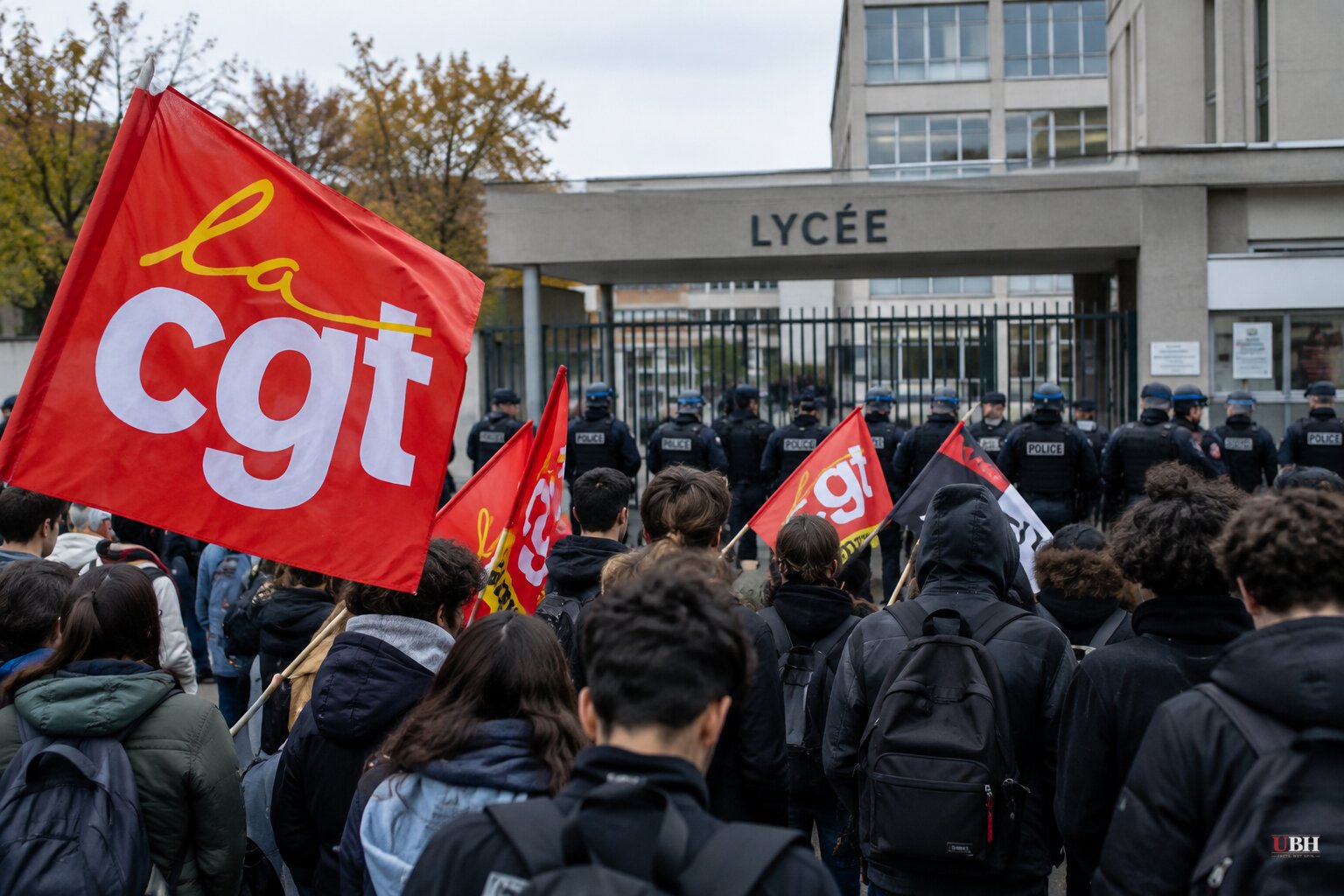
Since students began blockading schools in September, and after the Oct. 17 riots, France's protest movement has shifted from classroom grievances to a union-led fight over pay and public services. Thursday's Nov. 5 general strike showed how far it has spread.
The Interior Ministry put turnout at 575,000, revised down from an earlier 600,000. The CGT union claimed 1.6 million. As of 6:00 pm Thursday, 448 people had been arrested and 53 police officers injured, the ministry said.
A heavy police presence and a wide strike
Authorities deployed 70,000 police officers. Riot police fired tear gas at the end of demonstrations in Bordeaux and Lyon, and in Lyon at least one vehicle was torched. In Paris, police stopped schoolchildren from building barricades out of wheelie bins outside high schools, and used tear gas to keep students away from the Hélène Boucher high school in the east of the city.
The education ministry said about 16% of teachers nationwide were on strike. The government counted blockades at 81 of the country's 3,700 high schools. A student association said classes were suspended at about 1,000 secondary schools. The two counts differ by more than tenfold, and neither side has explained the gap.
The government also said a third of higher education sites were affected after university students joined the blockades. Public and private teaching unions struck, along with rail, hospital and postal workers, and some energy workers.
The Eiffel Tower and the Arc de Triomphe were closed for the day. Al Jazeera reported that transport was largely unaffected, though a traveler at Paris's Montparnasse station said her train was delayed.
What the unions and students want
The unions are demanding a higher minimum wage, raises for all workers, tax changes and better conditions in schools. CGT leader Sophie Binet told the Paris rally that the question is no longer whether workers will win but "how much we're going to win."
Students say the government's response falls short. Ministers have proposed capping some class sizes and lending money to regional authorities to repair school buildings. Students told reporters those measures are not enough.
Protesters also object to how the state is handling the movement. "This is a historic protest movement but the government's only real response has been to seriously crack down on it with police," said Rebecca, 30, a Paris-area social worker, who asked where the funding for other public services is.
France's four main rail unions said the proposed budget cuts would "worsen poverty, slash social security, freeze state workers' salaries and dry up investment needed for environmental measures."
The money problem behind it
The government is trying to pass a belt-tightening budget in a divided parliament while public debt approaches 120% of economic output. Eurostat puts France's debt at 115.7% of GDP and Italy's at 136.7%.
An Epoch Times analysis argues the unrest reflects a wider European growth gap. It cites World Bank data showing eurozone GDP grew 1.4% in 2025 against 2.2% in the United States, and Eurostat data showing France's economy contracted in the first quarter of 2026. It also cites youth unemployment of 15.4% in the eurozone. The analysis says images of looted shops and burning streets have contributed to a flight from European bonds into U.S. Treasuries. It does not name a market data source for that claim.
A Fox News opinion column takes a harder line, arguing that France is paying for "ruinously generous public benefits" and that protesters from students to retirees all want more state spending. The column also blames a violent fringe of looters for much of the damage. Thursday's marches were largely peaceful, according to the Interior Ministry and news agencies, with skirmishes in several cities.
The political clock
Macron is in his final months in office. The presidential election is about five months away, and far-right candidate Marine Le Pen leads the opinion polls, according to the Guardian and Al Jazeera.
CBS News has described the protests as running into a fourth straight weekend. The unions have not announced a date for another national strike day in the material reviewed for this report, and the government has not shown that its school measures or its budget can end the blockades before the vote.
Sources used for this briefing
7 links from 7 independent newsrooms (syndicated copies of the same report count once)
These are the sources it draws on, linked so you can verify.


