
Unbiased headlines. Facts, not spin.
Unbiased Headlines is an independently owned news organization. We bring you the facts, not opinions, written fresh from 110+ named sources. Sources linked so you can verify it yourself.
 defense
Major Story (8/10)
France to Deploy 70,000 Police Saturday After Riots; Macron Bans Non-Union Protests
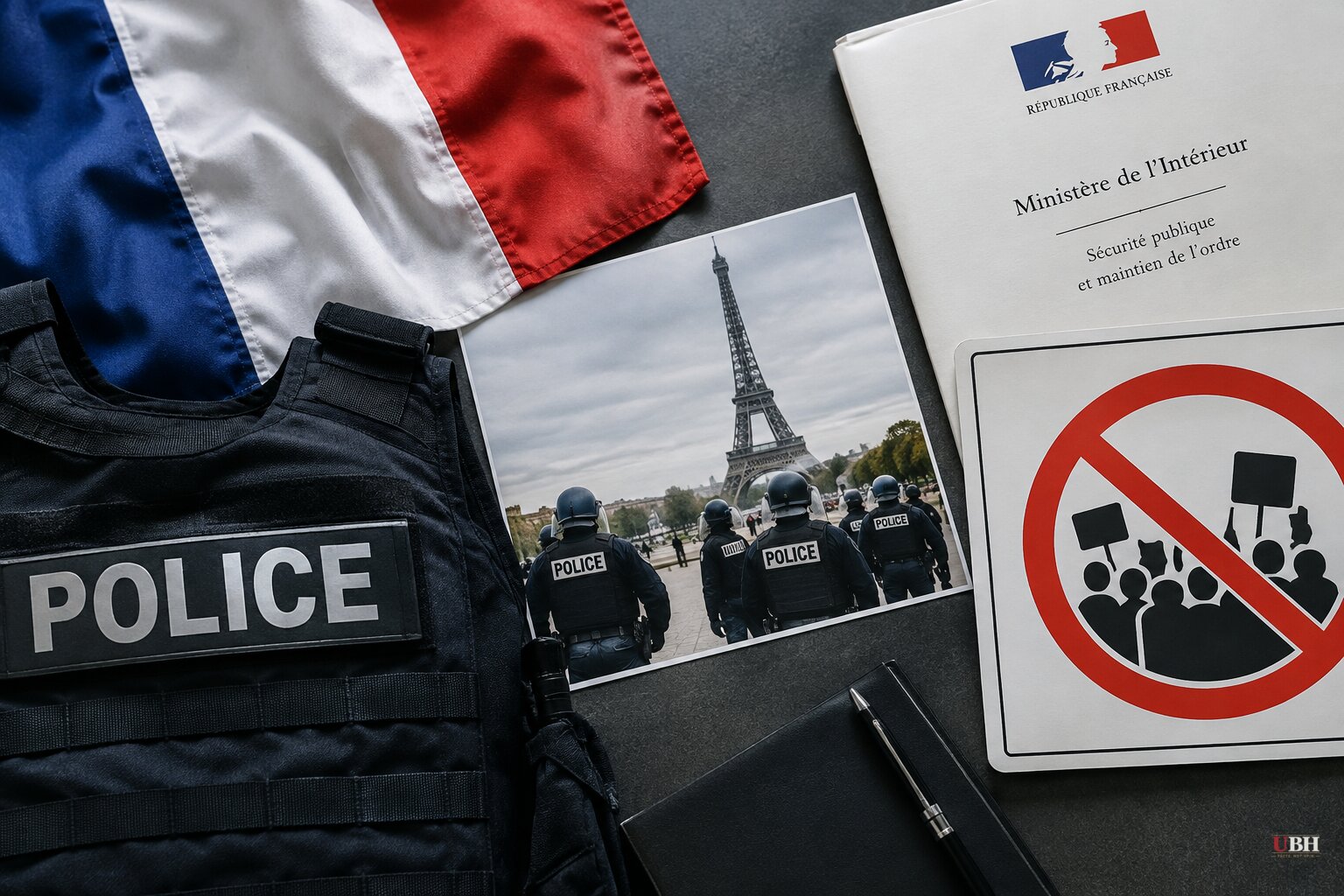
Since cost-of-living and education protests turned into the worst street violence France has seen in years on Saturday, Oct. 17, the government has moved from admitting it "lost control" to mounting one of its largest domestic security operations in recent memory.
On Friday, Oct. 23, Interior Minister Laurent Nuñez said about 70,000 police will be deployed nationwide on Saturday, Oct. 24. That is 10,000 more than last weekend. The force will include units normally used for counter-terrorism and hostage rescue, plus water cannon, armored vehicles, mounted police, helicopters and drones.
The army is also adding to the soldiers who already patrol Paris under counter-terrorism measures, according to the interior ministry. The aim is to free police from stationary guard duty.
"We are not talking about a peaceful, friendly demonstration," Nuñez told reporters after a meeting chaired by President Emmanuel Macron. "We are ready tomorrow to be extremely firm and not tolerate anything."
What last weekend left behind
Largely peaceful marches were overtaken by rioters in Paris, Marseille, Lyon and other cities. Looting was widespread. In Limoges, the town hall was set on fire and partly destroyed. Hundreds of shops and small businesses were wrecked in Paris alone.
The courts are still working through the fallout. Justice Minister Gérald Darmanin has cited 217 people jailed since last Saturday, half of them first-time offenders. In another tally he put the total at 232 jailed, with more than 1,000 brought before prosecutors or judges. RFI reported that 2,700 people have been taken into police custody.
The ban, the curfews and the closures
Macron announced Thursday that demonstrations not organized by trade unions would be banned in the coming days. "The general recommendation is that there should be no demonstrations in the coming days," he said. Where unions file requests, he said, prefects will review them and propose alternative routes to protect city centers, businesses and public buildings. Government spokesperson Maud Bregeon said restrictions would be decided case by case.
The result varies by city:
- Paris: A union march is authorized along a limited route in the east, between Place de la Bastille and Place de la Nation, avoiding the center. Paris police have barred movement around Place de la République and Les Halles from 11 p.m. to 6 a.m., and that partial curfew has been extended until Monday.
- Lyon: A total ban on protests, with the center off-limits.
- Marseille: All protests banned except one union-organized demonstration, allowed on an "exceptional basis." It is the only authorized protest in the Bouches-du-Rhône department.
Across the Paris area, authorities have also banned transporting fuel and flammable gases, carrying protective equipment within 100 meters of a school, and possessing fireworks mortars.
The city of Paris has cleared barriers, bins and construction material from public spaces. The Louvre, Musée d'Orsay, Orangerie and Picasso museums will be closed Saturday. The Paris National Opera canceled its performances, and at least two dozen metro stations will be shut for much of the day. Art Basel Paris ended Friday, two days ahead of schedule.
UNEF says it will march anyway
The opposition is organized and named. UNEF, one of France's oldest student unions, grew its movement out of high school protests last month over teacher shortages and dilapidated facilities. Its requests for Paris rallies were refused, and the gilets jaunes movement's request was refused too. The gilets jaunes had planned some 600 small events nationwide.
UNEF has said its rallies will go ahead regardless, and it accused Macron of "an abuse of authority." CNN reported that French media expect hundreds of thousands of people at a large Paris demonstration on Saturday afternoon. The CGT, one of the country's biggest trade unions, has said it will join. Farmers and climate activists are also expected.
The government's framing is different. Nuñez says social media calls for violence are circulating from "ultra-left" groups. Macron has blamed the unrest on "ultra-left groups whose aim is to bring down the Republic." The government's position is that the ban targets groups with, in Macron's words, "no legitimate authority," not the unions or the grievances behind the protests.
A state ban on gatherings is a real restriction on speech and assembly. It rests on a record of burned buildings and looted shops. Both facts will be tested Saturday.
Trappes and the wider backdrop
The security picture was complicated Friday by the shooting in Trappes, west of Paris. A 39-year-old man was arrested after one person was killed and five wounded. Anti-terror prosecutors have opened a murder investigation "in connection with a terrorist enterprise." Nuñez called it "clearly a terrorist crime" that may have been racially motivated.
The unrest is not limited to France. Protests over public services, housing costs and budget cuts are called for Saturday in Italy, Spain, Portugal, Austria, Ireland and Albania. Macron canceled a planned trip to Nigeria and Senegal next week. The crisis lands about six months before the presidential election to choose his successor.
Forecast heavy rain and high winds could cut turnout. Whether the Bastille-to-Nation march stays peaceful, and whether UNEF's unauthorized rallies trigger arrests under the new ban, will show on Saturday whether the 70,000-strong deployment holds the line.
Sources used for this briefing
7 links from 5 independent newsrooms (syndicated copies of the same report count once)
These are the sources it draws on, linked so you can verify.


