
Unbiased headlines. Facts, not spin.
Unbiased Headlines is an independently owned news organization. We bring you the facts, not opinions, written fresh from 110+ named sources. Sources linked so you can verify it yourself.
 defense
Major Story (7/10)
GAO: Pentagon AI Oversight Council Lapsed Without a Charter, and Six of 10 Surveyed Project Officials Flag Risks
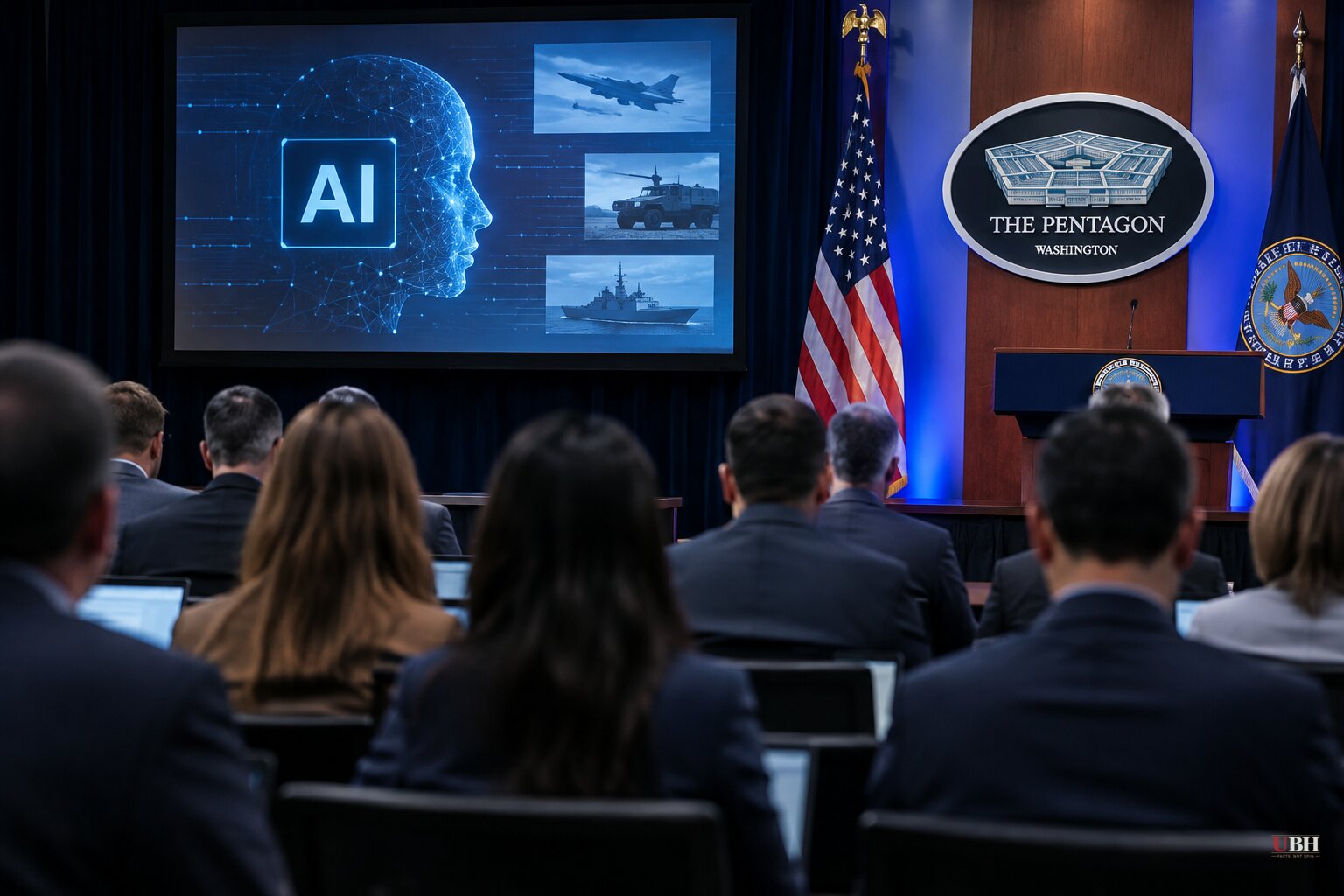
The Pentagon is racing to field artificial intelligence. The internal body meant to keep that work in check stopped meeting for a stretch of months.
That is the core finding of GAO report GAO-27-107837, released Oct. 14. Auditors reviewed how the Defense Department carries out and oversees its own Responsible AI guidance.
The council that stopped meeting
The Responsible AI Working Council has served since May 2021 as the department's permanent working-level group on the issue. GAO found it did not meet from late 2024 until August 2025.
It still has no charter setting roles, responsibilities or how often it meets. GAO warned that without one, the council is at risk of lapsing again. It restarted in August 2025 because people chose to restart it, not because any document required them to.
The gap had consequences, according to GAO. Officials from four components said they hit Responsible AI problems that would have benefited from collaboration. The Air Force began building its own governance structure. The Navy started on one too and wanted other components to validate it. The Joint Staff, which had used the council to coordinate the department's implementation plan, struggled when meetings stopped.
What the 10 project officials told GAO
GAO surveyed 10 officials building 10 AI weapons and tools. The systems automatically identify targets on the battlefield, process surveillance and improve tactical decision making. The projects are among more than 300 being built with AI in the Pentagon.
Six of the 10 officials said their teams had "identified risk(s)" with using the projects "in an operational environment."
Four said the requirements for their projects were not "aligned with Responsible AI tenets." Three said they "don't know" whether the projects will be continuously monitored after deployment, though the tenets encourage monitoring.
The tenets come from a 2021 Pentagon memo. The six guidelines stress Pentagon-wide oversight, verification, "real-time monitoring" and cooperation with allies "to advance global norms grounded in shared values." Most of the people building the 10 projects had taken "at least initial steps" to follow them, the report says. Some projects were in early stages, GAO's Alissa Czyz clarified.
Czyz, who directed the review, stressed the tenets are not binding. "It's a memo, right, at the end of the day, so it's not a department instruction," she said. "It's something that the department has signaled that should be implemented."
Empty slots
The Pentagon's Responsible AI division was authorized to hire 10 people in 2023. As of February, only three of those positions were filled, and the Pentagon "is unlikely to fill vacant positions or increase staffing," the report states.
Officials told GAO that more access to expertise about the department's guidelines, or more staff who know them, would increase their ability to incorporate AI responsibly.
"That's a very small number of folks tasked with a large responsibility of responsible AI throughout the department," Czyz said.
Policy pushes the other way
The oversight problems sit alongside a leadership push for speed. A January Pentagon memo said the department would become "an 'AI-first' warfighting force across all components, from front to back." Last month Defense Secretary Pete Hegseth announced a new warfare command focused on developing autonomous weapons, including drones.
Hegseth has repeatedly dismissed earlier caution about AI tools and encouraged rapid autonomous innovation. In a January speech at SpaceX, he said: "Our enterprise currently operates on staffing and committee cycles measured in months and years, and that's unacceptable. Military AI is going to be a race for the foreseeable future where the risks to U.S. national security of moving too slowly outweigh the impacts of imperfect alignment."
AI researchers and international organizations take the opposite view. They have long argued that weapons which behave unpredictably or run with little human control endanger soldiers and civilians and could escalate wars quickly.
Nobody has to settle the philosophical argument over autonomous weapons to see the process problem: a council with no charter and three of 10 authorized staff slots filled is a thin check on more than 300 AI projects.
What the Pentagon agreed to
GAO issued two recommendations: that the Pentagon more clearly outline the responsibilities and meeting schedules of the office charged with overseeing AI, and that it address understaffing.
The Pentagon agreed with both. But as of Oct. 22, the agency had not implemented the changes, a GAO representative confirmed to NPR. NPR asked the Pentagon when it planned to make them and did not receive a response.
Concurring costs nothing. The open question is whether a charter arrives before the next pause in meetings, or after.
Sources used for this briefing
7 links from 3 independent newsrooms (syndicated copies of the same report count once)
These are the sources it draws on, linked so you can verify.


