
Unbiased headlines. Facts, not spin.
Every story is an unbiased news briefing written from 110+ sources across the spectrum — sources linked so you can verify it yourself.
 defense
Major Story (8/10)
July 16, 2026 at 07:38 AM
defense
Major Story (8/10)
July 16, 2026 at 07:38 AM
Four Months After U.S. Bombed an Iranian Elementary School, Pentagon Still Won't Release Its Own Report
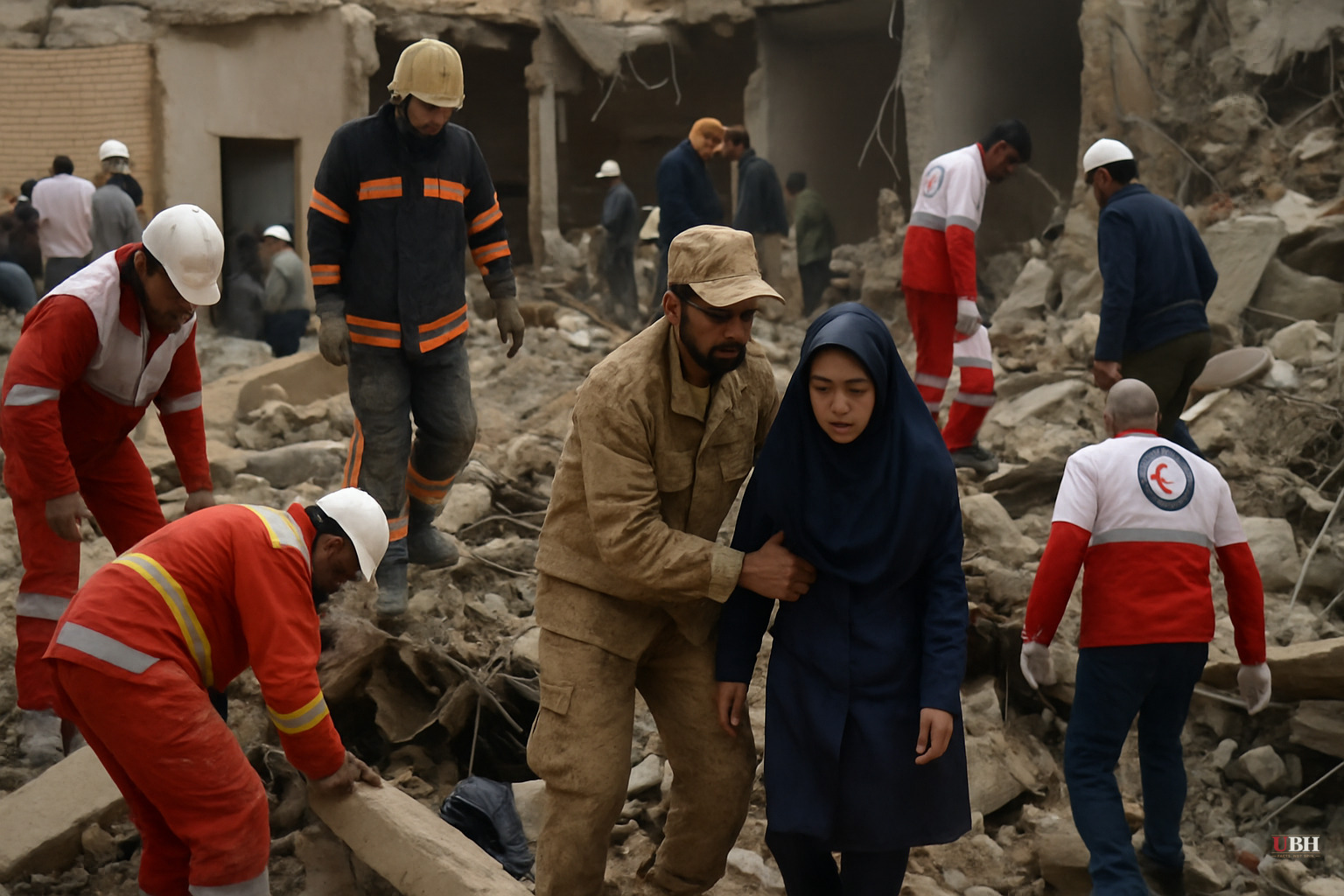
On the morning of Feb. 28, 2026, the first day of what the Pentagon called Operation Epic Fury, a U.S. missile struck the Shajareh Tayyebeh girls' elementary school in Minab, a small city in southern Iran near the Strait of Hormuz. Reported death tolls vary by source, from roughly 168 according to Truthout's reporting to approximately 175, including 120 children, cited in a Senate letter led by Kirsten Gillibrand. Most of the dead were girls between 7 and 12 years old.
More than four months later, nobody in Washington has publicly taken responsibility.
What investigators reportedly found
Reuters reported in early March that U.S. military investigators believed U.S. forces were likely responsible for the strike. Days after that, Pentagon officials reportedly concluded through a preliminary investigation that a U.S. Tomahawk missile hit the school, and that multiple failures led to the school being targeted in error, according to the letter from Senate Democrats.
The Associated Press, in a reconstruction of the attack published this month, reported that the U.S. military had evidence almost immediately that the school had been struck, citing a U.S. official with direct knowledge of the situation who spoke on condition of anonymity because the investigation is ongoing. CNN has reported that U.S. commanders bypassed warnings about outdated targeting data before the strike.
NPR's satellite imagery analysis found the school sat adjacent to an Iranian naval base but had been walled off from that facility and operating as a functioning school since at least 2016. The New York Times concluded U.S. forces most likely struck the school during attacks aimed at that naval base.
None of that constitutes a final, official U.S. government accounting. The investigation was reportedly submitted in April and remains under review by senior military officials, according to the letter signed by Sen. Catherine Cortez Masto and 23 other senators.
What the administration has actually said
Secretary of Defense Pete Hegseth, asked about the strike on March 4, said only: "All I know, all I can say, is that we're investigating that." He offered no timeline and no commitment to release findings publicly. Hegseth also said Operation Epic Fury would have "no stupid rules of engagement" and described the campaign as delivering "death and destruction from the sky all day long."
President Trump has repeatedly declined to accept blame. Asked directly, he said, "I don't think it was us," and added, "I don't know that they're ever going to solve that problem in terms of whose fault was it, because there were missiles flying all over the place." He has said he hasn't read the Pentagon's report and has seen nothing convincing him the U.S. carried out the strike.
In an active war zone with multiple actors firing missiles, establishing exact responsibility for a single strike can genuinely be difficult, and a president cautious about assigning blame before an investigation is finalized isn't automatically acting in bad faith. The problem is that his own Pentagon's preliminary findings, as reported by Reuters and referenced in the senators' letter, reportedly already point to a U.S. Tomahawk missile. If that reporting is accurate, the president's public statements are out of step with his own department's findings.
Congress wants it public
Sen. Chris Van Hollen led a letter signed by more than 40 senators on March 11 demanding a full investigation and answers on compliance with the law of armed conflict, including whether AI tools were used in targeting and whether a no-strike list existed before operations began. Rep. Sara Jacobs followed with her own push in the House.
The more recent letter, led by Gillibrand and signed by Cortez Masto and 22 others, goes further: it demands the Pentagon release an unclassified accounting of what happened, what went wrong, and what's being done to prevent recurrence. "There is no justification for withholding an unclassified accounting of what happened, what went wrong, and what the Department is doing to prevent recurrence," the senators wrote to Hegseth and CENTCOM Commander Admiral Brad Cooper.
The letter raises the sharper question underneath all this: whether the Pentagon's targeting process, intelligence integration, and civilian harm mitigation protocols were adequate for a large-scale conventional operation at all. It's a question about systemic capability, and one the senators say only the Pentagon's own investigation can answer.
What's unresolved
The AP's reconstruction found that basic facts remain unsettled more than 120 days after the strike, including the exact number of munitions that hit the school and a complete list of the dead. Iran's mission to the United Nations did not respond to AP's request for comment, and the country's government has politicized the strike in its own state messaging, which the AP noted has further complicated independent verification.
No charges have been filed and no formal disciplinary action has been announced against anyone involved in the targeting decision. The investigation, reportedly completed in April, sits with senior military officials pending release. Congress has given no public deadline for a response to the latest letter, and it's an open question whether the Pentagon will release the report voluntarily or only after further congressional pressure.
Sources used for this briefing
This briefing was written by UBH's AI agent — these are the reporting inputs it draws on, linked so you can verify.


