
Unbiased headlines. Facts, not spin.
Unbiased Headlines is an independently owned news organization. We bring you the facts, not opinions, written fresh from 110+ named sources. Sources linked so you can verify it yourself.
 defense
Notable (6/10)
defense
Notable (6/10)
Five Years After Taliban Takeover, $7 Billion in U.S. Military Gear Still Rolls Through Kabul
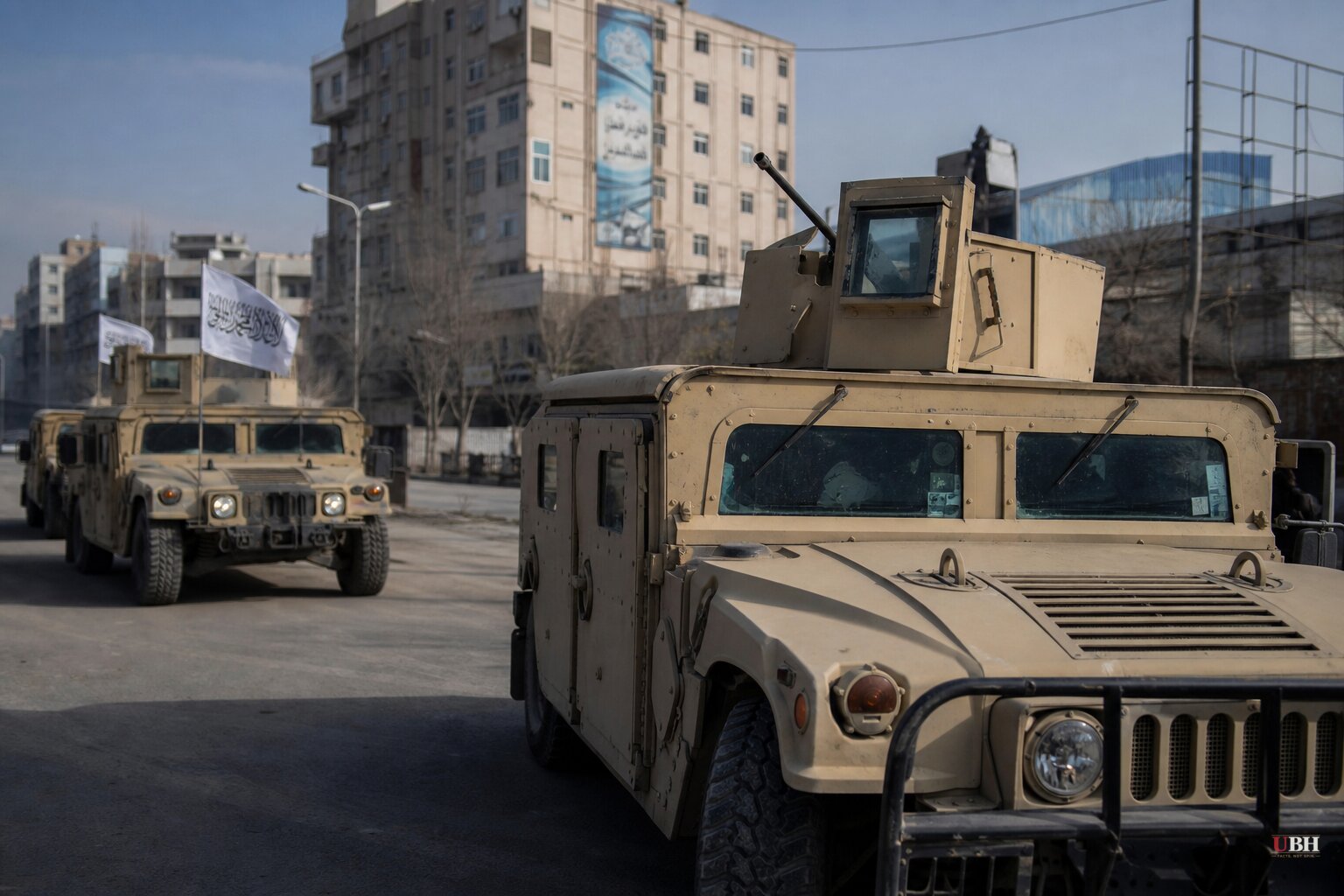
Twenty-five years after al-Qaeda hijackers flew planes into the World Trade Center and the Pentagon, the war that attack started has been over for five years. The Taliban won it.
CBS News traveled to Kabul this week and found Taliban fighters patrolling the capital in American-made armored vehicles, wearing American tactical gear, and carrying American rifles. One Humvee still had a faded Green Bay Packers decal on it, a leftover from whatever U.S.-trained Afghan unit drove it last.
Pentagon figures released last year put a number on it: roughly $7 billion in U.S.-purchased military hardware fell into Taliban hands when the Afghan National Army collapsed in August 2021, according to CBS News. That includes the vehicles, weapons and equipment now on display in Taliban military parades through the streets of Kabul.
Trump wants it back. The Taliban says no.
President Trump has demanded the Taliban return the equipment and has accused the Biden administration of "totally botching" the withdrawal, according to CBS News. He's not wrong that the collapse was chaotic. But CBS News's own reporting notes it was Trump's first administration that negotiated the 2020 deal with the Taliban setting the terms and timeline for the U.S. exit. The final withdrawal under President Biden executed a framework Trump's team built. Both administrations own a piece of how this ended.
Taliban Ministry of Foreign Affairs spokesman Abdul Qahar Balkhi gave CBS News a blunt answer when asked about handing the gear back: it belongs to "the state of Afghanistan, and we are not in the business of doing transactions and deals on the assets of the state of Afghanistan."
When CBS pointed out American taxpayers paid for it, Balkhi shot back: "The Americans did a lot of things. Americans killed a lot of people, destroyed the majority of the country. Should they not be paying for that first?"
The Taliban's position, on the record, is that the equipment stays. It isn't changing.
The human cost, and who's paying it now
The war killed more than 2,400 U.S. service members and tens of thousands of Afghan civilians, according to CBS News. Five years into Taliban rule, women and girls are almost entirely barred from work and education. Some analysts told CBS the restrictions are harsher now than during the Taliban's first stint in power in the 1990s.
A separate analysis published by Consilio International AB frames the last five years as a genuinely mixed outcome: relative peace compared to the constant insurgency of the war years, but a peace built on poverty, isolation and increasingly instability from Pakistan. Consilio also notes that millions of Afghan refugees have been forcibly returned by neighboring Iran and Pakistan in recent years, adding fresh strain to a country already struggling under Taliban rule.
The fight over what 9/11 retrospectives should say
The Daily Signal's Todd Bensman argues that as outlets mark the 25th anniversary, coverage will avoid naming the ideology behind the attacks. Bensman points to the Flight 93 cockpit recording, in which a hijacker repeatedly shouted "Allahu Akbar" in the plane's final seconds, as documented in the 9/11 Commission Report. He argues that omitting the religious-ideological motive undersells why vigilance still matters, citing more recent attacks he says share that motivation: the 2026 vehicle-ramming and shooting at Temple Israel in West Bloomfield, Michigan; the 2025 truck attack in New Orleans; the shooting of two National Guard soldiers in Washington, D.C.; and a 2024 attack on Chicago's Jewish community.
The 9/11 Commission Report itself does address the ideological motive at length. None of the reporting on this week's Kabul story disputes that point. Bensman's piece is speculating about how retrospectives will be framed rather than reporting how they were.
What's not in dispute: the $7 billion in American hardware is real, it's in Taliban hands, and Kabul's own foreign ministry has said on the record it's staying there. Whether the Trump administration pursues any actual mechanism to recover it, sanctions, frozen assets, diplomatic pressure, or otherwise, remains an open question CBS News did not report an answer to.
Sources used for this briefing
7 links from 5 independent newsrooms (syndicated copies of the same report count once)
These are the sources it draws on, linked so you can verify.


