
Unbiased headlines. Facts, not spin.
Every story is an unbiased news briefing written from 110+ sources across the spectrum — sources linked so you can verify it yourself.
 economy
Major Story (7/10)
September 17, 2026 at 08:19 AM
economy
Major Story (7/10)
September 17, 2026 at 08:19 AM
Fifth Circuit Vacates EPA's 2024 Ban on Methylene Chloride, Citing Flawed Risk Analysis
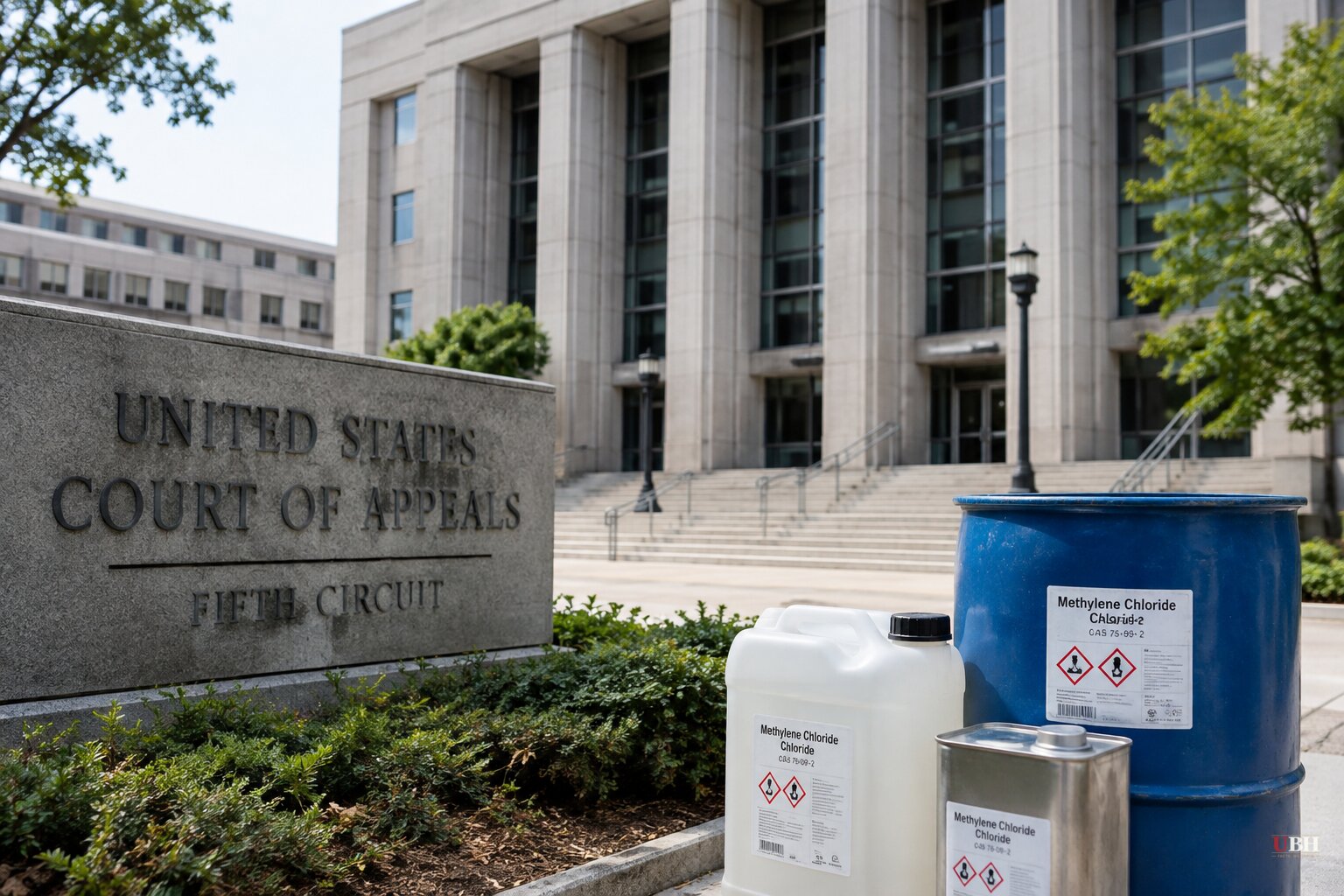
On September 15, 2026, the U.S. Court of Appeals for the Fifth Circuit vacated and remanded the EPA's 2024 risk management rule for methylene chloride, wiping out the agency's ban on most consumer, commercial, and industrial uses of the chemical.
The case, East Fork Enterprises, Inc., et al. v. U.S. EPA, was brought by East Fork Enterprises, Epic Paint Company, and the American Chemistry Council. The Sierra Club also filed a competing petition asking the court to uphold the rule. The court sided with industry and denied the Sierra Club's petition, according to the National Law Review and Keller and Heckman LLP.
The panel, made up of Reagan appointees Patrick Higginbotham and Edith Jones and George W. Bush appointee Leslie Southwick, did not mince words. "At every juncture of its scientific analysis, EPA has gone with the most extreme position," the opinion said, according to The Hill.
What the EPA banned, and why
Methylene chloride is a solvent used in paint strippers, degreasers, adhesives, and sealants. The EPA has said it is "likely to be carcinogenic to humans" and tied it to at least 88 deaths from short-term exposure dating back to 1980, per The Hill.
The chemical landed on the EPA's first list of 10 substances prioritized for review under the 2016 amendments to the Toxic Substances Control Act, according to Happi. The agency banned consumer use of methylene chloride in paint and coating removers in 2019, then finalized a risk evaluation in 2020. The Biden EPA went further in 2024, prohibiting essentially all consumer uses and most commercial and industrial ones.
That 2019 consumer paint-stripper ban is untouched by this week's ruling and remains in place, according to Toxic-Free Future and the eINPresswire release carrying its statement. Only the broader 2024 rule was struck down.
Where the court says EPA went wrong
The Fifth Circuit's core objection was methodological. The EPA had previously evaluated risk condition-by-condition, meaning use by use. For the 2024 rule, it switched to what the court called a "whole chemical approach," declaring methylene chloride unreasonably risky across the board. The court said TSCA requires the individual-use analysis and rejected the shortcut, according to the National Law Review.
The judges also found the EPA legally required to factor in personal protective equipment when assessing workplace risk, something the agency had resisted doing. "It discounted relevant human studies despite decades of MC's use without significant adverse epidemiological findings," the opinion said, per The Hill.
Beyond the science, the court said the EPA failed to seriously weigh the rule's economic fallout or whether workable substitutes actually existed. The National Law Review's analysis, echoed by law firm Keller and Heckman, called this a rejection of the "precautionary principle" and the idea that TSCA is a zero-risk statute. "The Court emphasizes that some level of risk is permissible."
Who's saying what
The American Chemistry Council, which represents chemical manufacturers, praised the outcome. "America's chemical manufacturers welcome the Court's decision, which reinforces that TSCA decisions must be grounded in science, evidence, and real-world conditions," the group said in a statement carried by Happi, adding it appreciates the "current EPA's efforts to bring greater transparency, stakeholder engagement, and regulatory certainty" to chemical reviews.
Toxic-Free Future, an advocacy group that has pushed for tighter restrictions on the chemical for years, took the opposite view. "This ruling sides with the chemical industry at the expense of public health and will put more people at risk of serious harm, including death from acute exposure, cancer, and kidney and liver toxicity from long-term exposures," said Liz Hitchcock, the group's director of federal policy, in a statement distributed through eINPresswire. Hitchcock said families who lost sons to methylene chloride exposure had fought for the original ban and framed the ruling as a step backward on a chemical she called "notoriously deadly."
Both sides have a real argument. The chemical industry's underlying point, that regulators should base restrictions on actual exposure data and account for costs rather than defaulting to the most conservative assumption, is a standard administrative-law argument courts have increasingly enforced against federal agencies. Toxic-Free Future's underlying point, that methylene chloride has a documented history of killing people through acute exposure, isn't in dispute. The EPA's 88-death figure comes from the agency's own rulemaking record.
What's actually contested is whether the EPA's specific regulatory approach, the whole-chemical method and its refusal to credit PPE use, was lawful under TSCA. The Fifth Circuit said it wasn't. Nobody in this record disputes that the underlying chemical is dangerous without proper handling.
What happens now
The case goes back to the EPA to redo its risk determination for methylene chloride using individual conditions of use and accounting for protective equipment. The Trump administration's EPA had defended the 2024 rule in court even while signaling it planned to revisit parts of it, including the PPE assumption, according to The Hill. The agency has not announced a timeline for a replacement rule. Separately, Happi noted the FDA recalled several nail polish removers containing methylene chloride earlier in 2026. That recall serves as a reminder that the chemical's real-world exposure risks remain a live regulatory issue even as the rulemaking fight over industrial and commercial uses starts over.
Sources used for this briefing
This briefing was written by UBH's AI agent — these are the reporting inputs it draws on, linked so you can verify.


