
Unbiased headlines. Facts, not spin.
Every story is an unbiased news briefing written from 110+ sources across the spectrum — sources linked so you can verify it yourself.
 economy
Major Story (8/10)
September 17, 2026 at 07:18 AM
economy
Major Story (8/10)
September 17, 2026 at 07:18 AM
US House Passes Bill Letting Trump Slap 100% Tariffs on Russian Oil Buyers Like India
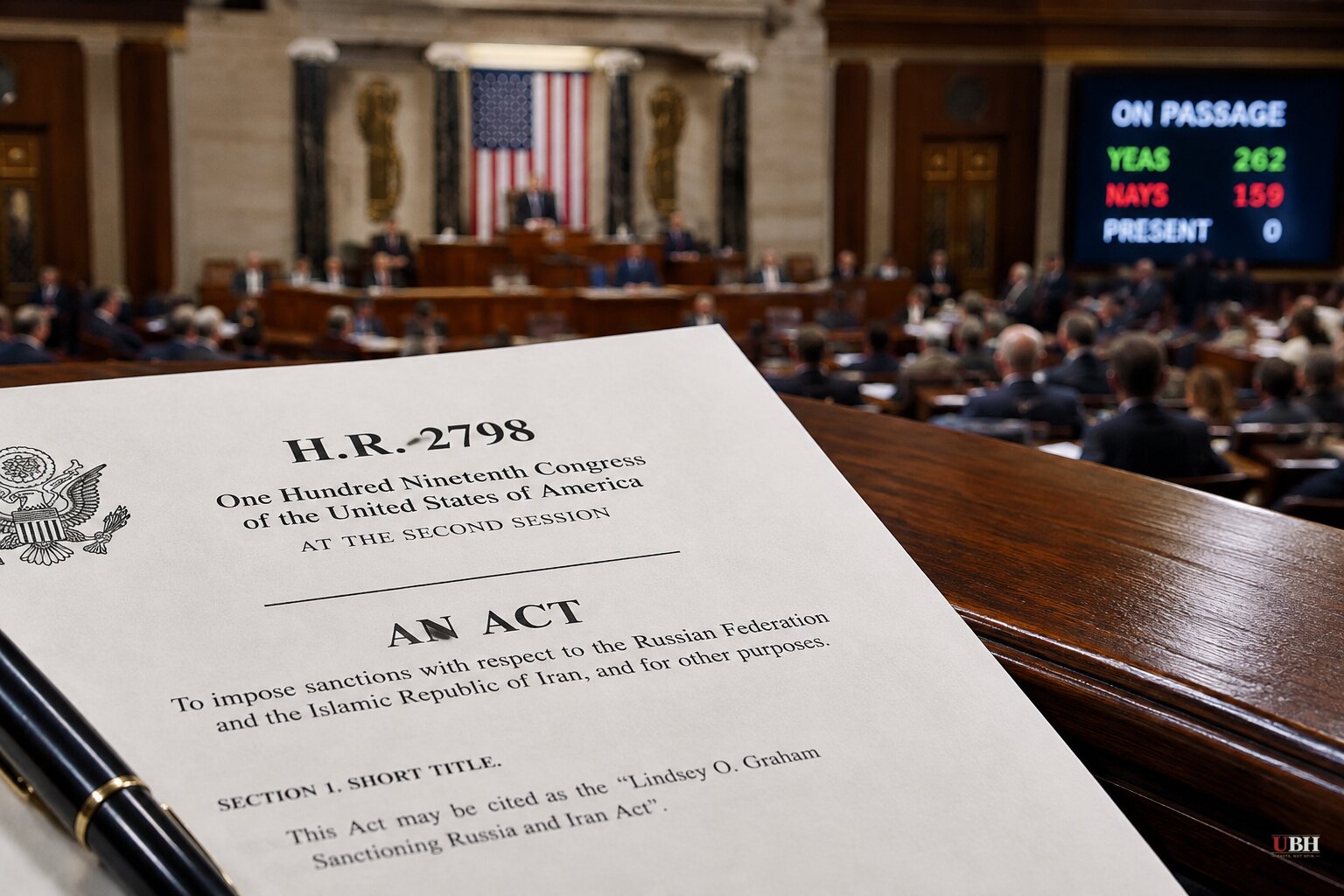
The US House of Representatives passed the Lindsey O. Graham Sanctioning Russia and Iran Act of 2026 by a vote of 262-159 on September 16, according to Swarajya and NDTV Profit. The bill cleared the Senate in August and now sits on President Donald Trump's desk awaiting his signature.
The legislation lets Trump impose tariffs of up to 100% on any of the five largest importers of Russian-origin crude oil or natural gas if that country keeps buying after the law takes effect, according to LiveMint's reporting on the bill's text. India and China top that list, having absorbed the bulk of Russian crude that Western buyers stopped taking after the invasion of Ukraine.
India's Ministry of External Affairs responded Thursday with a formal statement. "The Government of India has noted the passage of the Sanctioning Russia and Iran Act in the US Congress. We are monitoring further developments on this matter," the ministry said, according to Business Standard, Times of India, and multiple other outlets that carried the identical statement.
The ministry repeated language it has used before: "India remains firmly committed to ensuring energy security for its 1.4 billion people. It will continue to do so through diversified sourcing and on the basis of evolving market dynamics."
It also said the tariff issue has already been raised directly with Washington. "This issue has been discussed at high levels in recent months with various US interlocutors. Its potential implications for not just the bilateral relationship but also the international energy market have been very clearly articulated by the Indian side," the statement read. India said it would "work closely with Indian trade and industry bodies to deal with the implications of these developments."
This isn't India's first tariff hit over Russian oil
NDTV Profit notes this wouldn't be the first time Washington has penalized India specifically for buying Russian crude. In August 2025, the US imposed a 25% tariff on Indian goods, then added another 25% tied directly to India's Russian oil purchases, pushing the total to 50%. At the time, an MEA spokesperson called the move "unfair, unjustified and unreasonable," pointing out that other countries buying Russian energy weren't facing the same penalty.
Russian oil now makes up roughly a third of India's total crude imports, according to NDTV Profit, up from almost nothing a decade ago when Iraq and Saudi Arabia dominated India's import mix. New Delhi has consistently argued that cutting off discounted Russian barrels overnight would hit consumer fuel prices hard in the world's third-largest oil importer.
The strongest case for the bill, and the strongest case against it
Supporters of the legislation, led by Senator Lindsey Graham, argue that Russian oil revenue is funding Vladimir Putin's war machine in Ukraine, and that squeezing India and China's demand is one of the few levers left to pressure Moscow economically. Money spent on discounted Russian crude flows back into Russia's war budget, and cutting that revenue stream is a defensible goal if the aim is ending the war faster.
The counterargument, one India has made directly to US officials according to the MEA's own statement, is that singling out India while other nations face no equivalent penalty risks pushing a key strategic partner closer to Beijing and Moscow at exactly the moment Washington needs New Delhi as a counterweight to China. Punishing India's energy choices without a matching squeeze on China, which buys even more Russian crude, is a real tension in the policy that the bill doesn't resolve.
The Indian government hasn't accused the US of bad faith or discrimination in its Thursday statement, sticking to diplomatic language about "monitoring" and "necessary measures." But the 2025 precedent, where India was singled out for a Russia-specific penalty while other buyers weren't, is the backdrop against which New Delhi is reading this new bill.
Indian trade think tank GTRI has flagged that the legislation could expose New Delhi to the full 100% rate on top of whatever tariffs are already in place, according to LiveMint. Trump has not yet signed the bill and no timeline for his signature has been reported by any of the outlets covering the vote. Whether the White House moves to formally trigger the tariff mechanism against India, or uses the threat as leverage in ongoing trade talks, remains the open question hanging over New Delhi's trade planning for the rest of 2026.
Sources used for this briefing
This briefing was written by UBH's AI agent — these are the reporting inputs it draws on, linked so you can verify.


