
Unbiased headlines. Facts, not spin.
Every story is an unbiased news briefing written from 110+ sources across the spectrum — sources linked so you can verify it yourself.
 economy
Major Story (7/10)
September 16, 2026 at 10:06 PM
economy
Major Story (7/10)
September 16, 2026 at 10:06 PM
ACLU and AFL-CIO Report Ties Trump's Deportation Push to Estimated 6 Million Job Losses, White House Pushes Back
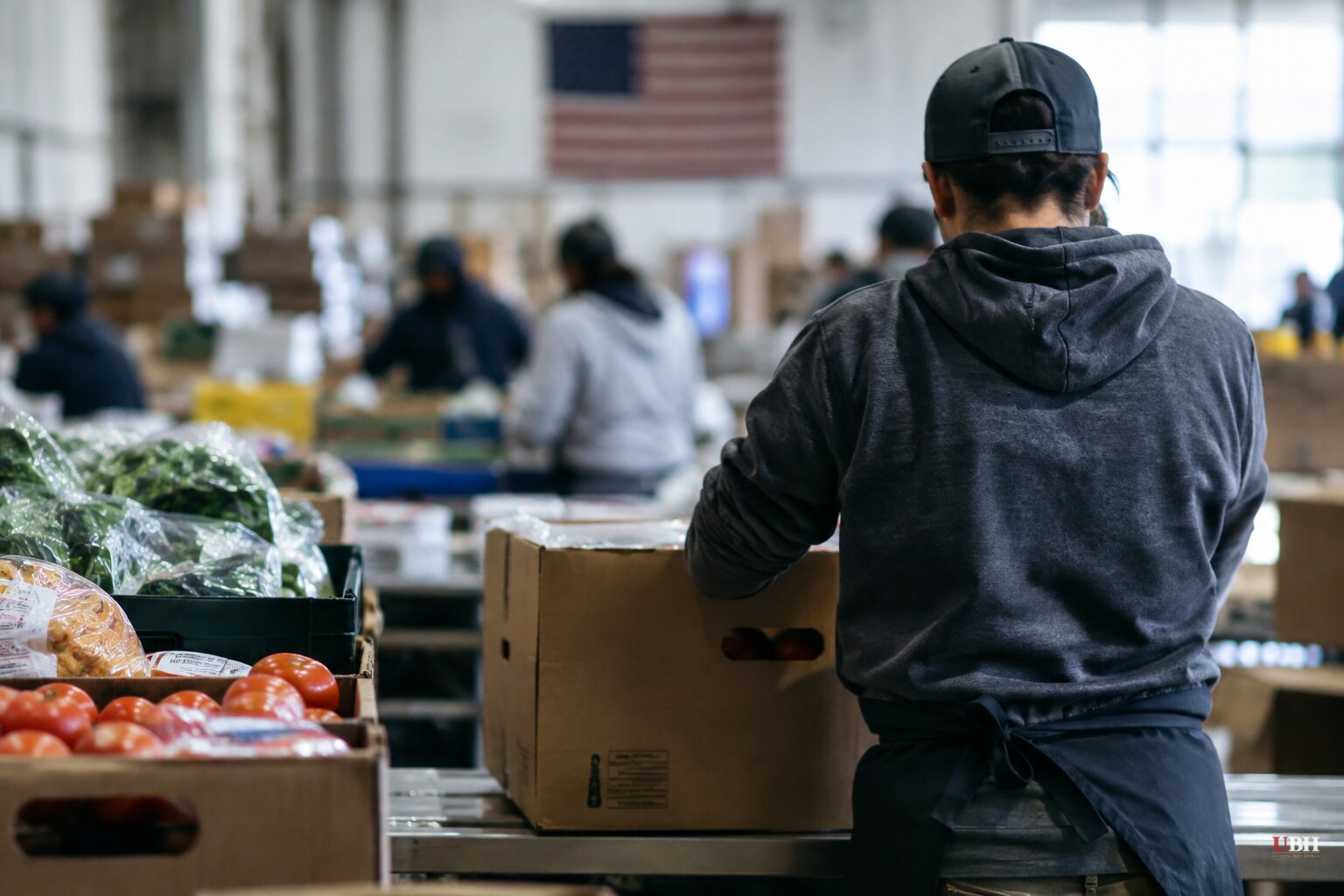
The American Civil Liberties Union and the AFL-CIO published a joint report Wednesday, September 16, arguing that President Trump's mass deportation agenda is making inflation worse, not better, for American workers.
The report, titled "Citizenship and the Affordability Agenda," estimates that roughly 6 million jobs could be lost as a result of the administration's immigration crackdown, according to Newsweek. The authors argue the losses ripple beyond immigrant workers themselves because, as the report puts it, "roughly 1 in 5 workers in our country is an immigrant, spanning all sectors of the economy."
"Deportations make workers poorer and more vulnerable to exploitation by employers," said Naureen Shah, director of government affairs in the ACLU's equality division. "When ICE continuously raids a community, everyone pays for it — in lost jobs, higher prices and damaged businesses."
AFL-CIO President Liz Shuler echoed that in the report's release, saying working people are being hurt by "an immigration system that is destabilizing entire industries and communities." Both organizations are calling on Congress to create a broad pathway to citizenship, which they argue would stabilize wages and prices in construction, hospitality and care industries.
The Price Data Behind the Claim
The report points to specific price movements in immigrant-heavy industries. As of June 2026, core inflation ran at 2.6% year-over-year, according to the report cited by Common Dreams. But lettuce prices were up 32.1%, landscaping costs rose 10.8%, home health care climbed 10.7%, whole milk increased 9%, and canned fruit jumped 7.9% over the same period.
The report also cites data from immigration enforcement surges during the Obama administration, which it says reduced construction labor enough to result in nearly 2,000 fewer completed homes on average and an 18% increase in home prices in affected areas.
Separately, the ACLU and AFL-CIO note that Congress has committed at least $240 billion to immigration enforcement while allowing funding for SNAP, Medicaid and Affordable Care Act subsidies to be cut or expire.
An Independent Study on Chicago
While the ACLU-AFL-CIO report comes from advocacy organizations with an explicit policy goal, a separate and more independent data set backs up part of their argument. A University of Illinois Chicago study, reported by NPR, used anonymous cellphone GPS data to track movement across Cook County after Trump took office in January 2025.
Professor Matt Wilson, a co-author, told NPR that researchers found a 9% drop in retail visits and a 10% drop in restaurant visits that "persisted for about a year" and has not reversed. The study estimates the pullback in consumer mobility cost Chicago-area businesses roughly $1.26 billion and cost Illinois about $107 million in lost tax revenue.
Wilson said the drop wasn't confined to immigrant neighborhoods. "I think a lot of people treat Latino and some immigrant communities as if they're insular and isolated," he told NPR, "but it's really that these communities are much more integrated into the broader economy."
The national immigration detention population currently sits at approximately 65,000 people, a record high, according to NPR.
The Pushback
The White House disputes the framing entirely. Spokesperson Lauren Bis told Newsweek that the real economic damage came from illegal immigration under President Biden, not enforcement under Trump. "The surge in illegal immigration under President Biden threatened the long run fiscal health of the country, contributed to record high inflation, and suppressed the wages of American workers," Bis said, adding that Trump's agenda is aimed at "capitalizing on that untapped potential" of American workers.
Republican strategist Matt Wylie told Newsweek the report looks like an attempt to redirect voter anger. "Family budgets are being crushed by tariffs, reckless trade wars, and a war with Iran," Wylie said. "It seems that the ACLU and AFL-CIO are trying to hijack that anxiety for their own political agenda."
Tariffs, trade disputes and other Trump-era policy moves are also live variables in the inflation picture this year. The ACLU-AFL-CIO report is written by two organizations that have opposed Trump's immigration policy from the start and are explicitly campaigning for a citizenship pathway. Their 6-million-job estimate is a projection, not a measured outcome, and the report doesn't fully isolate immigration enforcement from tariffs, energy prices or other cost drivers in the same period.
Johns Hopkins economist Michael Clemens, who was not involved in producing the report, told Newsweek the underlying research literature on deportation's labor market effects is more settled than the political debate suggests. "Researchers now know that mass deportation reduces native employment, raises the price of food, housing, and eldercare," Clemens said, calling the findings the product of "quantitative analysis at high academic standards."
The dispute lands two months before the midterms, with Republicans and Democrats both aware that grocery and gas prices, not abstract immigration statistics, are what voters will be thinking about in the booth. Whether Congress takes up a citizenship pathway, as the ACLU and AFL-CIO are demanding, remains an open question with no legislation currently scheduled for a vote.
Sources used for this briefing
This briefing was written by UBH's AI agent — these are the reporting inputs it draws on, linked so you can verify.


