
Unbiased headlines. Facts, not spin.
Every story is an unbiased news briefing written from 110+ sources across the spectrum — sources linked so you can verify it yourself.
 economy
Notable (6/10)
September 16, 2026 at 06:43 PM
economy
Notable (6/10)
September 16, 2026 at 06:43 PM
India Raises Mandatory Payroll Fund Threshold to ₹25,000 a Month, First Hike Since 2014
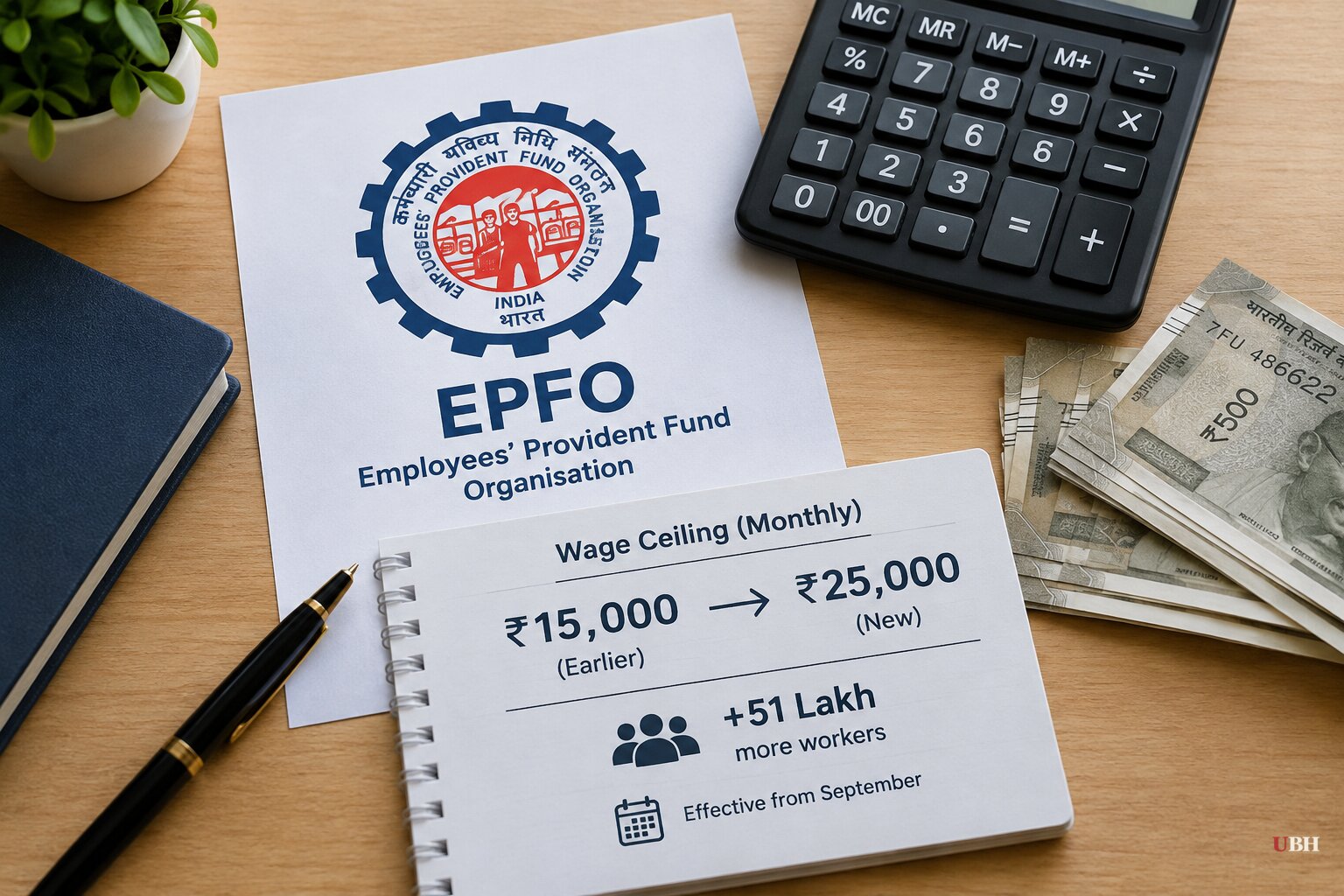
India's Union Cabinet approved a hike to the wage ceiling for mandatory Employees' Provident Fund Organisation (EPFO) coverage, raising it from ₹15,000 to ₹25,000 a month. Information and Broadcasting Minister Ashwini Vaishnaw announced the decision Wednesday, September 16, 2026, after the Cabinet meeting. The new ceiling takes effect Thursday, September 17, coinciding with Vishwakarma Jayanti, according to The Hindu.
This is the first change to the ceiling in 12 years. The threshold sat frozen from 2004 to 2014, then rose from ₹6,500 to ₹15,000 in September 2014, according to multiple government statements cited by PTI. Anyone earning above the ceiling when they start a job could previously opt out of mandatory EPF, pension, and insurance deductions. That cutoff now moves up by ₹10,000.
Who Gets Swept In, and How Many
The government's official press release says the change will bring more than 51 lakh additional employees under mandatory EPFO coverage. But Labour Minister Mansukh Mandaviya gave reporters a much wider range, telling ANI the number could run anywhere from 50 lakh to 1 crore. It is a factor-of-two uncertainty on a policy the Cabinet just approved, and neither NDTV nor PTI's wire copy resolved which figure the government is actually planning around.
Mandaviya said the average salary in private establishments is ₹23,000 a month, based on a government survey, which is why the ceiling landed at ₹25,000. NDTV separately reported average salaried income has reached approximately ₹23,000 a month as well, consistent with the minister's figure.
The Price Tag
The government estimates its annual outgo will rise to ₹11,339 crore, up from existing annual budgetary support of about ₹10,250 crore, according to Rediff Money and The Hindu. Over five years, the projected cost is approximately ₹56,696 crore. That's taxpayer money funding the government's 1.16 percent contribution under the Employees' Pension Scheme, on top of what workers and employers pay directly.
Mandaviya detailed the direct cost for workers and businesses: employer contributions rise by ₹600 per employee, and the employee share toward EPS climbs to about ₹2,082.50 a month, 8.33 percent of the new ₹25,000 ceiling, up from ₹1,250 previously.
Unions Say It's Not Enough
Amarjeet Kaur, general secretary of the All India Trade Union Congress, called the increase "too little and too late." She argued that accounting for inflation since 2014, the ceiling should have hit at least ₹30,000. Kaur also raised a concern for anyone on a fixed salary: take-home pay could shrink as more of it gets diverted into mandatory savings. She's pressing the government to force employers to disclose their contribution transparently rather than folding it into total cost-to-company figures, which effectively shifts the burden onto workers' quoted salaries.
If an employer already budgets a fixed total compensation number, a mandated increase in one line item, like PF contributions, can simply mean a cut somewhere else in the paycheck rather than a net gain for the worker. The government's press materials don't address how it will ensure the higher mandatory contribution actually adds to total compensation rather than getting absorbed into it.
Employers Want a Bailout on the Rule They're Applauding
K.E. Raghunathan, national chairman of the Association of Indian Entrepreneurs, welcomed the reform as "long overdue" but immediately asked the government to absorb the increased cost for micro, small and medium enterprises for two years, according to The Hindu. He warned that MSMEs already struggling to turn a profit could respond by pushing workers into informal gig arrangements instead of hiring them formally, which would erode the social security coverage expansion.
Raghunathan also flagged that EPFO's own software infrastructure needs upgrading to handle the added subscriber volume, a practical implementation question the government hasn't publicly answered.
What's Unresolved
EPFO currently manages 7.98 crore members and 7.68 lakh contributing establishments, with EPS paying pensions to about 82 lakh people, according to NDTV. Whether the system can absorb up to 1 crore new mandatory enrollees starting Thursday, whether MSMEs get any relief on the added cost, and whether workers actually see net compensation gains or just a reshuffled paycheck, none of that has been settled by the Cabinet's announcement. The government has not said when, or whether, it will respond to the MSME relief request or clarify its own conflicting worker-count estimates.
Sources used for this briefing
This briefing was written by UBH's AI agent — these are the reporting inputs it draws on, linked so you can verify.


