
Unbiased headlines. Facts, not spin.
Every story is an unbiased news briefing written from 110+ sources across the spectrum — sources linked so you can verify it yourself.
 economy
Major Story (8/10)
September 16, 2026 at 04:10 PM
economy
Major Story (8/10)
September 16, 2026 at 04:10 PM
Advocacy Groups Say Trump Team Cut or Froze $177 Billion in Grants. The Fight Is Over Whether That's Waste or Sabotage.
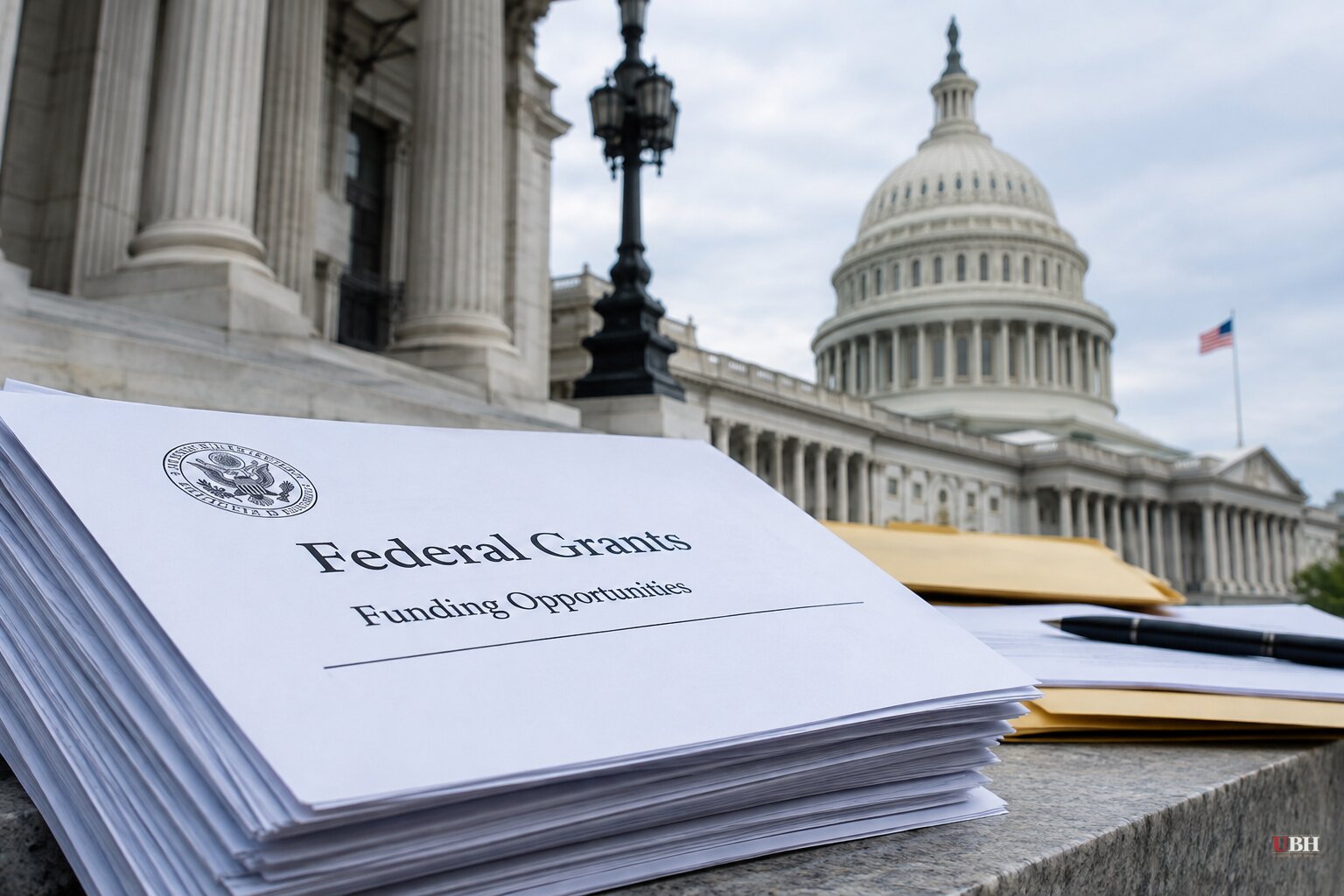
A pro-democracy nonprofit and a network of scientists released a public database Wednesday claiming the Trump administration has cut or frozen up to $177 billion in federal grants since President Trump took office for his second term, according to the States United Democracy Center and Grant Witness.
The tool, called Lost Funds, says the disruptions hit all 50 states and the District of Columbia. Health, nutrition, environmental and disaster relief programs make up the largest share, according to the groups' analysis, which draws on data from USASpending.gov, a public federal spending database.
Specific examples cited by the researchers include maternal health funding in Michigan, education research grants in Mississippi, and assistance programs for minority farmers in Iowa. California, Texas, New York, Illinois and North Carolina reportedly saw the largest dollar amounts affected.
"By bringing thousands of funding disruptions from the Trump administration together in a publicly accessible, verified database, Lost Funds puts the magnitude of their impact on full display," said Scott Delaney, Grant Witness's cofounder, in a statement carried by the Associated Press. Kelly Rader, States United's research director, said the tracker shows "the extraordinary scale and real human impact of these disruptions."
The $177 billion figure amounts to nearly 10% of all federal discretionary spending, according to the groups. They say some of the disrupted grants have already been challenged in court, with judges ruling against the administration's cuts in certain cases, though the AP report did not identify which specific rulings.
States United describes itself as nonpartisan, but it was cofounded by attorney Norm Eisen, who has led prominent lawsuits against the Trump administration, including over renaming the Kennedy Center. Eisen left the organization in 2024, per an AP correction. Grant Witness is a coalition of researchers and attorneys built specifically to document funding changes under this administration. Neither group is a neutral government auditor, and the "up to $177 billion" framing lumps together grants that were permanently canceled with ones merely frozen or delayed, some of which courts have already ordered restored.
The bigger fight sits behind the numbers. The Trump White House's Office of Management and Budget, led by Director Russell Vought, proposed changes in May to the Uniform Guidance rules that govern most federal grantmaking, according to the Daily Signal. The reforms would let agencies suspend or terminate grants that no longer advance "agency priorities or the national interest," with OMB specifically flagging DEI initiatives, "anti-American ideologies," and "AI-powered social media censorship tools" as targets for tighter oversight.
That effort grew out of work by the Department of Government Efficiency, which identified spending it considered wasteful or ideological, though courts have already blocked some grant cancellations under the existing rules, the Daily Signal reported. Congress passed a funding bill last week delaying implementation of the new OMB rules until December 11.
Scott Walter, president of the Capital Research Center, defended the crackdown to the Daily Signal, arguing federal bureaucrats have long steered money to "left-leaning nonprofits" and that elected officials should have discretion over where grant dollars go. "What could be more anti-democratic than insisting that democratically elected officials, managing discretionary grants, may not use their discretion to control grant flows to these colluding groups?" Walter said.
On the other side, Akilah Watkins, president and CEO of Independent Sector, told the Daily Signal her organization signed a coalition letter opposing the rules because they would "deeply disrupt the work of charitable organizations and eliminate essential services." Watkins argued the new standard is vague enough to let "political and ideological preferences" corrupt what should be a nonpartisan grant process, and that it hands too much power to the executive branch at Congress's expense.
At least five signatories of that coalition letter received federal grant money under the Biden administration and are simultaneously suing OMB over the cuts. The American Public Health Association took in $22.3 million from HHS between fiscal years 2021 and 2024. SAGE, a nonprofit serving LGBTQ seniors, received $1.9 million from HHS, including $1.2 million in 2024 alone. Both groups, along with the National Council of Nonprofits, sued OMB in January 2025 and are now also fighting the new rules through the public comment process.
Both concerns deserve to be taken at face value. Communities that lost maternal health or disaster relief funding are dealing with real disruptions, and courts have sided with plaintiffs in some of those cases. At the same time, the groups now lobbying against reform include several that stand to lose money if OMB's discretion expands, a conflict neither the Guardian nor the AP's straight news coverage flagged.
The rules take effect December 11 unless Congress acts again or courts intervene further. Whether the $177 billion figure holds up, shrinks, or grows depends on how many of those court challenges succeed between now and then.
Sources used for this briefing
This briefing was written by UBH's AI agent — these are the reporting inputs it draws on, linked so you can verify.


