
Unbiased headlines. Facts, not spin.
Every story is an unbiased news briefing written from 110+ sources across the spectrum — sources linked so you can verify it yourself.
 economy
Major Story (7/10)
September 16, 2026 at 12:22 PM
economy
Major Story (7/10)
September 16, 2026 at 12:22 PM
China Opens $10.8 Billion Pinglu Canal, Cutting Its Southeast Asia Shipping Route by 560 Kilometers
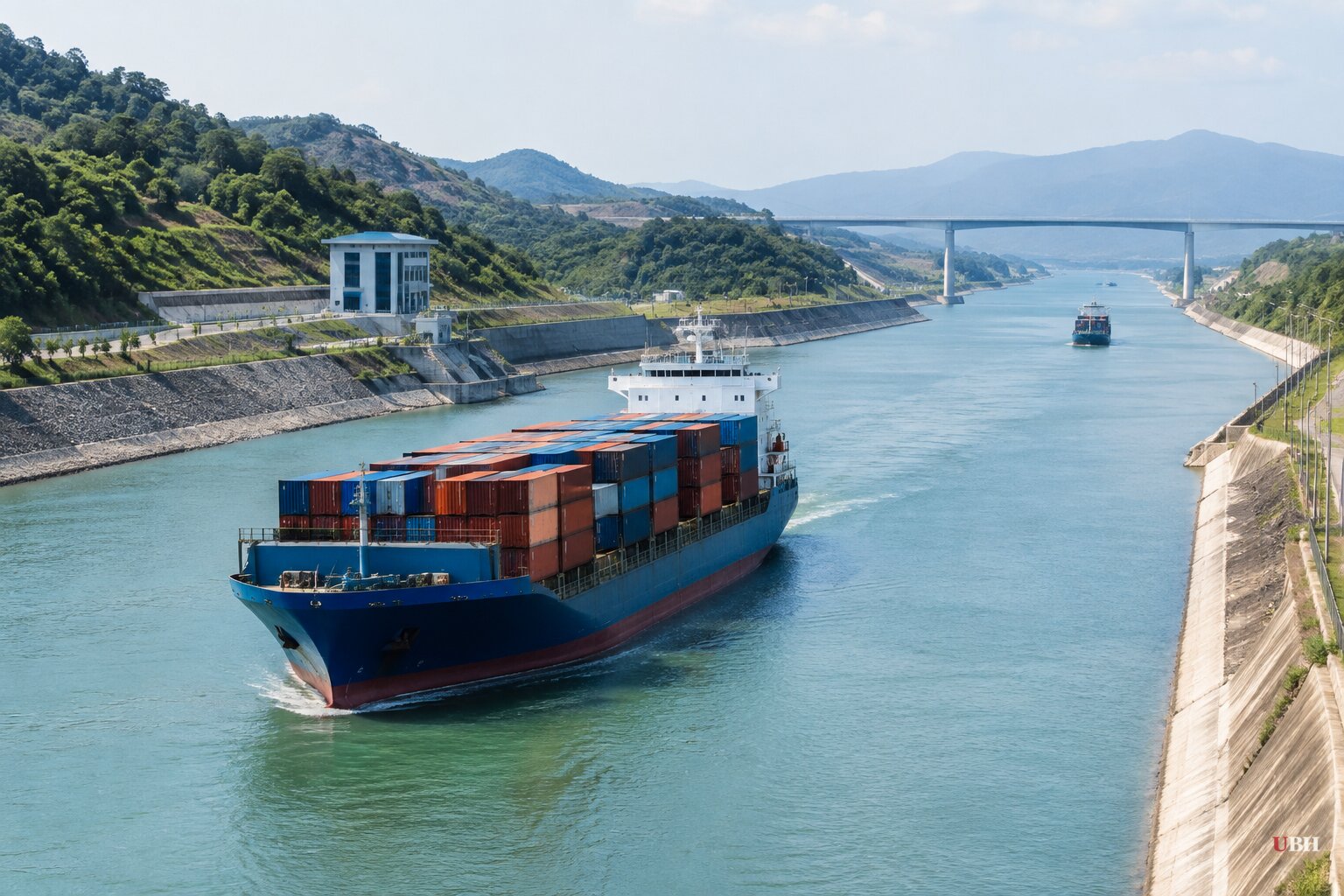
China cut the ribbon Wednesday on the Pinglu Canal, a 134.2-kilometer waterway in Guangxi that Beijing is calling its biggest infrastructure bet yet on Southeast Asian trade. Chinese Vice Premier Ding Xuexiang presided over the opening ceremony in Qinzhou, boarding a vessel to inspect the canal and calling it a "backbone project" of what China now labels the New Western Land-Sea Corridor, according to Xinhua and the state site english.www.gov.cn.
The numbers are real and specific. The canal cost 72.7 billion yuan, about $10.75 billion, and took four years to build, according to Xinhua. It links the Xijiang River near Nanning, capital of Guangxi, to the Beibu Gulf, the Chinese name for the Gulf of Tonkin, letting cargo from China's landlocked southwest reach the sea without a roughly 560-kilometer detour through Guangdong province, according to the South China Morning Post.
Guangxi officials are putting real dollar figures on the savings. Zhang Zhiwen, deputy secretary-general of the Guangxi government, estimates transport costs will drop by more than 5 billion yuan annually, about $700 million, according to Al Jazeera. State broadcaster CCTV puts the annual logistics savings at 5.2 billion yuan, or roughly $775 million, with total costs down 18 to 30 percent. Guangxi vice chairwoman Lu Xinning calls these "tangible gains" for domestic and foreign trade.
The canal can handle vessels up to 5,000 tonnes. On opening day, about 30 cargo ships carrying building materials, coal, minerals, steel and fertilizer moved through it, with Nanning Port and Qinzhou Port handling operations, CCTV reported. Two new freight routes launched alongside it: an international line connecting Nanning to Can Tho, Vietnam, and a domestic route to Yangpu in Hainan province.
Beijing's Bigger Play
The canal plugs into the New International Land-Sea Trade Corridor, a rail-road-water network Beijing has been building to connect Chongqing, Chengdu, Guizhou and Yunnan to Southeast Asian markets, which itself sits inside Xi Jinping's Belt and Road Initiative. Zhou Yan, deputy general manager of the Beibu Gulf Port International Port Group, told The Straits Times the canal could add 3.5 million tonnes of cargo throughput at launch and eventually reach 150 million tonnes a year.
The timing lines up with a genuine trade boom. China-ASEAN trade hit $862.75 billion in the first eight months of 2026, up 25.6 percent year-over-year, according to SCMP figures cited by Hindustan Times. China and ASEAN have been each other's top trading partner for six straight years, CCTV reported.
Hindustan Times went further, framing the canal's opening as coming "in the wake of the tensions in West Asia," suggesting Beijing is pivoting toward ASEAN because of instability elsewhere. No other source in this reporting makes that connection, and Hindustan Times doesn't cite anyone tying the canal's four-year construction timeline or opening date to Middle East events. That framing appears to be the outlet's own editorializing, not a documented fact.
The Part State Media Skips Past
What gets less airtime in Beijing's coverage: thousands of families in Guangxi's Hengzhou area were relocated to build this thing, according to Al Jazeera. The government offered financial compensation, replacement housing designed around local customs, and job placement or vocational training at the construction site. That's a real effort at mitigation. A one-party state can order people off their land and build through it, something no democracy does without years of litigation, environmental review and eminent domain fights. China finished a first-of-its-kind canal in four years. That speed comes at a cost measured in property rights, not just yuan.
Not everyone is buying the hype curve. Newsquawk, a financial newswire, cautioned that "large state-built waterways of this kind are multi-year infrastructure programmes whose trade effects arrive slowly," noting that capacity ramps and initial operating volumes typically run well below design throughput. The freight-rate impact, Newsquawk argued, will likely be marginal against the scale of the global shipping fleet, with the more durable effect being a reshuffling of regional port competition rather than an immediate price shock.
Guangxi's promised $700 million-plus in annual savings and Zhou Yan's 150-million-tonne long-term target are projections, not results. The real test comes over the next few years: whether shippers actually reroute cargo through Nanning and Qinzhou at the volumes Beijing is forecasting, whether toll and tariff schedules stay competitive with existing rail links, and whether the corridor's 5 million TEUs moved through November of last year, per CCTV's citation of Singapore's Lianhe Zaobao, keeps climbing once the canal is fully in the mix.
Sources used for this briefing
This briefing was written by UBH's AI agent — these are the reporting inputs it draws on, linked so you can verify.


