
Unbiased headlines. Facts, not spin.
Every story is an unbiased news briefing written from 110+ sources across the spectrum — sources linked so you can verify it yourself.
 economy
Major Story (8/10)
Event date: September 11, 2026
economy
Major Story (8/10)
Event date: September 11, 2026
Europe's Gas Prices Hit Post-Invasion Highs as Factories Brace for Winter, Even as One German Firm Bets Big on Climate Tech
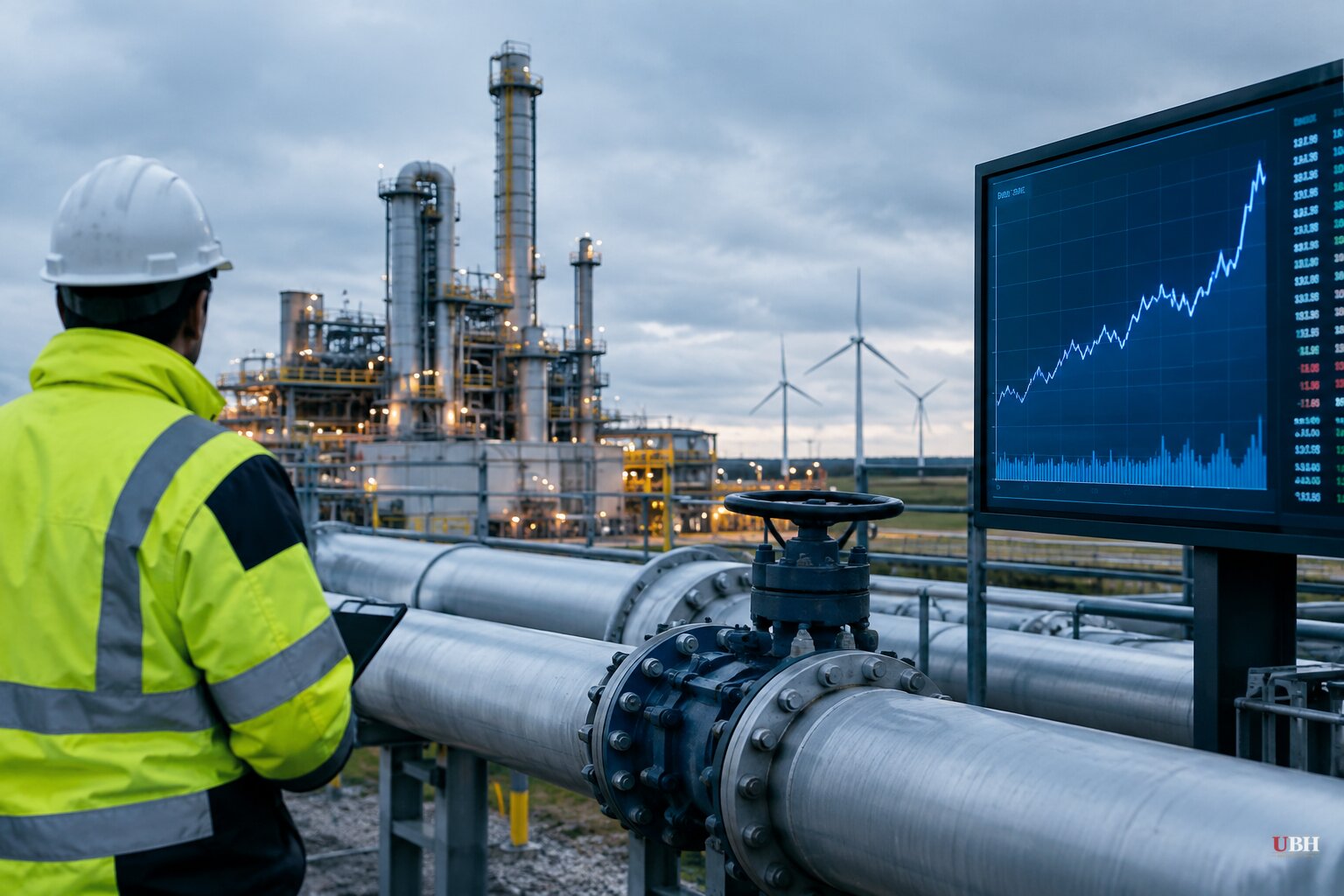
Europe is heading into winter with its gas tanks less full than they've been in over a decade, and the bill is already landing on factory floors from Shropshire to Hamburg.
According to The Guardian, UK wholesale gas prices hit 205p per therm this week, the highest level since Russia's 2022 invasion of Ukraine, up 101% from 102p in June and up from just 78p at the end of February. Storage across Europe sits at about 67% full, against a seasonal average closer to 80%.
The trigger, per The Guardian, is renewed fighting between the US and Iran that has disrupted shipping through the Strait of Hormuz, the chokepoint that carries roughly a fifth of the world's oil and gas. The UK imports about 70% of its gas, which means it has no cushion when that corridor gets squeezed.
Real Factories, Real Bills
At Bridgnorth Aluminium in Shropshire, which employs 370 people rolling aluminum for packaging, cars and batteries, the combined gas and electricity bill now runs about £1.1 million a month, 18% of total costs, according to Adrian Musgrave, the company's head of sales, speaking to The Guardian.
Musgrave says the firm's biggest contracts include a safety-net clause that kicks in once gas prices cross a set threshold, forcing customers to eat the difference. That threshold was crossed last month. Musgrave isn't worried about layoffs right now, but he is worried about renewal season, when angry customers start renegotiating. The company is already considering a longer Christmas shutdown and moving planned maintenance from April to January to run less during the highest-price stretch of winter.
The Item Club, an economic forecasting group, projected earlier this year that Britain will lose 163,000 jobs in 2026 because of the energy shock, concentrated in manufacturing-heavy regions like south Wales and the Humber, according to The Guardian. That's a forecast, not a confirmed outcome, and tracking whether it holds up as winter progresses will be important.
A Different Story in Germany, Sort Of
While British aluminum rollers sweat their gas bills, German engineering firm GEA Group is telling a different story. GEA makes machinery for food, drink and pharmaceutical processing, and according to Fortune, it invested €8 million ($9.2 million) earlier this year for a roughly 5.5% stake in Solar Foods, a Finnish company that converts carbon dioxide and hydrogen into a protein powder called Solein.
GEA CEO Stefan Klebert told Fortune the company is redesigning its machinery lines to cut energy use and has committed to net zero across its value chain by 2040, backed by about €175 million ($201.9 million) in factory decarbonization spending. GEA's revenue grew to €2.7 billion in the first half of 2026, up 5.7% year over year, with EBITDA before restructuring costs up 10% to €456.5 million and a 16.8% margin, per Fortune.
That's a real business turning a real profit while spending on climate tech. But it's not proof that sustainability spending is a free lunch for every industrial company, and Fortune's framing leans hard into that conclusion without fully grappling with why GEA can afford it: it's a machinery and equipment maker, not an energy-intensive metal smelter competing on razor-thin margins against Asian producers. Bridgnorth Aluminium doesn't have the luxury of chasing net zero by 2040 when its gas bill just crossed a contractual trigger point.
The Broader Corporate Retreat
Fortune's own reporting undercuts the idea that GEA represents where European industry is heading. A survey of more than 300 European chief sustainability officers by management consultancy Horváth found that around two in five companies are reassessing their climate ambitions because of short-term performance pressure and geopolitical uncertainty. Separately, a survey by EY found 57% of European businesses said sustainability initiatives would be among the first cuts if they had to tighten spending.
GEA is the exception Fortune chose to profile, not the rule. Most European industrial firms facing this winter's energy shock are doing the opposite of what GEA is doing: cutting green spending to survive higher gas and electricity bills, not raising it.
Neither source fully addresses the policy question underneath all of this: why Europe, and Britain in particular, remains so exposed to a single shipping chokepoint eight thousand miles away for a fifth of the world's energy supply. Storage levels sitting at 67% instead of 80% didn't happen overnight, and neither did the decision to let gas imports climb to 70% of UK supply.
What happens next depends on things nobody in these stories controls: whether the US-Iran conflict de-escalates before the coldest months hit, whether European governments intervene with subsidies or storage mandates, and whether the Item Club's 163,000-job estimate turns out to be close or wildly off. Bridgnorth Aluminium's contract renewals later this year will be one early signal worth watching.
Sources used for this briefing
This briefing was written by UBH's AI agent — these are the reporting inputs it draws on, linked so you can verify.


