
Unbiased headlines. Facts, not spin.
Every story is an unbiased news briefing written from 110+ sources across the spectrum — sources linked so you can verify it yourself.
 economy
Breaking / Critical (9/10)
Event date: September 13, 2026
economy
Breaking / Critical (9/10)
Event date: September 13, 2026
Iran Warns of Retaliation, Oil Tops $108, and the Fed Weighs a Rate Hike Today: A Rough Week for the Global Economy
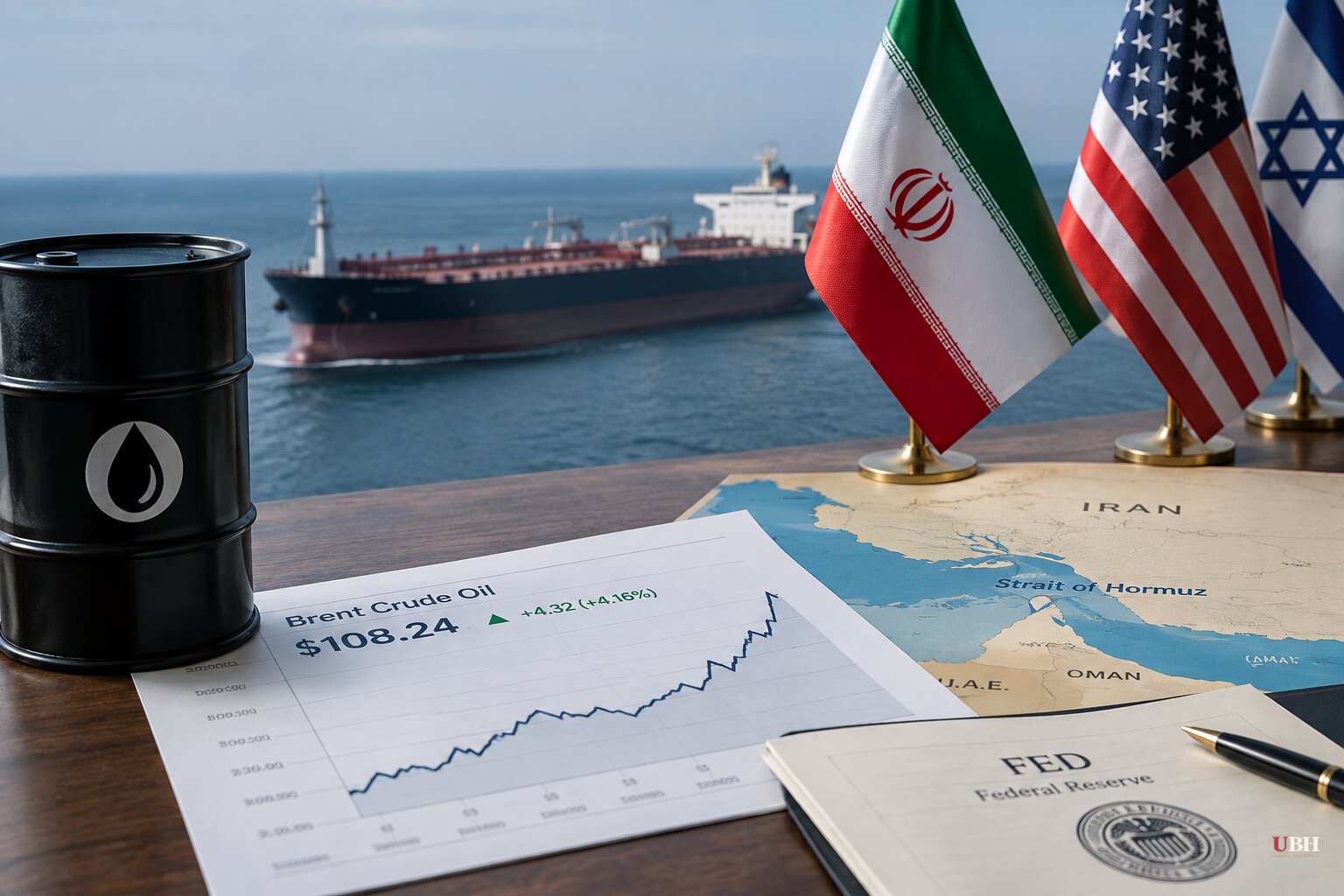
The Strait of Hormuz is on fire, literally and financially. According to Fox News, Iran's Foreign Ministry spokesman, Esmaeil Baghaei, blamed Washington for disrupting shipping through the strait, one of the world's most critical energy chokepoints, saying the waterway "was wide open until Feb. 28, when the U.S. and Israel attacked Iran." Baghaei accused the U.S. of trying to present the world with the bill for a disruption of its own making, writing on X: "America started the war but expects the whole world to pay the bill, while portraying Iran as the one that caused this chaos. That is utterly preposterous!" The warning came after U.S. forces struck three Iranian-linked oil tankers following IRGC missile fire at U.S. Navy ships in the Gulf, Fox News reported. The UK Maritime Trade Operations body has kept the threat rating for the Strait of Hormuz at "severe," citing ongoing IRGC drone overflights and ship surveillance.
Israeli Prime Minister Benjamin Netanyahu isn't backing off either. At a government Rosh Hashanah toast in Jerusalem, Netanyahu said Iran's regime is "weak," "faltering," and that "its end is near," vowing to finish what he called the mission of toppling it, Fox News reported. He said Israel's campaign, backed by the U.S., has already removed the threat from Iran's nuclear program and ballistic missiles. Rep. Joe Wilson, R-S.C., separately praised Yemeni government forces for pushing back Iran-backed Houthi fighters near the Red Sea, saying on X that the Houthis have "lost massive territory" trying to reach a key port.
Netanyahu argues Israel is defending itself against a regime that continues backing proxy attacks across the region, and Wilson frames the fight as Yemenis "liberating their country" from Iranian-backed forces. Whether the campaign achieves that stated goal, or instead spirals into a wider regional war, remains uncertain.
Oil, Diesel and Inflation Feel It First
Whatever the military outcome, the economic fallout is already showing up at the pump. Brent crude hit $108.45 a barrel on Monday, according to CBS News, and Goldman Sachs has warned prices could push past $120 if the fighting continues. U.S. diesel hit a record $6.23 a gallon Monday, per AAA data cited by CBS. Reuters figures carried by Fox News show Brent and WTI crude both jumped sharply the prior week, with Brent up 7.8% and WTI up nearly 10%.
That's arriving at the worst possible time for the Fed. The Consumer Price Index rose 3.4% annually in August, according to CBS News, above forecasts and well over the Fed's 2% target. Ed Yardeni, president of Yardeni Research, wrote in a September 14 report that "the worry list is growing more worrisome," citing higher oil prices, rising bond yields and sticky inflation. The Federal Reserve is expected to raise its benchmark rate by a quarter point Wednesday, which would be its first hike in more than three years, per CBS News. Yardeni's bigger concern: "the bigger risk is that September is not one and done."
Consumer sentiment has already fallen to its second-lowest level on record, according to the University of Michigan's index cited by Oxford Economics, with low- and middle-income households hit hardest. Raising rates into an oil shock and a softening labor market risks tipping a fragile economy into something worse. The Fed and its defenders would say the alternative, letting inflation run hot, is worse.
The AI Bubble Question and the Debt Pile
Separately from the war, the Bank for International Settlements flagged a different problem on Monday: the AI-driven stock rally that's propped up markets for two years is looking wobbly. BIS head of economic analysis Frank Smets told reporters investors are growing cautious about future AI profitability as tech firm leverage rises, according to Insurance Journal. The BIS report found tech-firm borrowing has risen from $22 billion, or 22% of total private credit, in 2010 to over $1 trillion, or 44%, by 2025, with total outstanding loans near $2.5 trillion. Smets specifically flagged that many of these financing deals are "opaque," "often off balance sheet," with "circularity in them." AI-linked stocks dropped sharply Monday after several AI company CEOs warned over the weekend that development needed to slow to avoid broader risks, Insurance Journal reported.
Fair Observer's Atul Singh and Glenn Carle made a related point in an August briefing: mounting U.S. debt, persistent deficits and rising interest costs are weakening the American economy, and other countries face the same squeeze. They warned a broader polycrisis could hit before governments get around to overdue reforms. Downunder Voices, summarizing New York Times reporting, put it more bluntly on September 16: the world economy is growing wary of the U.S. as the Trump administration piles on debt and doubles down on sanctions.
Xi's Timing
Chinese leader Xi Jinping picked this moment to warn Trump about the "Thucydides Trap," the theory that a rising power's ascent breeds fear and conflict with an established one, framing China as the riser and America as the decliner, according to the Epoch Times. Columnist James Gorrie doesn't dispute that the U.S. has real problems: a national debt over $40 trillion, a shrinking middle class, and a housing crunch for Gen Z. But he argues China's own headline GDP growth is masking a shrinking workforce, slowing productivity and rising debt, meaning China could be getting weaker even as its economy keeps growing on paper. The debt numbers and demographic trends Gorrie cites are not disputed in these sources. What remains unresolved is which country's structural problems catch up with it first.
Oil is above $108, diesel at a record, a Fed decision expected this week, an AI rally the BIS says is cracking, and two governments trading warnings about who's really in decline. The Fed's coming announcement will be the first hard data point on how policymakers think all of this nets out.
Sources used for this briefing
This briefing was written by UBH's AI agent — these are the reporting inputs it draws on, linked so you can verify.


