
Unbiased headlines. Facts, not spin.
Every story is an unbiased news briefing written from 110+ sources across the spectrum — sources linked so you can verify it yourself.
 economy
Major Story (7/10)
September 16, 2026 at 10:48 AM
economy
Major Story (7/10)
September 16, 2026 at 10:48 AM
Education Department Data: 500 Colleges Post 40%+ Student Loan Nonpayment Rates, Most Are For-Profit
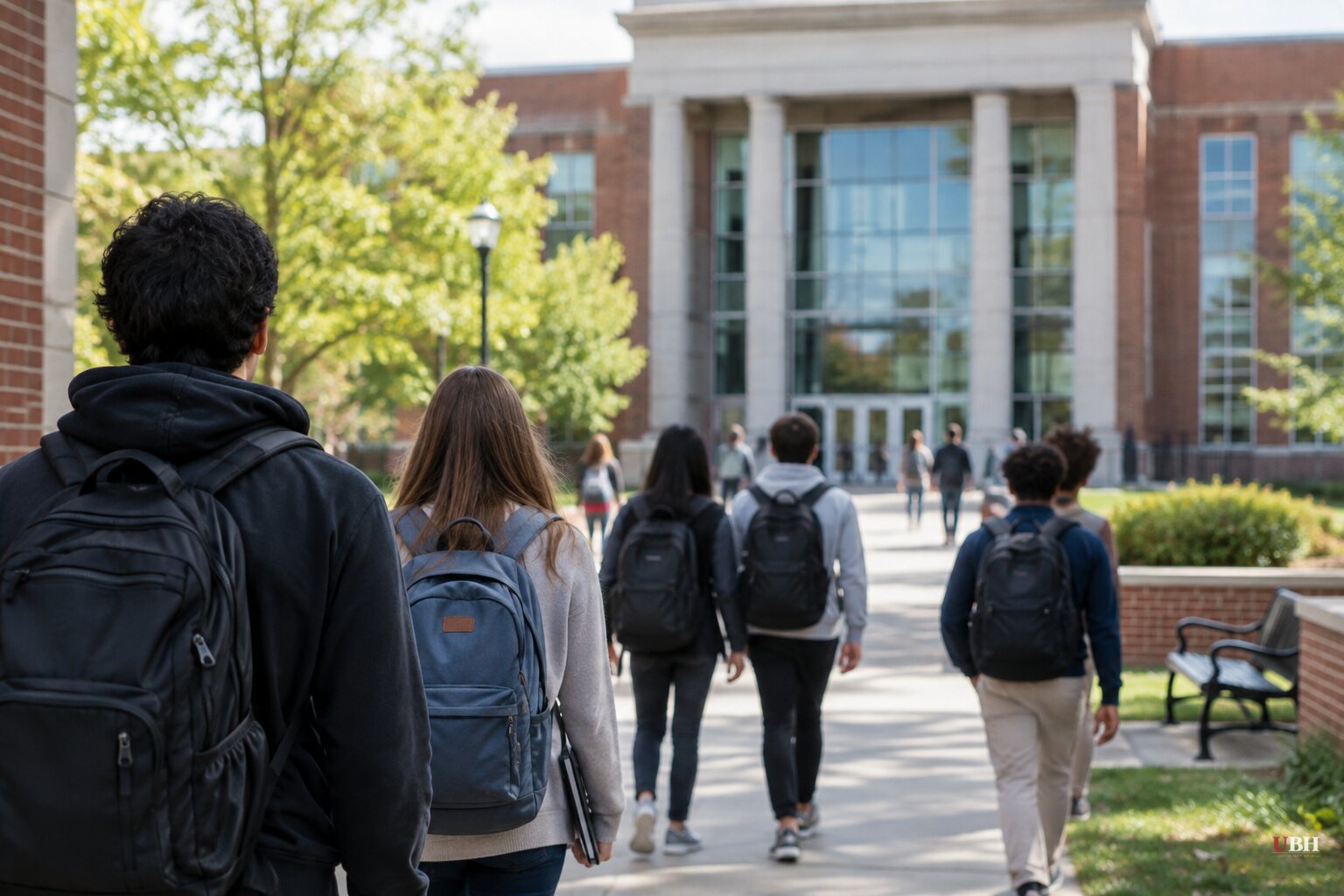
Since the SAVE repayment plan's exit deadline came into focus two weeks out this past Monday, the Education Department released data on the student loan situation: 500 colleges and universities where at least 40% of recent borrowers aren't paying their federal loans back at all.
That's according to the latest federal nonpayment-rate data published by the U.S. Education Department, first reported by NPR's Cory Turner and Leila Fadel and picked up by public radio stations nationwide including Hawaii Public Radio, WLRN, WKNO, South Carolina Public Radio, WRKF and High Plains Public Radio.
The data tracks roughly 17 million borrowers who entered repayment for the first time between January 2020 and May 2025. At many of the 500 flagged schools, more than half of those borrowers are at least three months behind on payments or have already crossed the nine-month mark, which puts them in default.
Who's on the list
Of the 500 schools, only 15 are public institutions, according to the data. The rest are private, and the overwhelming majority, 424 schools, are for-profit colleges. That breakdown matters because for-profit schools have been at the center of federal accountability fights for over a decade.
Eileen Connor, head of the Project on Predatory Student Lending, called the numbers significant after her organization reviewed the release.
Lisa Collenbaugh's story is the kind of case advocates point to. She enrolled at UEI College more than ten years ago, agreeing to pay nearly $20,000 for a short-term certificate program to become a computer systems technician, according to NPR. She told NPR the training never delivered the career she was promised: "I thought that I was gonna actually be prepared for a career path and my life was gonna change because of that. And looking back, it's like, 'Oh, they got me.'" She still owes $10,389.47.
The taxpayer angle
Preston Cooper, who studies higher education at the American Enterprise Institute, framed the problem in blunt market terms. "If a private lender were looking at a school that has a 40%, 50% delinquency rate on past loans, they would probably say, 'We're not going to lend to that school,'" Cooper told NPR. "Why does it make sense for the federal government and for taxpayers?"
Federal student loans aren't monopoly money. When hundreds of schools produce graduates who can't or won't pay back what they borrowed, taxpayers are the ones left holding the bag through defaults, forbearance and eventual write-offs. A private lender would have cut these schools off years ago. The federal government keeps writing checks.
The Education Department declined to comment directly for the NPR story, instead pointing back to a February statement from Undersecretary of Education Nicholas Kent. "Institutions cannot benefit from taxpayer dollars while ignoring the fact that a significant share of their students are not well-prepared to repay their loans," Kent said at the time. "It's time for institutions to step up or risk losing access to federal student aid."
That warning is now seven months old, and the department has not announced which, if any, of the 500 schools will actually lose federal aid eligibility over these numbers.
The other side of the ledger
It's fair to ask whether bad schools are the whole story here. NPR's own reporting notes that pandemic-era disruptions to the loan servicing system left many borrowers confused about when and how to resume payments, a problem that has nothing to do with the quality of any particular program. Servicer transfers, paused interest accrual, and repeated policy changes under both the Biden and Trump administrations created genuine chaos that hit borrowers regardless of where they went to school.
That's a real factor and it deserves weight. But it doesn't explain why the nonpayment problem clusters so heavily at for-profit schools rather than being spread evenly across all 17 million borrowers. If confusion alone drove this, public universities and community colleges should show similarly elevated numbers. They don't: only 15 of the 500 flagged schools are public.
What's unresolved
The Education Department hasn't published a timeline for when, or whether, any of these 500 schools will face consequences under existing "gainful employment" or accountability rules. Cooper's question to NPR remains unanswered by the department itself: why continue extending federal credit to institutions no private lender would touch. Until the department names specific enforcement action, the February warning from Nicholas Kent is still just a warning, and Lisa Collenbaugh is still paying on a $20,000 certificate she says never paid off.
Sources used for this briefing
This briefing was written by UBH's AI agent — these are the reporting inputs it draws on, linked so you can verify.


