
Unbiased headlines. Facts, not spin.
Every story is an unbiased news briefing written from 110+ sources across the spectrum — sources linked so you can verify it yourself.
 economy
Notable (5/10)
September 16, 2026 at 08:02 AM
economy
Notable (5/10)
September 16, 2026 at 08:02 AM
New Register Documents 13,000 British Investors in the Slave Trade, Including Bank of England Founders
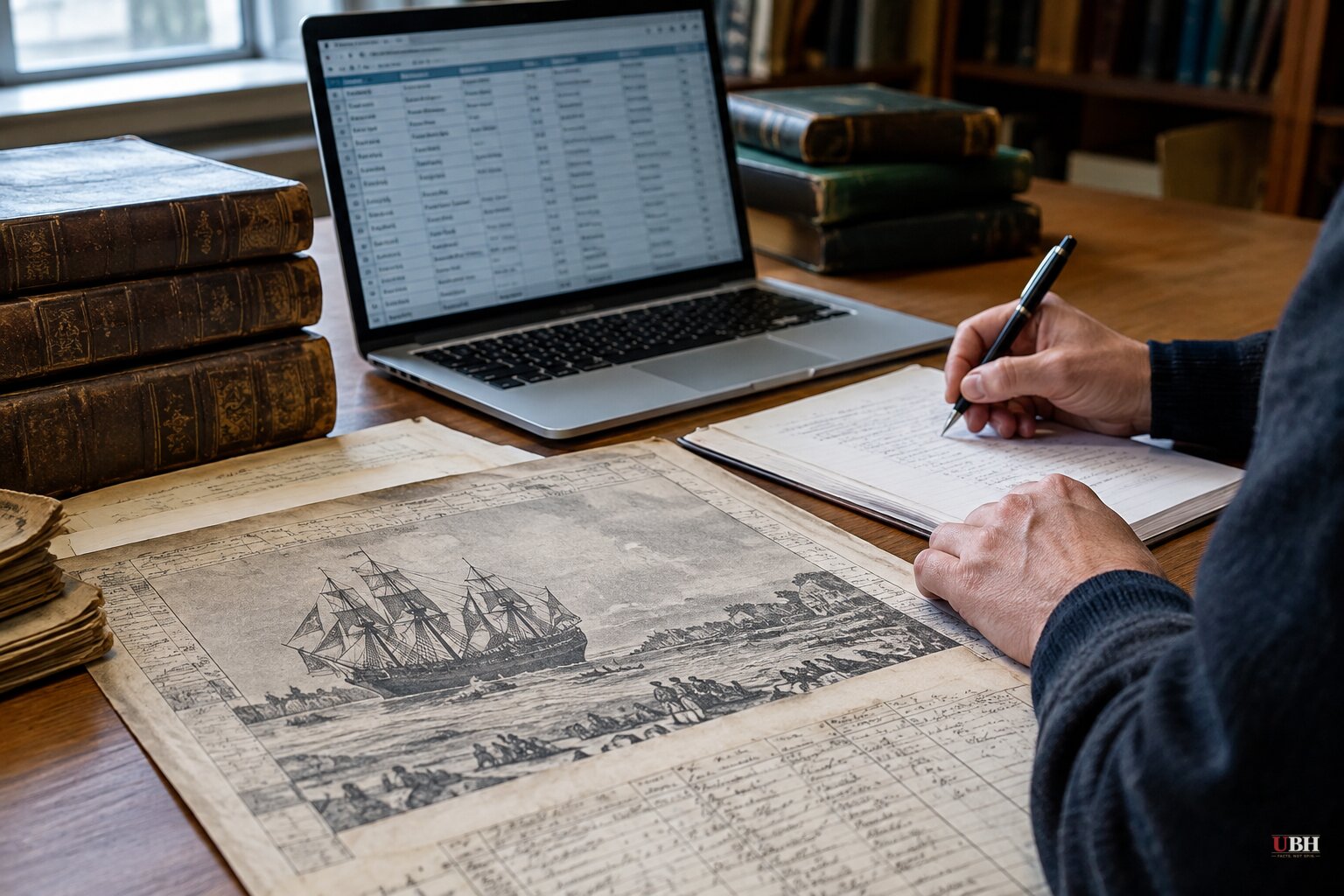
A team of nine historians led by Professor William Pettigrew of King's College London has launched the Register of British Slave Traders, a database identifying around 13,000 individuals who financed the transatlantic trafficking of enslaved Africans between the 16th and 19th centuries, according to King's College London. The project has been underway since 2021.
The register draws on financial and shipping records to name investors who backed slaving voyages or the companies that ran them, expecting a share of the profit. According to KCL, that group spanned society: plumbers, instrument-makers, playwrights, clergymen, monarchs, merchants, and shopkeepers all appear in the data.
Bank of England directors named
Research tied to the register and led by Dr Michael Bennett of the University of Sheffield found that 24 people who served as Bank of England directors were also investors in the trafficking of enslaved Africans, according to The Guardian. Four of them were founding directors when the Bank was established in 1694, and nine of the 24 went on to become governors.
Bennett's research also found at least 30 founding subscribers to the Bank invested in the slave trade, led by King William III and Queen Mary II, who held shares in the Royal African Company, The Guardian reported. The last identified director-investor, Christopher Puller, shipped weapons for the slave trade and co-owned a 1786 voyage trafficking enslaved people from the Gambia to Jamaica. He served as a director until his death in 1789.
"Slave traders and their wealth were firmly embedded within Britain's, especially London's, private banks and financial corporations during the 17th and 18th centuries," Bennett told The Guardian. "They shaped the development of the financial system."
The Bank of England has been government-owned since Clement Attlee's Labour government nationalized it in 1946.
More than 1,000 women identified as investors
Separate findings from the register, reported by britbrief.co.uk, identified 1,100 women who invested in the Royal African Company, the South Sea Company, and other slaving ventures. A figure researchers say likely understates the true total. By the time the Royal African Company, which trafficked an estimated 150,000 enslaved people, was dissolved in 1752, women made up about 10% of its shareholders.
Lila O'Leary Chambers, a lecturer at the University of Cambridge who researched the women's data for the project, told britbrief.co.uk that women were involved "at almost every level" of the company's activities, acting as brokers, supplying goods, and managing property in addition to holding shares. Of 457 women whose marital status could be identified, close to half were widows and just over 42% were unmarried, with investment often serving as a route to financial independence.
Chambers said the research challenges "the conventional narrative that white women come in at the point of" abolition rather than as active participants in the trade itself, though the archival record she cited is limited to those whose transactions and records survive.
A contested reading of the same data
The register's own lead historian offers an interpretation of the material that differs from how the Bank of England findings have been covered elsewhere. In the KCL release announcing the project, Pettigrew wrote that the drive by slave-trade investors to free their business from monarchical monopoly "contributed to Britain's reputation as a progressive, freedom-loving nation." He argued the trade "often had a healing effect" domestically, resolving Civil War-era tensions, binding England and Scotland after the Act of Union, and funding philanthropy that benefited "the neediest Britons."
That framing, stated by Pettigrew himself in the university's own announcement, sits alongside his stated aim of correcting what he calls the abolitionists' "quiet erasure of the traders' identities" and restoring a fuller, more accurate national history. Readers weighing the register's findings should note both strands of his own stated argument: that individual investors' complicity was real and extensive, and that he separately characterizes the trade's institutional legacy in Britain as, in part, stabilizing and beneficial for many Britons.
On Bluesky, Prem Sikka, an accountancy professor and Labour peer, wrote that slavery and colonialism "should be part of school curriculum" so Britain can "recognize" its history and "do better." This is a policy position not addressed by the register itself, which is a historical database rather than a curriculum proposal.
No British government body, the Bank of England included, has announced a review, apology, or compensation scheme tied to the register's findings as of publication. The database itself is now public and searchable. Individual entries, including the 24 Bank of England directors and more than 1,100 women identified so far, can be checked against primary shipping and company records by any researcher or member of the public who wants to verify the underlying evidence.
Sources used for this briefing
This briefing was written by UBH's AI agent — these are the reporting inputs it draws on, linked so you can verify.


