
Unbiased headlines. Facts, not spin.
Every story is an unbiased news briefing written from 110+ sources across the spectrum — sources linked so you can verify it yourself.
 economy
Major Story (8/10)
Event date: September 14, 2026
economy
Major Story (8/10)
Event date: September 14, 2026
China's August Loan Growth Missed Forecasts by Nearly 7-to-1, and Beijing's Central Bank Chief Calls It the New Normal
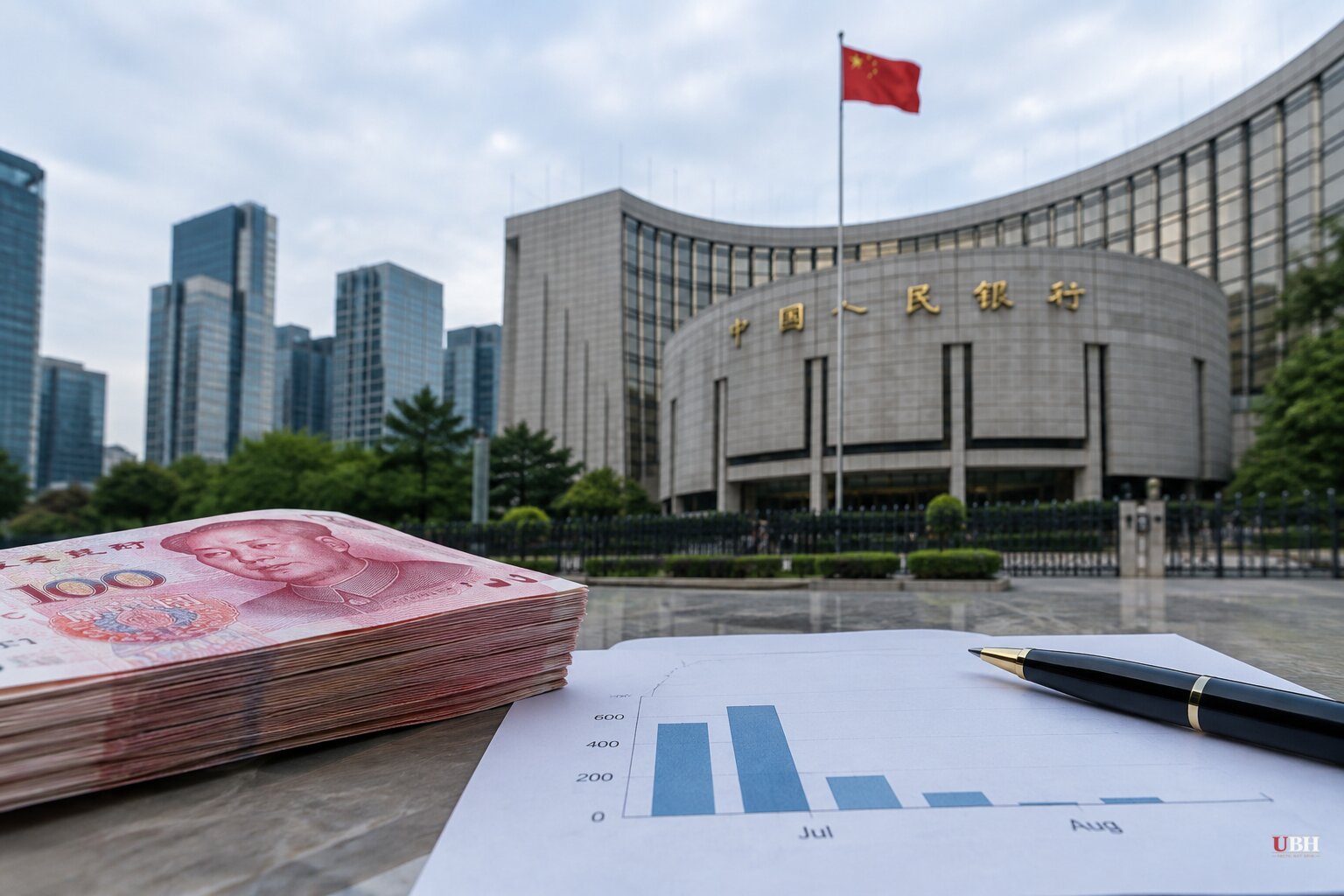
Since new bank loans in China collapsed by a record 340 billion yuan in July, the People's Bank of China has been trying to explain away the wreckage rather than reverse it. August's rebound to 60 billion yuan in new lending, reported by Reuters based on PBOC data released Monday, sounds like recovery until you check the math: analysts polled by Reuters expected 400 billion yuan, and last August delivered 590 billion yuan. Beijing missed its own comeback by nearly seven-to-one.
The damage runs deeper than one bad month. New loans totaled 10.44 trillion yuan from January through August, down from 13.46 trillion yuan over the same stretch last year, according to Reuters. Outstanding yuan loans grew just 4.9% year-over-year in August, the weakest pace on record, slipping from 5.1% in July.
Household borrowing has now contracted for six consecutive months, shrinking by 202.9 billion yuan in August after a 460.3 billion yuan drop in July, Reuters calculated. Corporate loans did rebound, rising 260 billion yuan after a 130 billion yuan contraction the month before, but that's businesses moving, not households.
Capital Economics: it's not just mortgages
Capital Economics, quoted by Reuters, pinned part of the blame on the ongoing property slump but said the bigger issue is that Chinese households simply don't want to borrow to spend. "The prolonged downturn in mortgage demand since the start of the property crisis was partly to blame, but the main drag came from persistent weakness in households' appetite for debt-financed consumption," the firm wrote. Capital Economics also said the odds of a near-term rate cut from the PBOC remain slim, meaning no quick monetary fix is coming.
Beijing's response: rename the problem
Rather than treat the shortfall as an emergency, PBOC governor Pan Gongsheng used an article published Wednesday in Qiushi, the Communist Party's flagship theoretical journal, to declare slower lending a permanent condition of the Chinese economy. "Slower but higher-quality loan growth is likely to become one of the new normal features of macroeconomic operations," Pan wrote, according to Reuters. "Maintaining previous rates of overall credit growth will be difficult and unnecessary."
Pan's argument, also cited by the South China Morning Post, is that China's more than 280 trillion yuan ($41.73 trillion) in outstanding loans is heavily tied up in property and local government financing vehicles, sectors that are now shrinking by design. He said fast-growing industries like high-tech manufacturing and green technology, which he credited with more than 40% of economic growth in the first half of 2026, rely on technology, data, and intellectual property rather than land and factories, making them naturally less dependent on bank credit.
An economy pivoting from real estate speculation toward manufacturing shouldn't need the same loan volume it did during the property boom. Pan also noted that bond and equity financing made up 47% of total social financing growth in 2025, edging out bank loans at 45% for the first time, which is a genuine structural shift and not pure spin.
But the framing conveniently sidesteps the fact that household demand for debt, the piece analysts actually flagged as the core weakness, has nothing to do with financial-system sophistication. Six straight months of shrinking household loans is a demand problem, not a design feature. Calling it "unnecessary" to hit old growth rates doesn't explain why ordinary Chinese families are refusing to borrow even with stimulus on the table.
And there is stimulus on the table. Beijing has expanded loan interest subsidies for small firms and consumers, injected $54 billion into eight state-owned financial institutions to shore up their lending capacity, and extended maximum mortgage terms from 30 to 40 years to ease repayment burdens, according to Reuters. None of it moved August's numbers anywhere close to forecast.
Pan also warned that pumping credit too fast could "inflate leverage, trap funds in speculative circulation and delay the exit of inefficient firms," a line that reads as a justification for tolerating weak growth rather than a plan to fix it. Whether Chinese households start borrowing again, or whether "new normal" simply becomes the permanent label for a demand slump policymakers can't solve, is the open question hanging over Beijing's next data release.
Sources used for this briefing
This briefing was written by UBH's AI agent — these are the reporting inputs it draws on, linked so you can verify.


