
Unbiased headlines. Facts, not spin.
Every story is an unbiased news briefing written from 110+ sources across the spectrum — sources linked so you can verify it yourself.
 economy
Breaking / Critical (9/10)
September 15, 2026 at 07:34 PM
economy
Breaking / Critical (9/10)
September 15, 2026 at 07:34 PM
CBO Report: Iran War Has Cost $38 Billion, CBO Says It's Behind Over a Third of This Year's Inflation
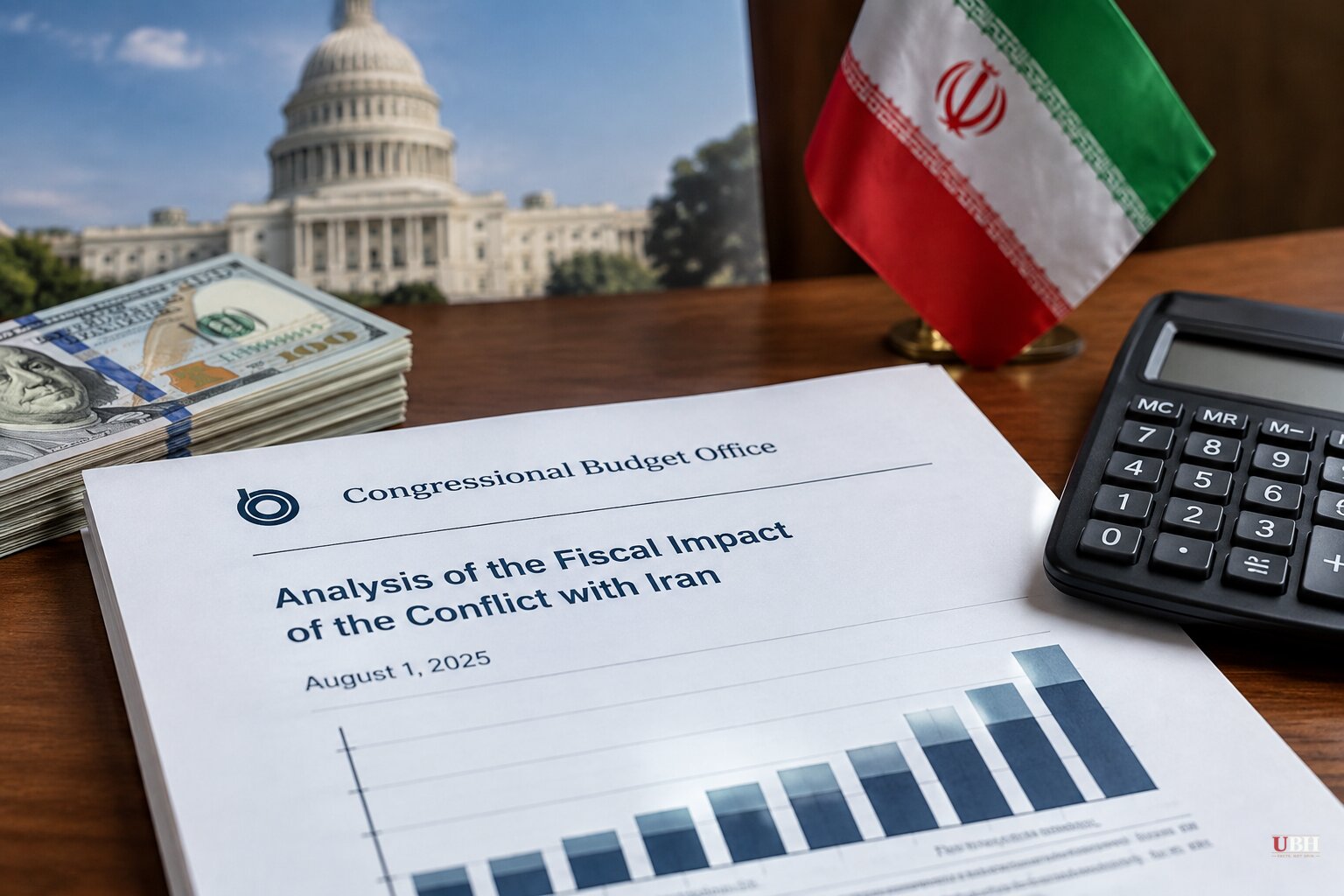
Since the war with Iran began Feb. 28, 2026, the Pentagon has burned through roughly $38 billion, according to a Congressional Budget Office analysis released Tuesday. The nonpartisan office says the tab keeps climbing by $2 billion to $3 billion a month, with no end to the fighting in sight seven months in.
The CBO's estimate was requested by Rep. Brendan Boyle (D-Pa.), the top Democrat on the House Budget Committee, along with Sens. Elizabeth Warren, Jeff Merkley and Chuck Schumer. It largely matches what Defense Secretary Pete Hegseth already told the Senate Armed Services Committee in July, when he put the cost at $37.5 billion.
Where the money went
Most of the spending, $21.7 billion, is munitions replacement: $13.1 billion for missile defense interceptors, $7.3 billion for land-attack cruise missiles, and $1.2 billion for everything else, according to the CBO's letter to Congress. A separate Pentagon inspector general report released Monday tallied $22.3 billion in munitions spending and $3.7 billion in destroyed or damaged aircraft and equipment, including four F-15 fighter jets, seven KC-135 tankers destroyed outright, another dozen KC-135s damaged, and up to 30 MQ-9 Reaper drones lost.
None of these figures include the cost of repairing U.S. bases and diplomatic facilities hit by Iranian strikes. The inspector general separately estimated $184 million to fix damaged facilities in Iraq, Kuwait, Saudi Arabia and the UAE, but the CBO couldn't produce a comparable number for military installations because, the office says, the Defense Department wouldn't share data on the value of destroyed equipment and property. The Pentagon also declined to respond to CBO's broader request for information, according to the Associated Press, a break from the normal cooperation federal agencies extend the budget office.
Pentagon comptroller Jay Hurst told reporters in April that officials don't have a final damage number because it depends on how, or whether, the U.S. rebuilds those facilities at all. CBO warns its overall estimates carry "considerable uncertainty" and that the separate cost categories "are not directly comparable or summable."
The White House requested $87.6 billion in supplemental war funding back in June, of which CBO figures roughly $42.3 billion is directly tied to the conflict, about 10% above the office's own DoD cost estimate. Congress hasn't approved that request.
The inflation math
CBO says the war is responsible for more than a third of this year's rise in inflation, and for over 40% of the increase during the second quarter of 2026 alone, according to NBC News. Looking ahead, the office projects the war will add roughly half a percentage point to inflation in the first quarter of 2027, driven mainly by reduced oil and gas shipments through the Strait of Hormuz and disruptions in the Red Sea.
The pain is visible at the pump. Gasoline is up 45% since the war started, averaging $4.32 a gallon nationally as of Tuesday, and $4.50 in Pennsylvania, according to NBC News and the Philadelphia Inquirer. Diesel, which moves nearly everything on American shelves, has jumped 66% to a record $6.26 a gallon. The 30-year mortgage rate has climbed from under 6% before the war to 7.22% as of Tuesday, according to Mortgage News Daily.
Consumer confidence is reflecting the squeeze. The University of Michigan's preliminary September sentiment index fell nearly 8% to 47.8, its weakest reading since a record low in May, according to the Epoch Times. Survey director Joanne Hsu noted year-ahead inflation expectations jumped to 4.6% from 4%. Wall Street is pricing in an 85% chance the Federal Reserve raises its key rate at its policy meeting scheduled for Wednesday.
The underlying picture isn't uniformly bleak. Core inflation, which strips out food and energy, actually cooled to 2.4% in the 12 months through August, its lowest level since March 2021, per the Epoch Times. That supports an argument TIME laid out: the war's direct financial toll, while nearly $40 billion, has come in below some of the doomsday projections floated when fighting began, giving the administration room to argue the military cost has been more contained than critics feared even as consumers still feel it at the pump.
The political fight
Democrats are running with the numbers. Sen. Warren called the war "a one-two punch that's burning a hole in Americans' pockets and burning a hole in our munitions supply." Rep. Boyle, in an interview with the Philadelphia Inquirer, said "we have now paid $40 billion, and climbing, on the most reckless decision to go to war of at least my lifetime," tying the issue directly to four contested Pennsylvania House races this November, including Republican Rep. Ryan Mackenzie's district against Democratic challenger Bob Brooks.
The White House did not respond to NBC News's request for comment on the CBO findings. No independent estimate in these reports disputes the CBO's inflation or cost figures; the disagreement so far is entirely about how to interpret them heading into the midterms.
The unresolved question is stockpile readiness. CBO estimates it will take the Pentagon five years or longer to replace munitions expended in the war, a shortfall the Pentagon inspector general flagged Monday as a "strategic inventory shortfall" that could limit the military's ability to respond to a separate major conflict while Iran fighting continues.
Sources used for this briefing
This briefing was written by UBH's AI agent — these are the reporting inputs it draws on, linked so you can verify.


