
Unbiased headlines. Facts, not spin.
Every story is an unbiased news briefing written from 110+ sources across the spectrum — sources linked so you can verify it yourself.
 economy
Major Story (8/10)
September 16, 2026 at 01:17 AM
economy
Major Story (8/10)
September 16, 2026 at 01:17 AM
House Set to Vote on Russia Sanctions Bill That Also Expands Trump's Tariff Power
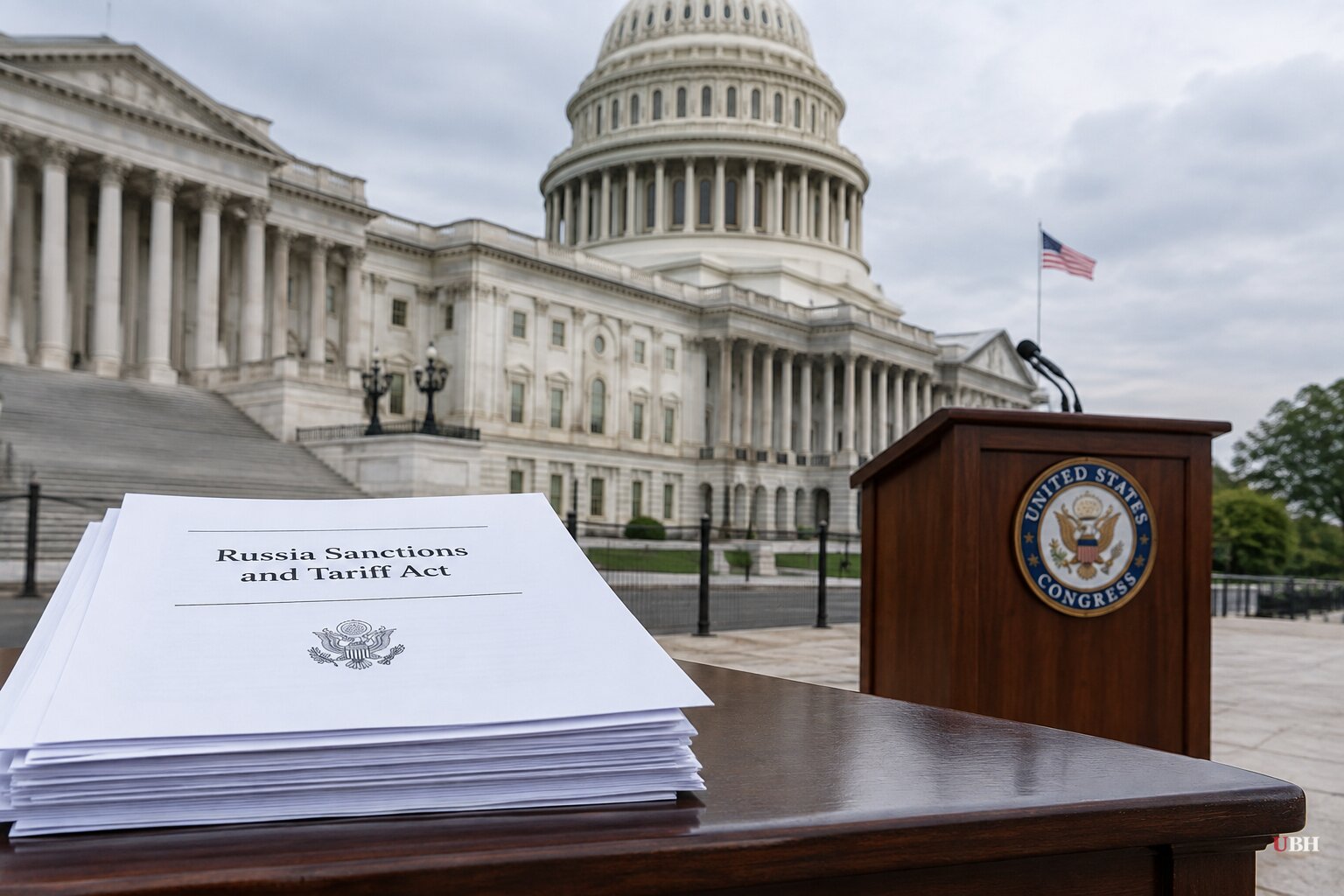
The House Rules Committee advanced the Lindsey O. Graham Sanctioning Russia and Iran Act on Monday, September 14, teeing up a rule vote on the floor Tuesday and a full House vote as soon as Wednesday, September 16, according to Republican Congressman Joe Wilson of South Carolina, who spoke with RFE/RL. The Senate already passed the bill 86-11 on August 7.
The bill targets Russia's energy and defense sectors and its "shadow fleet" of tankers used to dodge existing oil sanctions, according to The Guardian. It extends the Iran Sanctions Act for another five years, per RFE/RL. President Volodymyr Zelensky and more than 30 national-security and foreign-policy experts have pushed Congress to pass it, The Atlantic reported.
Most of the sanctions in the bill are already in place under executive order, meaning Trump can currently lift them at will, The Atlantic reported. The bill would move a large chunk of those sanctions into statute, requiring congressional approval to unwind them. But it also lets the president waive nearly any provision simply by declaring it in the national interest, according to The Atlantic and a statement from Representative Gregory Meeks, the ranking Democrat on the House Foreign Affairs Committee.
The tariff piece carries the most authority. The bill lets Trump impose tariffs of up to 100% on the five largest importers of Russian crude oil and the five largest importers of Russian natural gas, a list that currently includes China, India, France, Japan, Hungary, and Slovakia, per The Atlantic. Fox News reported the bill also allows tariffs of up to 500% directly on Russian imports and up to 100% on the top energy-buying countries, plus authority to tariff nations deemed to be facilitating Russia's sanctions evasion.
Peter Harrell, a trade lawyer who served in the Biden administration, told The Atlantic the bill "gives Trump much more flexibility on tariffs than traditional tariff laws" with "no guardrails or restrictions," and warned Trump's administration might interpret the country lists expansively, for example by treating the European Union as a single bloc.
Democrats split, and it's not close to unanimous opposition
Only nine Democrats and Republican Senator Rand Paul of Kentucky voted against the bill in the Senate, Fox News reported. Senator Ron Wyden of Oregon, one of the no votes, warned on the Senate floor that the bill "gives Donald Trump massive new tariff authority that he can use to threaten our trading partners and raise prices on the American people."
In the House, Meeks, along with Representatives Don Beyer and Richard Neal, issued a joint statement calling the bill's tariff expansion and lack of mandatory sanctions "unacceptable," saying it would do "more harm than good" and could "raise Americans' prices while undermining support for Ukraine in the long term," per The Guardian. Meeks went further in Rules Committee testimony, saying White House lawyers drafted the bill's text to maximize tariff authority while minimizing new sanctions obligations, and that President Biden imposed roughly 1,500 sanctions per year on Russia, compared to the current administration's limited sanctions on two oil companies and their subsidiaries last fall as its main action so far.
Supporters counter that the courts remain a check. Senator Richard Blumenthal of Connecticut, who co-sponsored the bill with Senator Lindsey Graham, told Fox News Digital that "if Donald Trump wants to break this law, he will be restrained by the courts, just as when he broke the law on tariffs previously."
The Supreme Court ruled in February that the International Emergency Economic Powers Act does not authorize tariffs at all, The Atlantic noted. Separately, three former U.S. trade officials, Alan Wm. Wolff, Carla Hills, and Warren Maruyama, filed a brief with the Court of International Trade last week arguing Trump's current use of Section 301 of the Trade Act of 1974 claims "essentially boundless" authority to impose "economy-wide tariffs untethered from the statute Congress enacted," as reported by Jacob Sullum for creators.
The Canada precedent Democrats keep pointing to
Critics of the bill aren't arguing in a vacuum. On July 20, Trump announced 50% tariffs on Canadian alcohol, dairy, and motor vehicle imports under Section 338 of the Tariff Act of 1930, the first time any president has cited that statute for tariffs, according to a Congressional Research Service report. After a brief suspension for negotiations, those tariffs took effect August 22. Canada retaliated with tariffs on C$27.6 billion (roughly $20 billion) of U.S. goods starting September 8. The Trump administration then announced import bans on certain Canadian goods, effective September 29, and revised tariff product lists effective September 15.
Fox News reported that fight isn't directly tied to the Russia sanctions bill's tariff authority, since that authority applies specifically to countries buying Russian oil and gas. But Democrats cite the Canada episode as evidence of how Trump uses tariff power once he has it, regardless of the original justification.
The House floor vote could come as soon as Wednesday. If it passes and Trump signs it, the immediate legal question will be whether the bill's tariff provisions survive a challenge similar to the ones already working through the Court of International Trade against Trump's IEEPA and Section 301 actions, and whether Trump reads the bill's five-country limits as narrowly as its authors intended.
Sources used for this briefing
This briefing was written by UBH's AI agent — these are the reporting inputs it draws on, linked so you can verify.


