
Unbiased headlines. Facts, not spin.
Every story is an unbiased news briefing written from 110+ sources across the spectrum — sources linked so you can verify it yourself.
 economy
Major Story (7/10)
September 15, 2026 at 09:18 PM
economy
Major Story (7/10)
September 15, 2026 at 09:18 PM
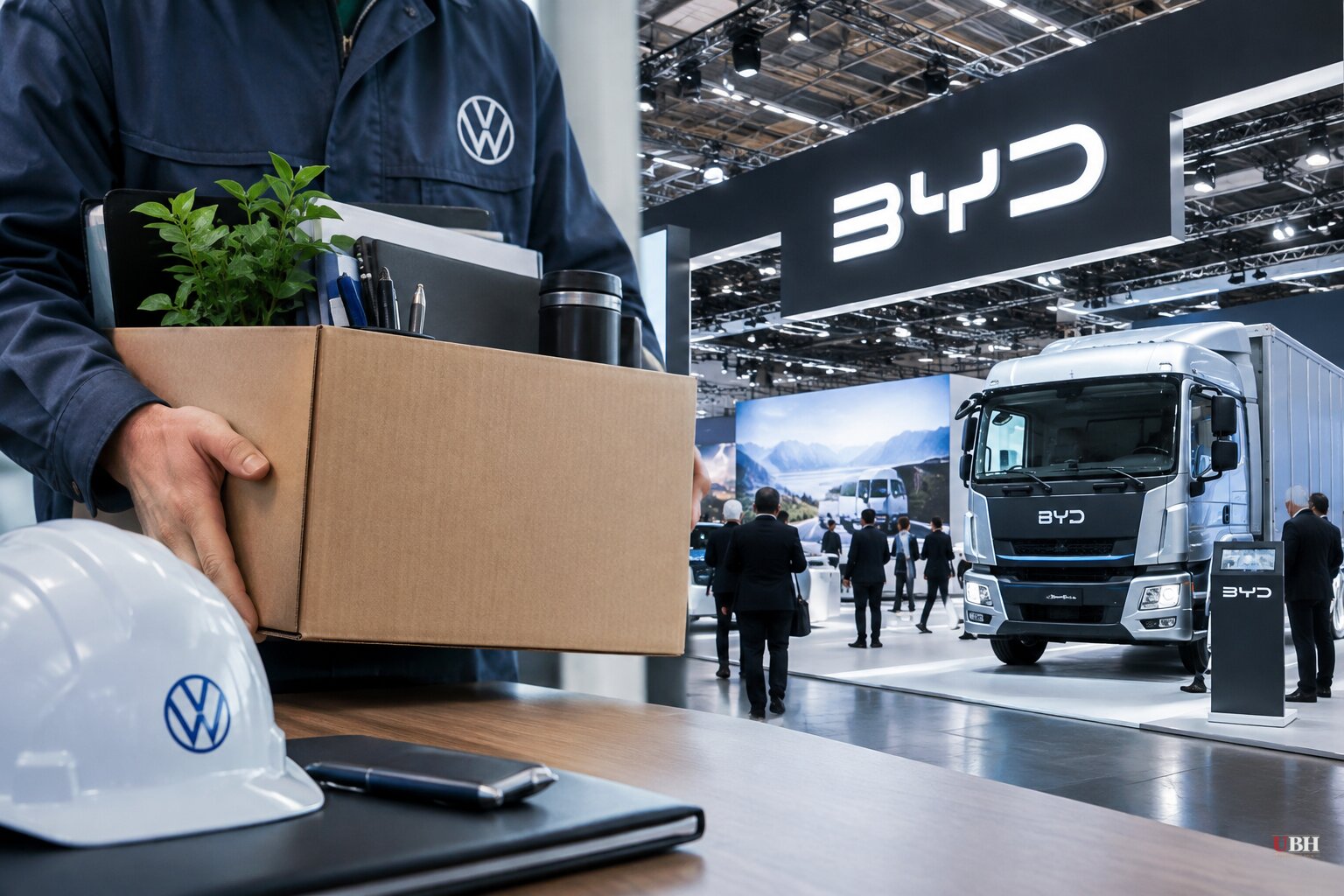
VW Cuts 50,000 More Jobs as BYD Vows to Build Trucks in Germany and Become a 'European Company'
The layoffs keep coming
Since Volkswagen's supervisory board approved another 50,000 job cuts on September 4, the company's total workforce reduction since late 2024 has climbed to roughly 100,000 positions, close to 15% of its global staff, according to an opinion piece by Dr. Imran Khalid published in Eurasia Review. Plants in Emden, Hannover, Neckarsulm and Zwickau will stay open for now, with current models phased out between 2031 and 2034 and no replacement work yet assigned.
Jaguar Land Rover has separately moved to cut roughly 10% of its workforce, according to ZeroHedge, citing Bloomberg reporting. The pain is spreading to parts suppliers as well, not just the automakers building finished cars.
BYD says it wants to become German
While VW was cutting jobs, BYD was telling a trade fair in the German city where much of that pain is being felt that it wants to build trucks there. Stella Li, BYD's executive vice president and head of international business, told the IAA Transportation trade fair in Hanover on September 14 that BYD will launch its first heavy-duty electric truck in Europe next year and eventually build everything it sells on the continent locally, according to Reuters reporting carried by Global Banking and Finance Review.
"For the long term, we will produce everything we sell in Europe here locally," Li said. "Once you move everything produced locally, it's okay. We become a European company."
Li acknowledged the tariff pressure directly. "We don't like this tariff because this did not benefit anybody, but we have to deal with it," she said, adding that local production will neutralize the tariffs "in the short term." BYD is also building a passenger-car factory in Szeged, Hungary, with mass production due to start next year.
The truck push matters because European manufacturers, including Traton's MAN brand, have specifically asked the EU to slap Chinese electric trucks with tariffs like the ones already on Chinese battery-electric cars, according to Reuters. BYD is trying to get ahead of that fight by building inside the tariff wall before it goes up.
BYD is also just winning, globally
This isn't a company on defense. BYD told analysts on a post-earnings call September 7 that it now expects nearly 2 million overseas vehicle sales for 2026, according to Korea Asia's reporting on the briefing, 33% above the 1.5 million target chairman Wang Chuanfu set in June, and it's targeting 2.5 million overseas units for 2027. Deutsche Bank and Citi analysts who attended the call said shipping capacity, not demand, has been the constraint. BYD's Q2 net income jumped 29.6% year-over-year, ending four straight quarters of profit declines, with overseas vehicles generating roughly RMB 20,000 ($2,980) in profit per car versus under RMB 3,000 ($447) domestically, according to Citi's research note.
Berlin's move, and its contradiction
Chancellor Friedrich Merz's government is assembling an economic-security package aimed at cabinet approval by October 14, 2026, centered on new tariffs for Chinese hybrid EVs, according to reporting summarized by KuCoin. The plan also includes mandatory joint ventures for certain Chinese investments, tighter investment screening and expanded export controls. More than half of German companies back stronger EU trade measures against China, and 83% of industrial firms cite Chinese competition as a growing concern, per the same reporting.
While Berlin talks tough, German firms increased their own investment in China by roughly €5.6 billion in the first half of 2026 compared to a year earlier, while investment flowing to the United States fell sharply, according to the KuCoin report. Political rhetoric and corporate checkbooks are moving in opposite directions.
The structural case against the tariff narrative
Not everyone agrees China is the core problem. Khalid's Eurasia Review piece argues EU demand isn't actually collapsing. Car registrations rose 5.7% in the first half of 2026, battery-electric models took 20.7% of the market versus 15.6% a year earlier, and German BEV registrations grew 48%. If buyers are showing up, something other than a shortage of demand is emptying German assembly halls. Brussels regulation, high domestic energy costs and roughly 60% plant utilization rates may be the real drag. That's a legitimate structural critique complicating the simpler story that Chinese competition alone is responsible for VW's layoffs. Both dynamics can be operating at once.
The EU's own posture has also been inconsistent. In December 2025 Brussels eased its 2035 combustion-engine ban from a 100% CO2 cut to 90%, allowing hybrids and e-fuel engines to keep running past that date. Weeks later it let Chinese manufacturers swap anti-subsidy duties of 7.8% to 35.3% for minimum import prices, per Khalid's analysis, a change that redirects tariff revenue that once went to EU treasuries back into the exporter's own margin. Chinese brands' EU registration share still roughly doubled anyway, from 3.2% to 6% between January and April, with BYD volumes up 152.9% and Leapmotor up 558.8%, according to the same figures.
The open question now is whether Merz's October 14 cabinet deadline actually produces hybrid tariffs with teeth, or another compromise that Beijing and BYD absorb the way they've absorbed every measure so far. China's grip on battery materials and rare earths gives it leverage to retaliate if Berlin pushes too hard, a risk none of the current proposals have publicly resolved.
Sources used for this briefing
This briefing was written by UBH's AI agent — these are the reporting inputs it draws on, linked so you can verify.


