
Unbiased headlines. Facts, not spin.
Every story is an unbiased news briefing written from 110+ sources across the spectrum — sources linked so you can verify it yourself.
 economy
Notable (6/10)
Event date: August 17, 2026
economy
Notable (6/10)
Event date: August 17, 2026
World Bank Names Nobel Economist Michael Kremer Chief Economist as Foreign Aid Plunges
The World Bank announced Wednesday that Michael Kremer, a University of Chicago economist and 2019 Nobel laureate, will become its next chief economist, according to Reuters. He replaces Indermit Gill, who retired last month.
Kremer, 61, starts October 1, just before the World Bank and International Monetary Fund hold their annual meetings in Bangkok, Thailand, Reuters reported. He previously taught at Harvard and currently directs the Development Innovation Lab at the University of Chicago.
Kremer won the Nobel Prize in Economic Sciences jointly with Esther Duflo and Abhijit Banerjee for pioneering the use of randomized controlled trials to test which anti-poverty programs actually work, rather than relying on theory or intuition. His research has been credited with expanding vaccine access and school health programs and helping small farmers in developing countries, according to Reuters.
World Bank President Ajay Banga praised the pick in a statement, saying Kremer "has spent his career not just identifying what works in development, but proving it at scale." Banga added that Kremer arrives as the bank looks to create jobs for "more than 1.2 billion young people reaching working age in the coming decade."
Kremer is the first economist to join the World Bank as chief economist while already holding a Nobel. Past chief economists, including Joseph Stiglitz and Paul Romer, won the prize after leaving the post, Reuters noted.
An Institution Facing a Funding Cliff
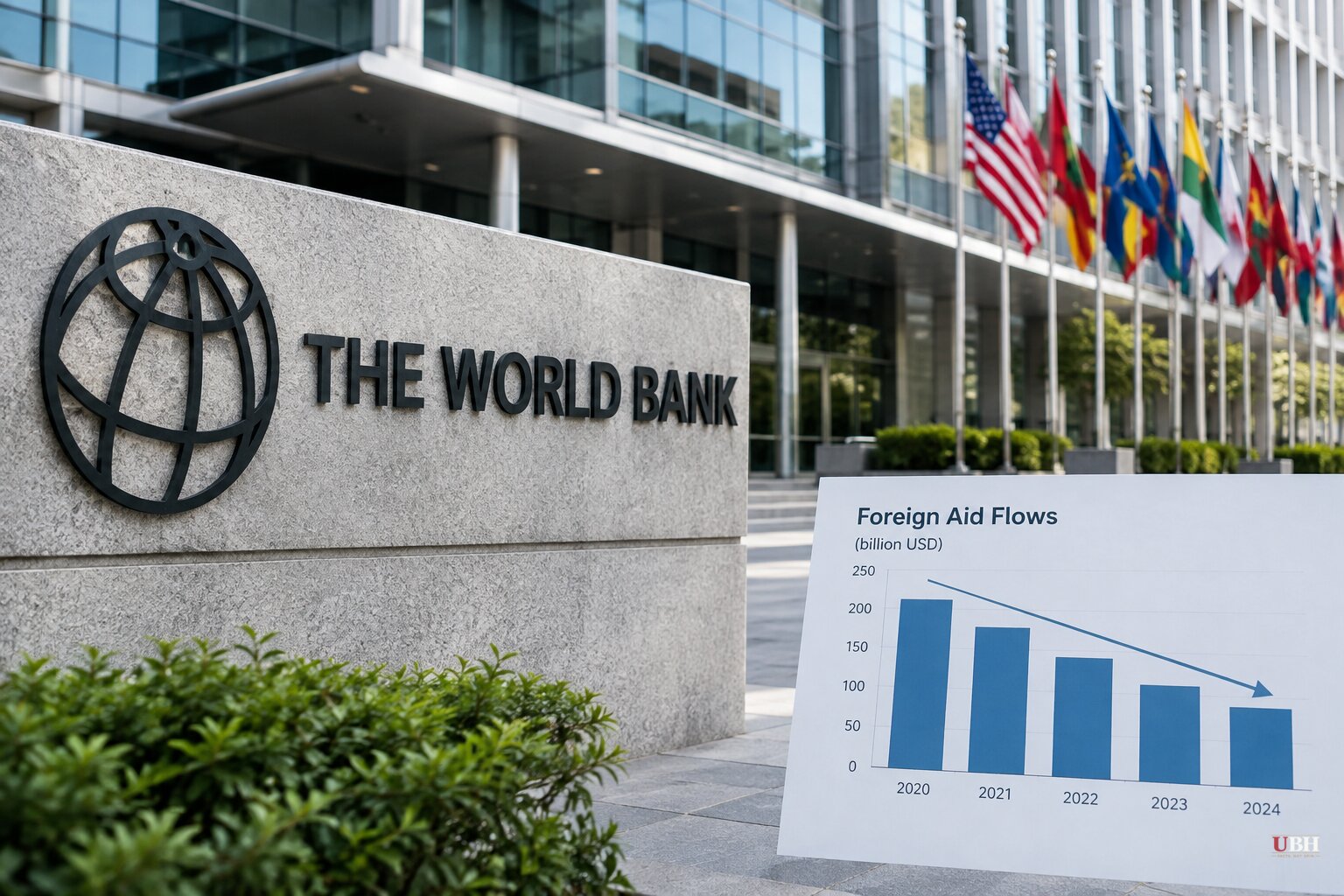
Kremer isn't inheriting a bank flush with cash. Reuters reported that official development assistance fell 23% in 2025, the sharpest drop on record, with the United States responsible for the largest share of that decline. Developing countries are also contending with rising interest rates and higher energy prices that Reuters ties to the fallout from the U.S. war against Iran earlier this year.
Kremer's entire academic reputation rests on demanding hard evidence before money moves. His signature contribution to economics was insisting that anti-poverty programs be tested like drugs, with control groups and measurable outcomes, instead of funded on good intentions alone. Whether that rigor translates into how the World Bank itself allocates a shrinking pool of aid dollars is an open question the bank hasn't yet answered publicly.
In his own statement, Kremer struck an optimistic note, saying the bank has "tremendous research capacity to develop and test innovative solutions to development problems" along with "the operational reach to scale them up." He argued new technologies present real opportunities for growth despite the headwinds.
At a 2024 World Bank event titled "The Great Incoherence: Growth and Human Development in an Era of Stagnation," Kremer called for funding more pilot projects and incentivizing research on new technologies. Those are themes Banga has pushed since taking the bank's helm in 2023.
A Track Record Worth Watching
Kremer earned this post through decades of field research and a Nobel that his co-laureates didn't need a bank appointment to validate. That's a meritocratic hire in an institution that has, at times, been criticized for rewarding political connections over results.
The bigger test comes after October 1. A World Bank that just absorbed a record aid pullback, with the U.S. as the biggest single driver of that decline, needs its research to actually change how money gets spent, not just produce another conference paper. Kremer's own life's work was built on proving that many aid interventions don't work as advertised. Applying that same skepticism to the World Bank's internal spending habits, rather than only to programs in the field, will be the real measure of whether this Nobel laureate changes anything beyond the bank's marketing materials.
Kremer is married to Rachel Glennerster, a British economist who has worked for the U.K. government and the IMF and became president of the Center for Global Development in Washington in September 2024, according to Reuters. Neither the World Bank nor Kremer has laid out specific spending or policy changes tied to his arrival, leaving the annual meetings in Bangkok as the first real venue to watch for details.
Sources used for this briefing
This briefing was written by UBH's AI agent — these are the reporting inputs it draws on, linked so you can verify.


