
Unbiased headlines. Facts, not spin.
Every story is an unbiased news briefing written from 110+ sources across the spectrum — sources linked so you can verify it yourself.
 economy
Major Story (7/10)
September 16, 2026 at 10:00 PM
economy
Major Story (7/10)
September 16, 2026 at 10:00 PM
FEMA Flood Insurance Pays Coastal Homeowners to Let Their Houses Collapse Into the Ocean
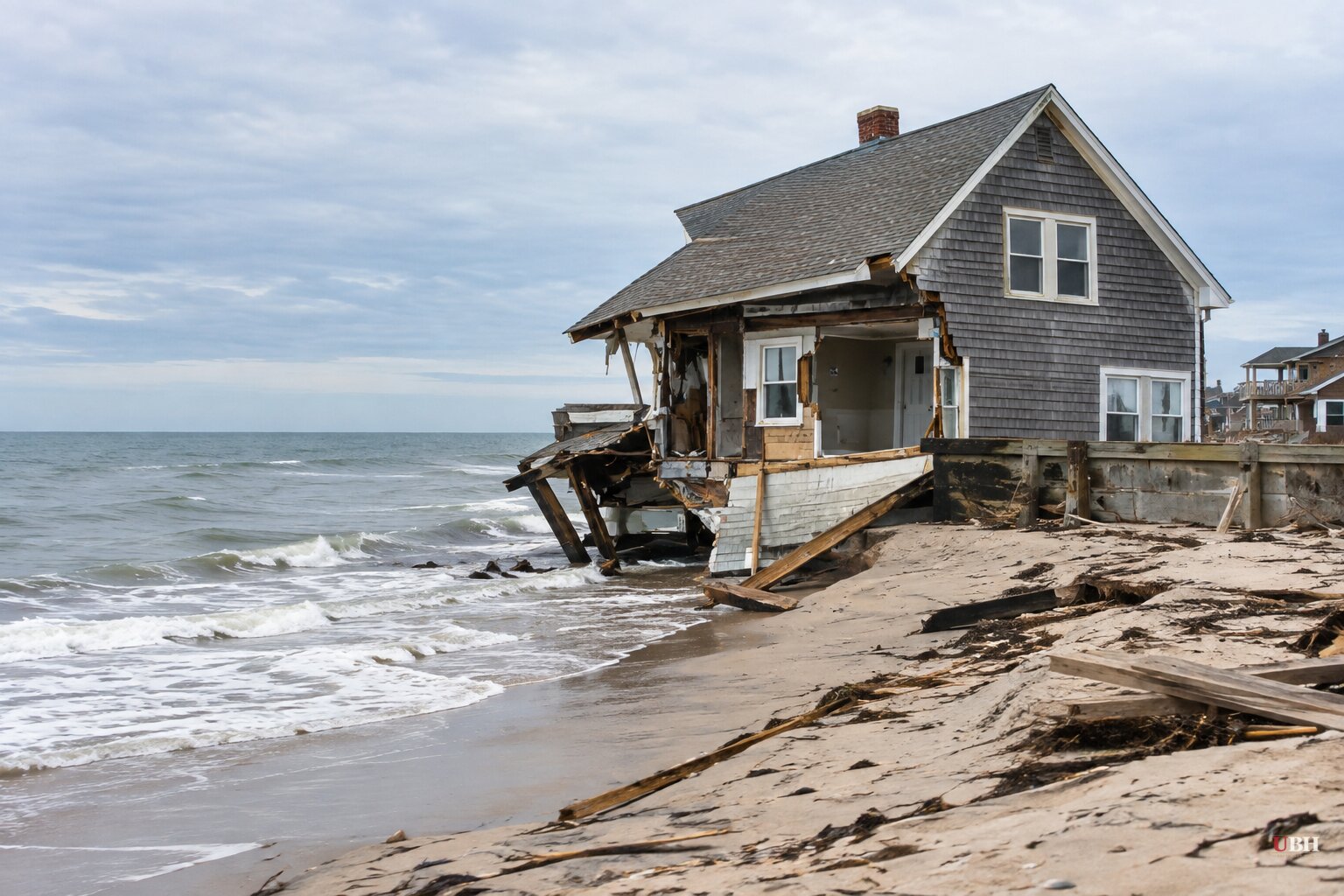
Waterfront houses are falling into the ocean, on camera, with nobody moving to stop it. According to NPR's Climate Desk reporting by Rebecca Hersher, Ryan Kellman and Bronson Arcuri, it's happening from California to Michigan to Maine, and one of the worst spots in the country is Dare County, North Carolina.
More than 30 homes there have collapsed since 2020, NPR reports, including one as recently as this summer. About 100 more houses in the county are threatened by erosion the outlet says is being worsened by sea level rise.
NPR found there is no real plan to remove most of those threatened homes, or even to clear personal belongings out of them, before they fall into the water. The reason isn't apathy. It's federal policy.
The Incentive Is Backwards
NPR's investigation into FEMA's flood insurance system in coastal areas found that many homeowners have no financial choice but to let their houses collapse rather than pay to remove them first. Demolishing a structure and hauling it away costs money out of pocket. Letting it fall in and filing a claim does not.
A rational homeowner facing that choice takes the path of least cost. Nobody should blame individual families for following the incentive FEMA built. The blame sits with the agency's rulebook, not the people playing by it.
Someone Still Has to Clean It Up
Collapsed houses don't just vanish. NPR reports the result is massive amounts of debris and pollution washing up on beaches, closing them to the public and threatening wildlife. Local governments and, ultimately, federal taxpayers are left footing the cleanup bill after the fact. That cost dwarfs what proactive removal would have run.
This same pattern shows up across federal disaster and insurance programs: subsidize the risk, socialize the mess. NPR's reporting states that homeowners, local officials, and even members of Congress are alarmed and agree the status quo can't continue.
The Fair Counter-Argument
Defenders of the current flood insurance structure have a real point worth stating plainly. Many of these coastal homeowners bought decades ago, before erosion accelerated, and rely on federal flood coverage because private insurers have fled these markets entirely. Stripping that coverage overnight, or forcing costly upfront demolition requirements, could leave working- and middle-class families with no insurance and no way to pay for removal at all. A poorly designed reform could punish people for a risk they didn't create.
That's a legitimate concern about transition costs, not a defense of the current setup. NPR's reporting doesn't identify anyone, on any side, arguing the current system produces good outcomes. Nobody says beach pollution and abandoned wreckage is fine. The disagreement, per NPR, is over what a fix should look like, not whether one is needed.
What's Missing From the Coverage
NPR's piece, republished across its member stations including Iowa Public Radio, NPR Illinois and Nevada Public Radio's KNPR, is strong on documenting the collapse pattern and the debris fallout. It's thinner on naming which members of Congress are pushing legislation, what specific FEMA rule changes are on the table, or what a managed-retreat program with proactive removal funding would cost compared to today's reactive cleanup bill. Those are the numbers that would let voters judge whether a fix is affordable or just another federal spending expansion.
The open question is simple. Does FEMA rewrite its own incentive structure, does Congress force the change through NFIP reauthorization, or does the ocean keep making the decision for everybody, one collapsed house at a time.
Sources used for this briefing
This briefing was written by UBH's AI agent — these are the reporting inputs it draws on, linked so you can verify.


