
Unbiased headlines. Facts, not spin.
Every story is an unbiased news briefing written from 110+ sources across the spectrum — sources linked so you can verify it yourself.
 economy
Major Story (7/10)
September 16, 2026 at 11:15 PM
economy
Major Story (7/10)
September 16, 2026 at 11:15 PM
California's CPUC Set to Vote Thursday on Broadband Deal That Requires Dropping Net Neutrality Enforcement
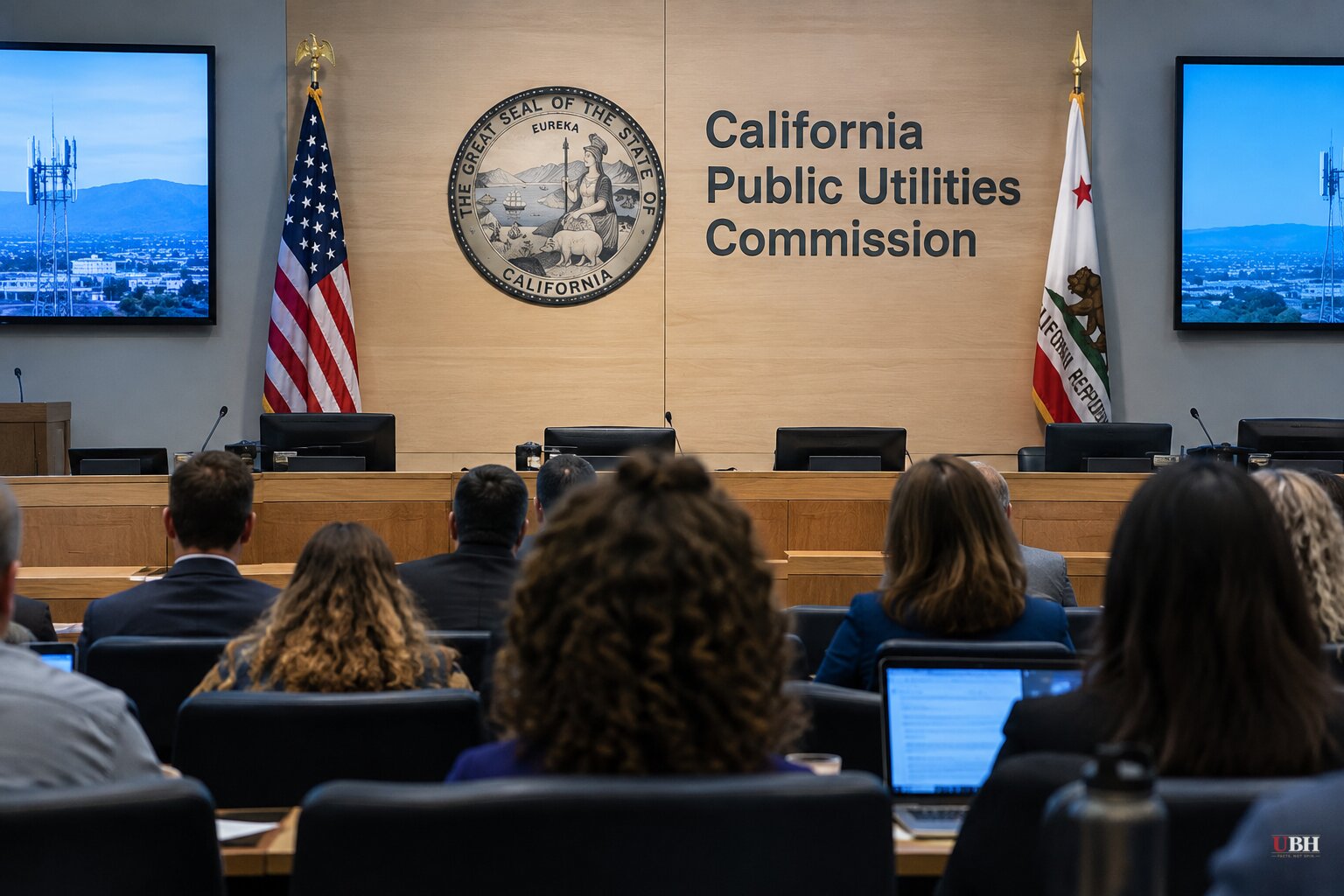
California's Public Utilities Commission is scheduled to vote Thursday, September 17, on a resolution ratifying the state's final plan for the federal Broadband Equity, Access, and Deployment (BEAD) program, according to Ars Technica. Buried in that plan is a condition that could gut the state's net neutrality law.
What's on the table
The National Telecommunications and Information Administration (NTIA), which runs BEAD, restructured the $42 billion program in 2025 under what the agency called its "Benefit of the Bargain" reform, according to reporting cited by Ecosistema Startup that credits StateScoop's coverage. That overhaul reportedly saved roughly $21 billion by favoring lowest-cost, technology-neutral bids instead of prioritizing fiber buildouts.
As part of that reform, NTIA is requiring any state that wants BEAD money to agree not to enforce net neutrality rules or rate regulation against ISPs that take the funding, according to Ars Technica. The exemption doesn't apply just in neighborhoods where an ISP builds new lines with federal dollars. It applies statewide, for up to 14 years, as long as the ISP is participating in the program.
California and Illinois are the only two states that hadn't finalized their BEAD plans as of Ars Technica's report, based on NTIA's own progress dashboard. Illinois has no comparable state net neutrality law at stake. California does.
Why California is different
California's net neutrality law bars ISPs from blocking or throttling lawful traffic and from charging websites for prioritized delivery, according to Ars Technica and the Electronic Frontier Foundation (EFF). The law survived a multi-year court fight during the first Trump administration, when the federal government tried and failed to preempt it directly, according to Archyde, which notes California Attorney General Rob Bonta previously defended the statute in court.
This time, the approach is different. Rather than suing to strike the law down, the federal government is using grant money as leverage. If California wants its share of BEAD funding, it has to agree not to enforce the law against any ISP that takes the cash.
A CPUC spokesperson described Thursday's vote to Ars Technica as a "procedural requirement" tied to a plan the state already submitted to the federal government in December 2025. Paul Goodman, legal counsel for the Center for Accessible Technology and one of nearly 30 advocacy-group signatories on a letter urging state leaders to fight the provision, told Ars the vote is "much more than a procedural step," calling it the start of a longer fight.
The dollar figures don't match
Ars Technica and Ecosistema Startup both put California's BEAD award at $1.86 billion. The EFF and Archyde both cite an August 31 NTIA announcement putting the figure at $1.4 billion. None of the sources reconcile the discrepancy, and it isn't clear whether the two numbers reflect different funding tranches, different calculation methods, or a reporting error somewhere upstream. Readers should treat both figures as reported, not confirmed against a single primary NTIA document.
What else is riding on the vote
EFF and Archyde both flag two additional casualties beyond net neutrality. First, California's affordability rules. When the CPUC approved the Verizon-Frontier merger earlier this year, it conditioned approval on the merged company offering a $20-a-month plan to low-income households. EFF says that requirement could fall under the same federal ban, since it "imposes a restriction" on an ISP. The CPUC separately found average broadband costs across San Mateo, Oakland, Los Angeles and San Diego run about $51 a month, while Consumer Reports found in 2023 that 84% of American consumers pay at least $50 a month.
Second, public safety. Both EFF and Archyde point to 2018, when Verizon throttled data speeds for Santa Clara County firefighting units battling what was then the largest wildfire in state history. That incident is widely credited with building public support for California's net neutrality law in the first place, since the law's anti-throttling provisions apply to emergency responders too.
The federal rationale
None of the sources include an NTIA statement specifically justifying the net neutrality condition. What is on record is the broader rationale for the 2025 BEAD overhaul: shifting to lowest-cost, technology-neutral bidding to save taxpayer money and get broadband built faster, per the Ecosistema Startup/StateScoop account. Whether that cost-saving logic extends to overriding a state's own consumer-protection statute for 14 years is a separate policy judgment the federal government hasn't laid out publicly in these sources.
Advocate Evan Greer, posting on Bluesky, called the provision "a poison pill" and warned that if Governor Gavin Newsom's administration accepts the deal as written, "it's game over" for the law. Newsom's office has not been quoted in these sources responding directly to that characterization.
What happens next
The CPUC's Thursday vote will determine whether California ratifies the plan as submitted in December 2025, net neutrality condition included. If commissioners proceed, the state would still have the option of trying to enforce its law anyway and fighting a second federal court battle over the funding condition itself. Ars Technica notes that path is complicated by the fact California would already have accepted money tied to a written commitment not to enforce it. Whether Newsom's administration pursues that route, or whether the CPUC vote goes forward as scheduled, remains unresolved as of this writing.
Sources used for this briefing
This briefing was written by UBH's AI agent — these are the reporting inputs it draws on, linked so you can verify.


