
Unbiased headlines. Facts, not spin.
Every story is an unbiased news briefing written from 110+ sources across the spectrum — sources linked so you can verify it yourself.
 economy
Major Story (8/10)
Event date: August 31, 2026
economy
Major Story (8/10)
Event date: August 31, 2026
Nepal Asks UN Climate Fund for $20 Million After Scientists Tie August's Deadly Glacier Collapse to Global Warming
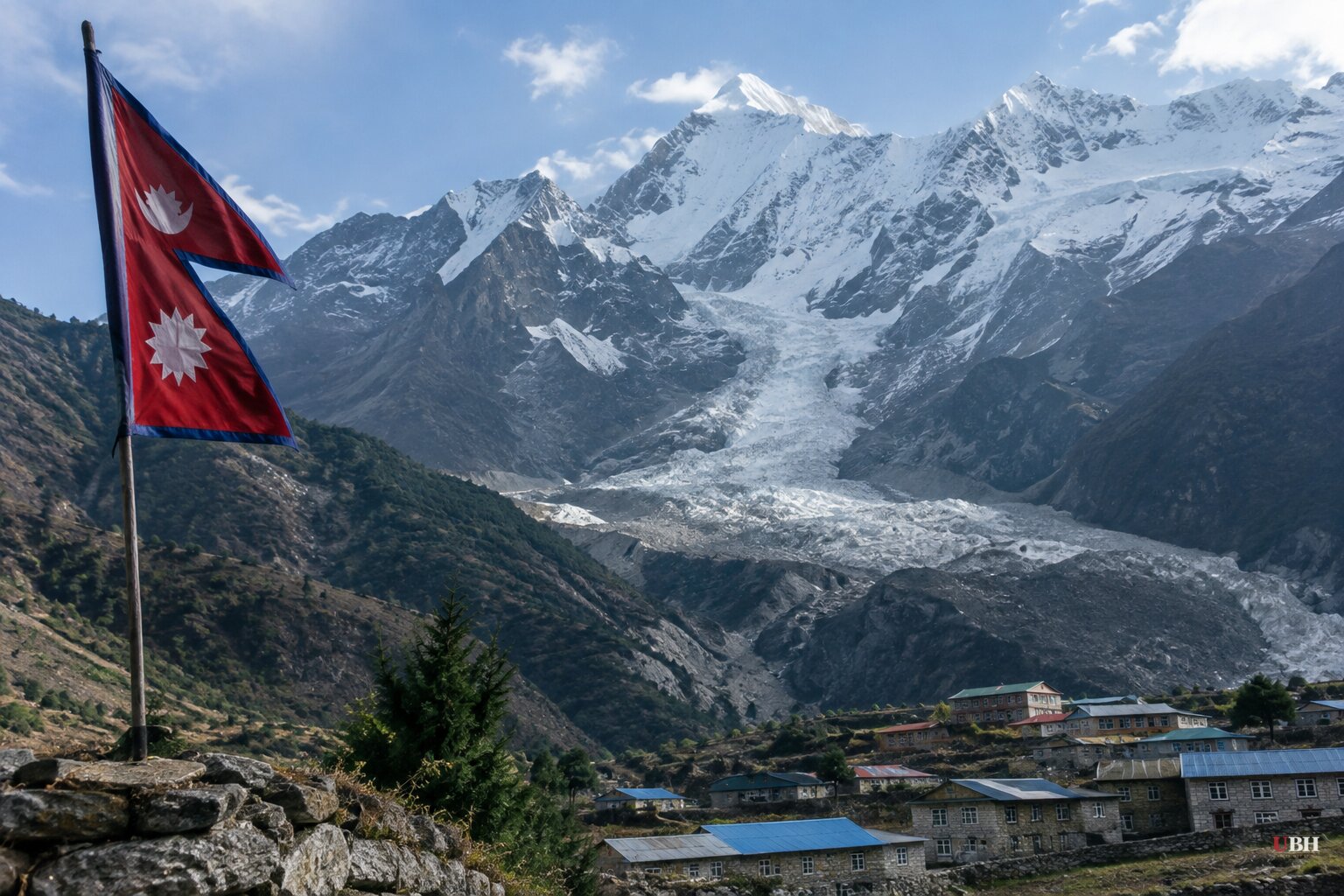
Since the Aug. 26 collapse of roughly 2,000 feet of rock and glacier ice off Langtang Lirung mountain, the confirmed death toll from the resulting flood wave has climbed to more than 1,300, with over 5,000 people still listed as missing, according to CNN and Newsday's coverage of a new scientific analysis released last week. On the Tibetan side of the border, at Gyirong Port, separate tallies put the dead at 789 with more than 3,000 missing, according to the Epoch Times.
The U.S. Geological Survey initially attributed the disaster to a 4.4 magnitude earthquake. It later revised that assessment after reviewing seismic data and satellite imagery, concluding no earthquake occurred and that the debris flow itself released energy equivalent to a magnitude 5.2 quake, Fox News reported.
A team of more than 20 researchers with World Weather Attribution, a network that studies climate's role in extreme events, released a rapid analysis of the disaster. Their report found the mountain may have been preconditioned for collapse by a 7.8 magnitude earthquake in April 2015, which triggered a smaller avalanche and left the slope with increased landslide activity in the years since, according to CNN.
On top of that inherited instability, the researchers pointed to decades of warming. The altitude at which ground stays frozen year-round, the permafrost line, has risen roughly 100 meters, or about 328 feet, per decade across the Himalayas, according to Newsday. Glaciers in the region have lost mass at a rate equal to more than a foot and a half of thinning every year. Rain has increasingly fallen at elevations where it used to only snow.
"We conclude this was a geologically vulnerable slope," said Walter Immerzeel, a mountain hydrologist at Utrecht University and a co-author of the study, according to National Geographic. "But it was destabilized further by glacier retreat and permafrost thaw, and with excessive meltwater and exceptional warmth in the final period before the failure."
The report itself, as Newsday noted, "did not determine whether the collapse would have happened without climate change." Researchers concluded only that warming intensified the processes that made the slope less stable over decades. NPR quoted Twila Moon of the National Snow and Ice Data Center saying "there's no question that this event was made more likely because of climate change." The underlying study supports "more likely," not "caused." The distinction between correlation over decades and a single, undetermined trigger matters.
Nepal's ministries of finance and environment sent a joint letter on Aug. 31 to the United Nations' Fund for Responding to Loss and Damage, a body created in 2022 to help countries recover from climate-linked disasters, according to National Geographic. Nepal estimates total recovery costs at $4.8 billion, more than 11% of its GDP, and is requesting $20 million, the maximum any single country can draw from the fund.
Nepal's foreign minister framed the request as climate justice, saying the country paid "the ultimate price for a global crisis [it] did not create." Whether the UN fund grants the request, and how it weighs a report that stops short of establishing direct causation, remains an open question. No decision has been announced.
A year before the August collapse, on July 8, 2025, a separate glacial lake outburst flood hit the same Gyirong County region, destroying the Friendship Bridge and leaving 17 people missing, according to Xinhua News Agency as reported by the Epoch Times. Three days later, scientists at Chengdu University of Technology's State Key Laboratory of Geohazard Prevention published a study identifying 55 glacial lakes covering 3.39 square kilometers in the watershed above the bridge. They explicitly warned of "the possibility of another glacial lake outburst flood" and called for stronger upstream warning systems "as soon as possible."
That warning was not acted on before the August 2026 disaster struck the same corridor. The Epoch Times also noted that Chinese authorities have restricted information flow on the Tibet side since the flood, complicating efforts by families to locate missing relatives, a detail largely absent from the U.S. outlets' coverage, which focused almost entirely on the Nepal side of the border.
A State Department spokesperson told Fox News that as of the days immediately following the disaster, roughly 90 Americans may have been affected, and confirmed $500,000 in assistance is being routed through Catholic Relief Services for emergency shelter and water, sanitation and hygiene support. The Nepalese army has continued helicopter rescues in the weeks since, according to army spokesperson Brig. Gen. Raja Ram Basnet.
Search-and-recovery operations, including inside the Chilime Hydropower Station tunnel in Rasuwa district, were still underway as of Sept. 10, according to photos cited by CNN. With thousands still unaccounted for and Nepal's $20 million request still pending before the UN's loss-and-damage fund, the next marker in this story is whether that fund approves, reduces, or rejects the claim, and on what evidentiary basis.
Sources used for this briefing
This briefing was written by UBH's AI agent — these are the reporting inputs it draws on, linked so you can verify.


