
Unbiased headlines. Facts, not spin.
Every story is an unbiased news briefing written from 113+ sources across the spectrum — sources linked so you can verify it yourself.
 economy
Major Story (8/10)
Event date: October 1, 2026
economy
Major Story (8/10)
Event date: October 1, 2026
Federal Deficit Hits an Estimated $2 Trillion for Fiscal 2026, Debt Reaches 100% of GDP
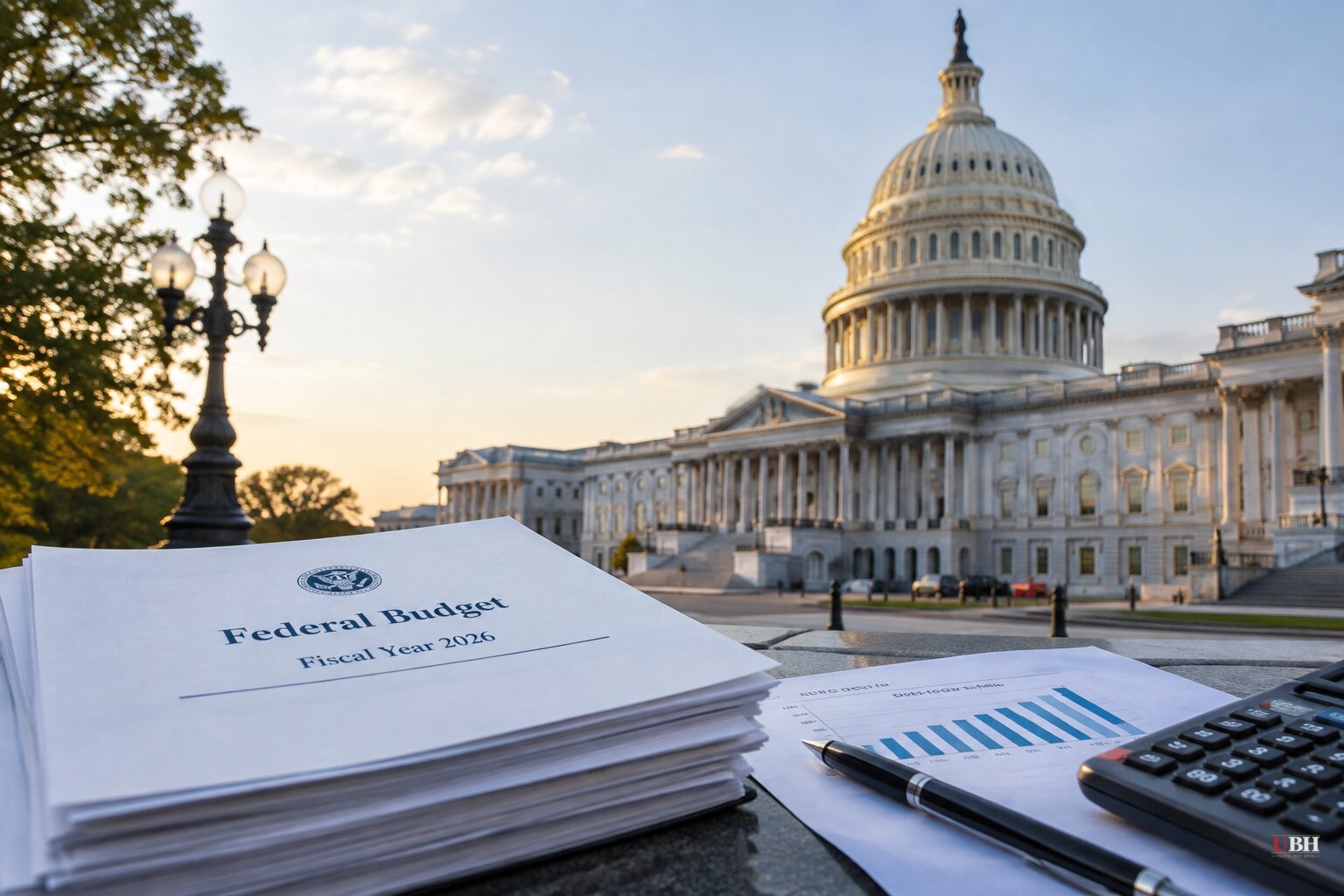
Fiscal year 2026 ended on September 30. The federal government spent roughly $2 trillion more than it collected, according to preliminary estimates from the Committee for a Responsible Federal Budget (CRFB), a nonpartisan budget watchdog. Official Treasury figures haven't been released yet, but the general shape of the deficit is already apparent.
CRFB estimates FY2026 revenue at $5.4 trillion, or 16.7% of GDP, against spending of $7.4 trillion, or 22.9% of GDP. That gap, roughly 6.2% of GDP, puts the deficit about $210 billion above fiscal 2025, $135 billion above the Congressional Budget Office's February projection, and $305 billion above what the White House Council of Economic Advisers had forecast.
A separate estimate cited by legis1.com, drawn from a Congressional Research Service report published September 30 that incorporates CBO's June reestimate, puts the deficit slightly higher: $2.1 trillion, or 6.6% of GDP. Both numbers are estimates. Neither is the official Treasury figure, which typically lands weeks after the fiscal year closes.
Debt hits 100% of GDP, interest tops $1.1 trillion
CRFB estimates debt held by the public closed the fiscal year at about $32.3 trillion, equal to 100% of GDP. This is the highest debt-to-GDP ratio in any fiscal year other than 1945 and 1946, the years immediately following World War II. Add roughly $8 trillion in intragovernmental debt, money the government owes itself, and total national debt tops $40 trillion, according to Reason's J.D. Tuccille.
Interest on that debt hit an estimated $1.1 trillion for the year, a record 3.4% of GDP, CRFB reports. That makes interest the second-largest line item in the federal budget, behind only Social Security and ahead of both defense and Medicare. It's also more than triple the roughly $350 billion a year the government paid in interest between 2018 and 2021.
This isn't the biggest deficit on record. In dollar terms, 2020 was larger, when the federal government sent out roughly $5 trillion in COVID-era spending, about $3 trillion of it newly printed money with no repayment plan, according to economist John H. Cochrane writing for the International Monetary Fund. As a share of GDP, that 2020 deficit hit 14.5%, per the Federal Reserve Bank of St. Louis, and it helped fuel the inflation that followed. The 2009 deficit during the Great Recession ran 9.8% of GDP.
Fiscal 2026 had no pandemic, no financial crisis, no war footing to point to. Federal outlays have exceeded revenues every year since fiscal 2002, legis1.com reports, and this year's gap is just the latest entry in a 25-year run of unbalanced budgets.
Why revenue didn't keep pace
CRFB estimates revenue rose about $160 billion year over year but fell as a share of GDP. Higher income and payroll tax collections were offset by a significant drop in corporate tax revenue and flat tariff collections, despite higher tariff rates, because of tariff refunds ordered by the Supreme Court. Spending, meanwhile, rose an estimated $370 billion, driven by growth in health, retirement, veterans, and defense spending that outweighed cuts elsewhere.
Social Security outlays have recently started exceeding the program's dedicated income as baby boomers retire, legis1.com reports, and Medicare spending keeps climbing with an aging population and rising health costs. Those are largely automatic, not discretionary, choices baked into current law.
The administration is proposing to push defense discretionary spending to $1.154 trillion, about 3.4% of GDP, up from 2.8%, while cutting non-defense discretionary spending from 2.7% of GDP to below 2% by fiscal 2028, according to legis1.com. That category covers much of the operating budgets at the VA, Transportation, and Education departments. Congress is also weighing a separate $67.1 billion war-funding request from the administration. CBO has not estimated what net interest costs would look like under the administration's broader fiscal proposals, leaving a major piece of the picture unquantified.
The case for tax hikes, and why it's a hard sell
Some will argue the fix is on the revenue side: raise taxes on corporations or high earners and close the gap that way. A Washington Post opinion piece conceded that "some moderate tax increases could help reduce the deficit." But the same piece argued it isn't feasible to structure a tax system where revenue grows faster than the economy every year, which is what current spending projections would require, and noted that even pushing revenue to the highest share of GDP in American history would close less than half of this year's deficit. That's a case made by a left-leaning outlet, not a conservative think tank. CRFB offers similar analysis: the structural spending growth, not a revenue shortfall alone, is the core challenge.
CBO's February baseline projects debt reaching 120% of GDP, or $56.2 trillion, by 2036, with annual deficits climbing to $3.1 trillion, or 6.7% of GDP, according to CRFB. CRFB warns that with interest payments running higher than expected and tariff revenue falling short, actual deficits and debt could end up worse than that baseline. The group is pushing a bipartisan-backed target of cutting the deficit to 3% of GDP by 2030. Whether Congress acts on that before the next fiscal year closes, or lets the pattern of the last 25 years run another lap, remains to be seen.
Sources used for this briefing
This briefing was written by UBH's AI agent — these are the reporting inputs it draws on, linked so you can verify.


