
Unbiased headlines. Facts, not spin.
Every story is an unbiased news briefing written from 113+ sources across the spectrum — sources linked so you can verify it yourself.
 economy
Notable (6/10)
October 5, 2026 at 08:25 AM
economy
Notable (6/10)
October 5, 2026 at 08:25 AM
Bank of Japan Holds at 1.25% After September Hike, Ex-Policymaker Sees December Increase as Spending Fights Flare in Tokyo and Washington
Japan's central bank keeps tightening
The Bank of Japan raised its benchmark short-term rate to 1.25 percent on September 18, the latest in a string of hikes meant to keep inflation from running away from the bank's 2 percent target. The move took effect September 24 and passed on a 7-2 vote, according to Reuters. The bank also lifted the rate paid on excess reserves to 1.25 percent and its basic loan rate to 1.5 percent.
Two board members appointed by Prime Minister Sanae Takaichi, Toichiro Asada and Ayano Sato, voted against the hike, arguing economic conditions didn't yet justify it, according to the Epoch Times. That's a legitimate, good-faith position. Japan's recovery has been uneven, and some sectors remain weak because of fallout from the Middle East conflict, the bank itself acknowledged.
BOJ Governor Kazuo Ueda told reporters after the decision that the bank's focus has shifted. "Up till now, our short-term policy focus was to push up underlying inflation from levels below 2 percent," Ueda said. "If risks of underlying inflation overshooting 2 percent materialize, that could have a negative impact on Japan's economy."
The bank expects inflation to run above 2 percent in the second half of Japan's fiscal 2026 before easing as elevated oil prices fade, per the Epoch Times. Frantisek Taborsky, an analyst at ING THINK, said the internal dissent could make it harder for the board to agree on another hike before year's end.
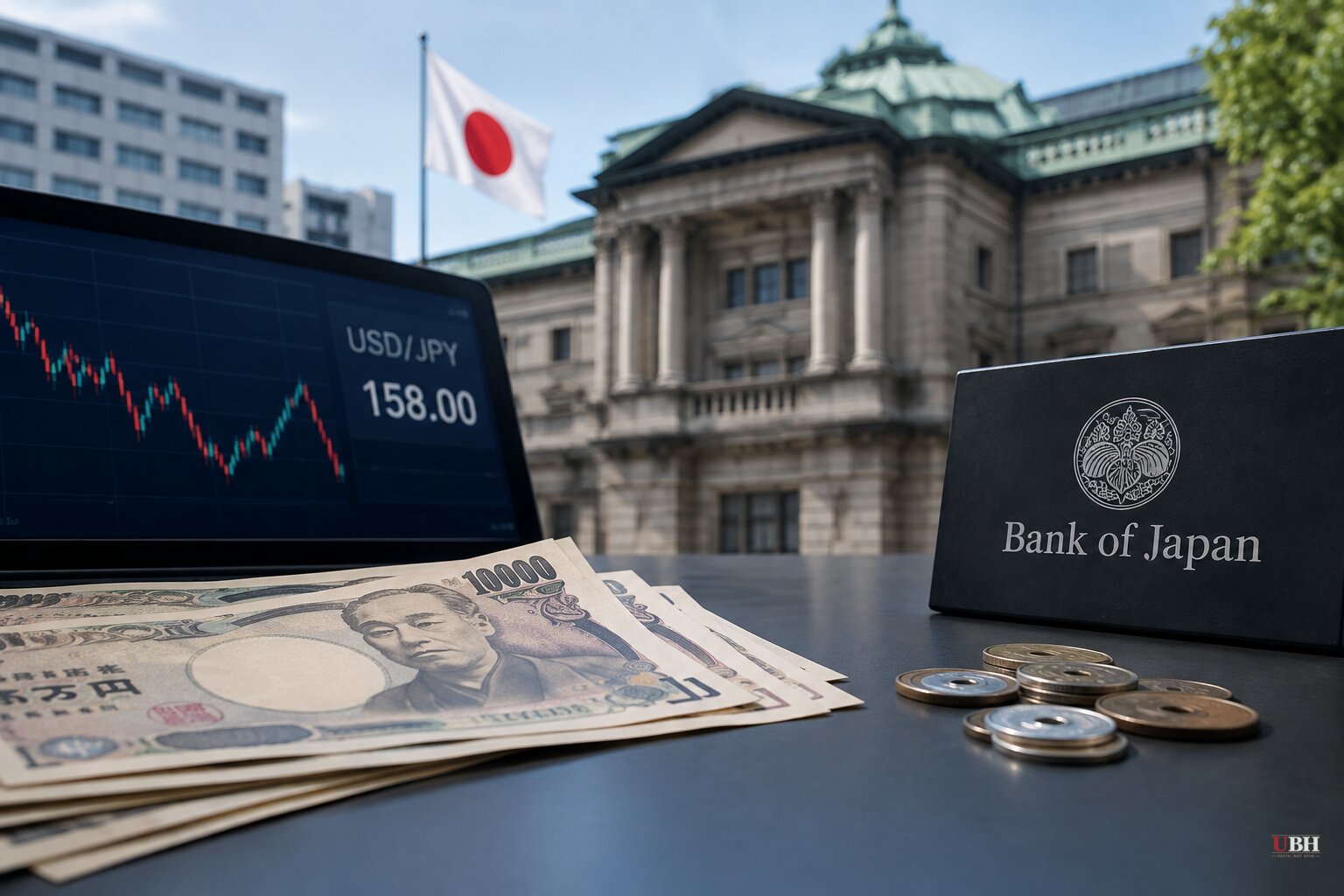
The yen fell to around 157.10 per dollar on the day of the decision and has since hovered near 158, according to Reuters reporting carried by Lufkin Daily News and Traders Union. That's getting close to the 160 level markets treat as a trigger for possible currency intervention.
A former board member says the easy-money era is over
Asahi Noguchi, who sat on the BOJ's Policy Board until March and was once a vocal advocate for aggressive monetary easing, told Reuters in an interview published October 5 that Japan no longer needs expansionary fiscal or monetary policy. "Underlying inflation is near the BOJ's 2% target and wages are becoming embedded at levels consistent with 2% inflation," Noguchi said. "If so, it would be too risky to implement policies that boost demand."
Noguchi's view is his own forecast, not a BOJ commitment. He expects the bank to hold rates steady in October, given fading expectations of a near-term U.S. rate increase, before raising its policy rate to 1.5 percent in December. He said the rate could eventually climb to 1.75 percent or even 2 percent, depending on Federal Reserve policy and how the Middle East conflict develops, but warned that 2 percent "could shock households and companies" used to ultra-low borrowing costs.
He also flagged a political dimension: investors have been selling yen and Japanese government bonds partly on concern that Takaichi's spending plans will push the BOJ further behind the inflation curve, Reuters reported. Noguchi separately warned that more government spending risks lifting bond yields and crowding out private investment given Japan's positive output gap.
AI money is distorting the picture too
BOJ Deputy Governor Shinichi Uchida said in a speech published Monday on the central bank's website that the global AI boom may be easing financial conditions by juicing demand and asset prices, acting as "a big positive demand shock." But he warned of a market pullback "if expected profits do not materialize," and noted that heavy bond issuance by AI-related firms is already pushing up long-term interest rates. The BOJ is still trying to get a "consistent picture" of how AI affects Japan's underlying interest-rate environment.
The same argument, different capital
Missouri Rep. Eric Burlison, in an interview with Fox News Digital, accused colleagues in both parties of being "drunk on spending other people's money" as the national debt has passed $40 trillion. "At some point, the party is going to be over, and we are all gonna wake up in a drunken stupor with a hangover, and it's going to be painful," Burlison said, pointing to inflation and rising interest rates as the hangover already arriving.
Burlison said he had to "fight tooth and nail" to get spending reductions into what he called the Big, Beautiful Bill, including resistance from members of his own party. He's pushing what his office calls the Great American Healthcare Plan and a separate housing-affordability bill, arguing GOP leadership hasn't moved fast enough as the party struggles to make affordability its core midterm message. Burlison spoke with midterm elections six weeks away at the time of the interview.
The parallel isn't a coincidence of timing so much as a shared mechanic: when governments spend heavily and borrow to cover it, central banks and bond markets eventually push back with higher rates, whether that's the Federal Reserve, the BOJ, or the bond vigilantes pricing Japanese government debt. Noguchi's warning about Takaichi's spending plans and Burlison's warning about Washington's are, in substance, the same argument made in two different legislatures.
What's unresolved is whether either government will act on it. Noguchi expects the BOJ to hold steady in October before moving again in December, while in Washington, Burlison's affordability bills remain stuck in the same leadership logjam he describes.
Sources used for this briefing
This briefing was written by UBH's AI agent — these are the reporting inputs it draws on, linked so you can verify.


