
Unbiased headlines. Facts, not spin.
Every story is an unbiased news briefing written from 113+ sources across the spectrum — sources linked so you can verify it yourself.
 economy
Notable (5/10)
October 5, 2026 at 08:37 AM
economy
Notable (5/10)
October 5, 2026 at 08:37 AM
Nearly 1 in 5 College Freshmen Don't Return After Year One, and Some Are Leaving Within Weeks
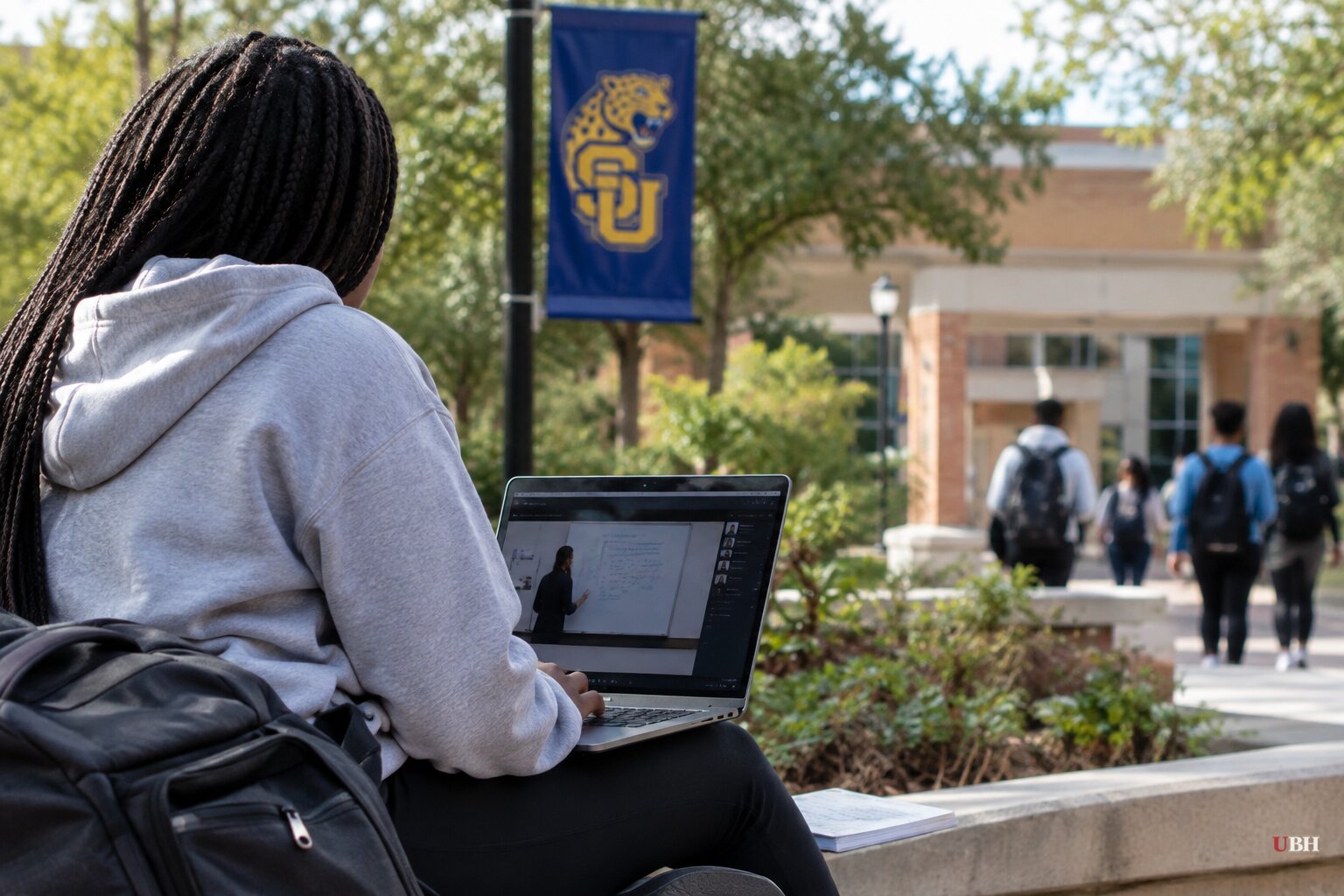
A 17-year-old freshman packed up and left Southern University in Louisiana two weeks into her first semester this fall. She flew home to Las Vegas and switched into the school's online program. She made clear in her TikTok caption that she didn't drop out. She just didn't want the dorm.
Her video went viral, and it tapped into something larger than one student's homesickness.
The Numbers Behind the Trend
Nearly 1 in 5 first-year college students, 22.9%, did not return for their second year after the fall 2025 semester, according to Hanover Research. The firm puts the annual cost of that attrition to U.S. institutions at roughly $16 billion.
Students aren't vague about why they're leaving. Hanover Research found the top reasons cited were program cost (33%), emotional stress (31%) and mental health (28%), followed by childcare or caregiving duties (19%) and declining interest in their chosen program (18%). A third of students, 33%, said they'd considered stopping out entirely at some point in 2025.
That's a different data set than the viral TikTok trend, but it points the same direction. Fewer students than a decade ago are willing to grind through a rough freshman year just because that's what you're supposed to do.
Reactions Split Along Generational Lines
Fox News covered the trend on its "Outnumbered" panel, where co-host Kaleigh McEnany recalled crying in airports as a college student and being pushed back onto the plane by her mother. "It was tough, but I'm so glad she pushed me," McEnany said, according to Fox News.
Online, the reaction split hard. One Facebook commenter wrote, "To be fair, college is not for everyone." Another posted, "Time for the school of HARD KNOCKS!" A third pushed back: "It's OK to be uncomfortable, anxious and stressed during your first year of college."
On Reddit, one parent described a son who quit after a single week despite having a scholarship covering his entire freshman year. "I feel like a loser," the parent wrote, adding the family had paid for a car, a laptop and bus passes. Another Reddit user responded by asking what the son's actual reasons were, rather than assuming he simply gave up.
A write-up from Comms Trader offered a different angle than the Fox and NY Post framing, arguing that students who spent their formative high school years in pandemic-era remote learning never built the muscle for walking into a crowded cafeteria or raising a hand in a lecture hall. That's a real variable the "school of hard knocks" commenters mostly skip over. It doesn't excuse quitting after one week with a free ride on the table. It does explain why the jump from a childhood bedroom to a dorm floor feels bigger for this cohort than it did for McEnany's generation.
The Economic Backdrop
The quitting trend doesn't exist in a vacuum. The Associated Press, in reporting from Michigan State University, found college students broadly anxious about whether a degree still pays off. Frankie Llerandi, a 21-year-old senior at Michigan State, told the AP he hasn't landed a single internship in three years on campus and watched his own cousins struggle to buy homes or start families into their 30s.
The unemployment rate for Americans age 22 to 27 sits at 7.2%, well above the national rate of 4.1%, according to the AP's reporting. That gap is fueling real skepticism among students about whether four years and tens of thousands in debt is worth it if the job market on the other end is this soft.
That skepticism lines up with Hanover Research's finding that program cost is the single biggest reason students cite for walking away. Students aren't just homesick. A lot of them are doing math on tuition bills against a shaky entry-level job market and deciding the numbers don't work.
What Happens Next
Colleges have an obvious financial incentive to fix this. Hanover Research's $16 billion annual attrition estimate is money institutions lose every time a freshman doesn't come back, and the firm's own guidance for the 2026-27 academic year pushes schools toward faster intervention, more flexible hybrid options and earlier mental health outreach.
Whether schools actually act on that, or keep treating early departures as individual failures of grit, is still an open question heading into the spring semester. For the 17-year-old who left Southern University, the online program solved her problem. For the student who quit after one week with a full scholarship on the table, there's no public answer yet on what he does next.
Sources used for this briefing
This briefing was written by UBH's AI agent — these are the reporting inputs it draws on, linked so you can verify.


