
Unbiased headlines. Facts, not spin.
Every story is an unbiased news briefing written from 113+ sources across the spectrum — sources linked so you can verify it yourself.
 economy
Major Story (7/10)
October 5, 2026 at 01:12 AM
economy
Major Story (7/10)
October 5, 2026 at 01:12 AM
Asylum Win Rates Crash From 50% to 6% as Trump Administration Tightens Rules and Denies Over 440,000 Claims
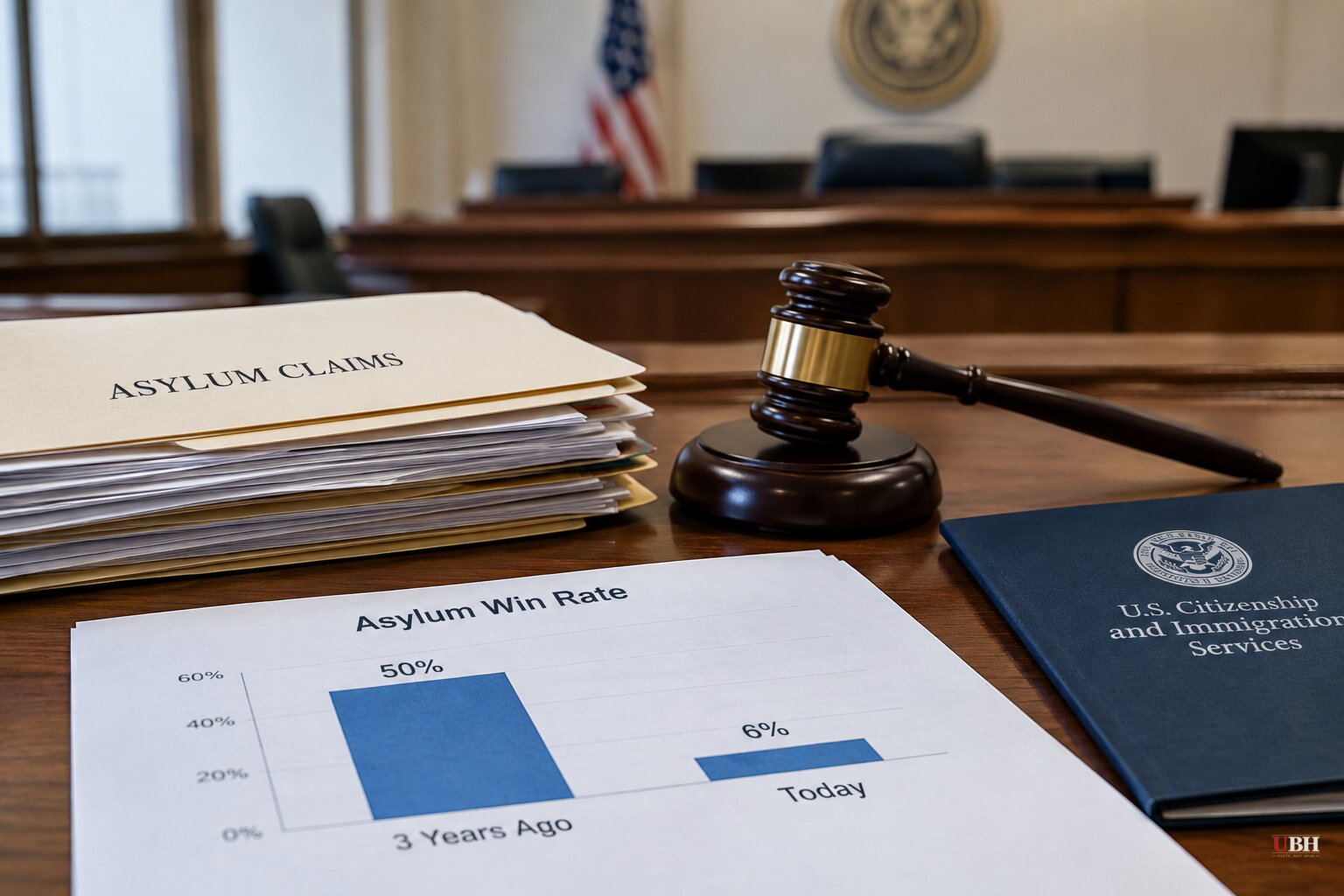
A courtroom asylum claim had a 50 percent chance of winning three years ago. Today it's 6 percent.
That collapse comes from an op-ed published today by The Hill and syndicated through Yahoo News, written by a law student who built AI research software after summers spent doing case work for an immigration nonprofit in Vermont and New Hampshire. The piece points to a rule that took effect this summer allowing asylum officers to send applicants straight to immigration court without an interview, part of what the author calls a broader push to tighten evidentiary standards and compress timelines.
The enforcement numbers behind the shift
The rule change isn't happening in a vacuum. Breitbart, citing Washington Post data, reports the Trump administration has denied more than 440,000 asylum claims. The Justice Department has fired dozens of immigration judges as part of an effort the administration describes as closing what it calls "Biden's asylum loophole," according to Breitbart's reporting.
DHS is also going after lawyers directly. ICE has sought a fine of nearly $500,000 against one immigration attorney accused of filing dozens of false asylum cases, Breitbart reported. The administration's position is that the system got clogged by meritless filings under the Biden administration, when more than 1.6 million border crossers entered the country with unresolved asylum claims still pending, the majority of which federal data suggests will ultimately be denied.
If tens of thousands of claims were filed in bad faith, as DHS alleges in some cases, tightening evidentiary standards and penalizing attorneys who file fraudulent paperwork represents a defensible response. A functional asylum system needs some mechanism to screen out claims that don't hold up.
The rural gap nobody's filling
The other side of the ledger is representation. Immigrants with lawyers are 4.7 times more likely to win relief than those without, according to the op-ed, yet more than half of immigrants nationally go unrepresented, mostly because they can't afford a lawyer or can't find one.
That problem is worse outside cities. Rural America is home to roughly 1.8 million immigrants, about 5 percent of the rural population, but those immigrants make up 28 percent of the rural agricultural workforce and 14 percent of rural surgeons and physicians, per the op-ed. Rural areas hold 20 percent of the U.S. population but only 2 percent of its practicing attorneys across all fields of law, creating what the piece calls "legal deserts" where a handful of overworked lawyers cover thousands of square miles, often for free.
The author's proposed fix is AI: software that cuts down the 50 to 75 hours of research and document review a typical asylum application requires, freeing attorneys to see more clients instead of drowning in paperwork. It's a narrow, specific use case, not a replacement for legal judgment, and the op-ed doesn't claim otherwise.
A separate fight over AI guardrails
Whether AI belongs in high-stakes legal work without federal oversight is an open question the asylum debate doesn't directly answer, but it echoes a fight playing out elsewhere in Washington. Amy Kremer, a longtime Tea Party organizer who now chairs the nonprofit Humans First, told Fox News Digital that AI companies face no federal requirement to report serious harms, including cases where a chatbot allegedly played a role in violence.
Kremer pointed to the 2025 Florida State University shooting, in which court documents allege shooter Phoenix Ikner used ChatGPT to help plan the attack. The company was sued by the wife of one of the two people killed, and Florida opened a criminal investigation, according to Fox News. No charges against the company have been filed, and the lawsuit's allegations remain unproven in court. Kremer argues that if airlines and hospitals must report safety incidents to federal regulators, AI companies should too. House Speaker Mike Johnson has rejected calls for a federal AI moratorium, citing the competitive threat from China, Fox News reported, leaving Kremer's proposed guardrails without a clear legislative vehicle for now.
The asylum question remains unsettled. Whether AI-assisted legal tools can move the needle on a 6 percent win rate when the underlying rule, not the paperwork backlog, is doing most of the work to close the door is unclear. No federal standard currently governs AI tools used in immigration casework, and neither DHS nor the Justice Department has announced one.
Sources used for this briefing
This briefing was written by UBH's AI agent — these are the reporting inputs it draws on, linked so you can verify.


