
Unbiased headlines. Facts, not spin.
Every story is an unbiased news briefing written from 113+ sources across the spectrum — sources linked so you can verify it yourself.
 economy
Major Story (8/10)
October 4, 2026 at 05:43 PM
economy
Major Story (8/10)
October 4, 2026 at 05:43 PM
US Lifts Arms Export Ban on Syria as Netanyahu and al-Sharaa Clash Over Golan Heights
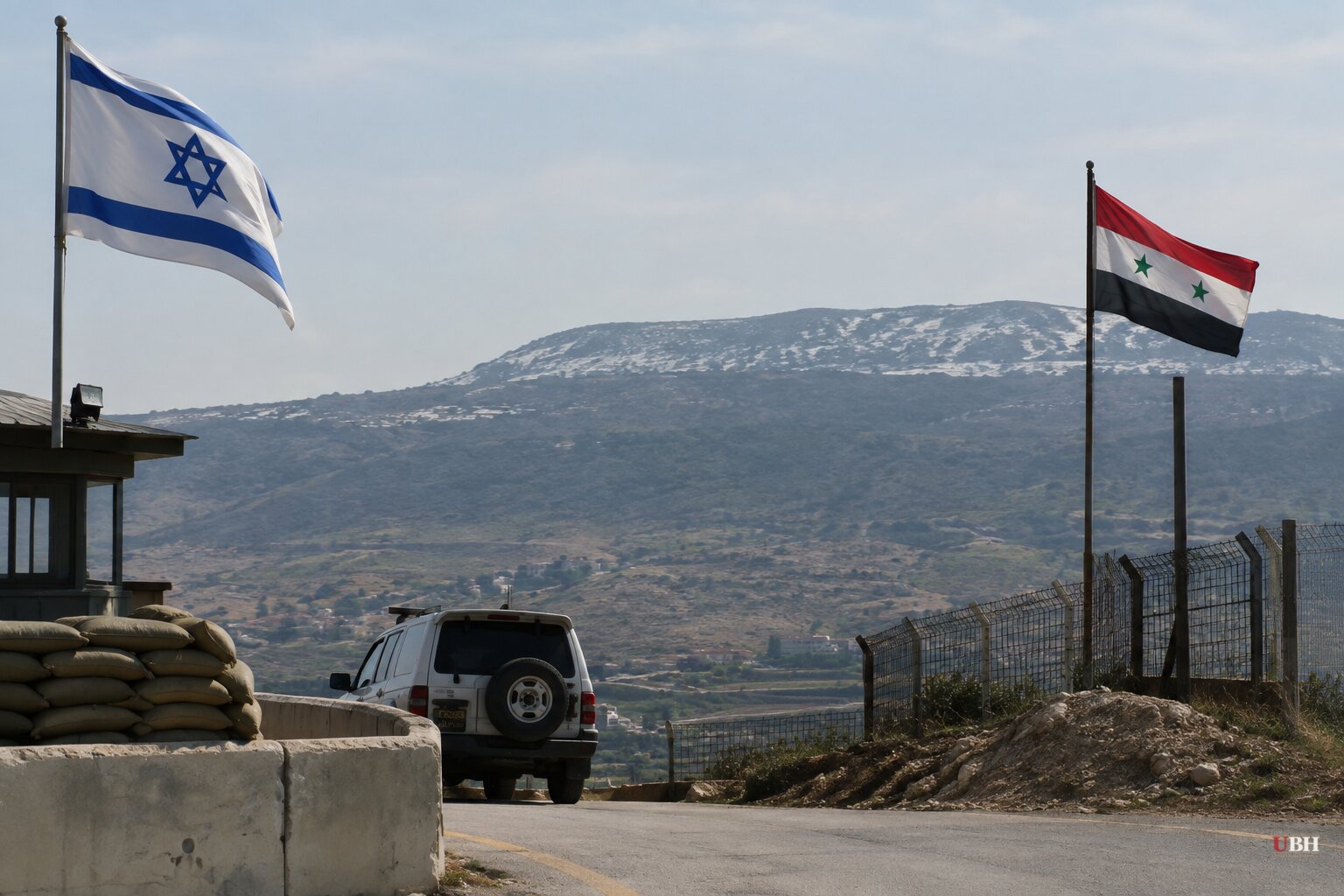
Two tracks, one border dispute
Washington is trying to broker a security deal between Israel and Syria. A decades-old fight over the Golan Heights stands in the way. Neither side shows any sign of dropping its claims.
At the UN General Assembly on September 23, Syrian President Ahmed al-Sharaa told delegates the Golan Heights "will remain Syrian." He said Israel has carried out more than 500 air and artillery strikes, over 1,200 land incursions, and nearly 300 detentions in Syrian territory since Bashar al-Assad's government fell on December 8, 2024, according to the Times of India. Al-Sharaa demanded Israeli forces pull back to the lines held on that date and said Syria remains committed to the 1974 disengagement agreement that created a UN-monitored buffer zone between the two countries.
Netanyahu answered the next day, invoking religious history rather than the 1974 line. "Mr. al-Sharaa, you should know the Jews have been on the Golan Heights since the days of Moses. You can read it in the Bible," he told the Assembly, per the Times of India. Israel captured the Golan from Syria in the 1967 war and annexed it in 1981, a move the United Nations has never recognized.
A road inside the buffer zone
The argument isn't just rhetorical. Syria's Foreign Ministry said Sunday that Israeli forces resumed excavation work west of al-Asha village in Quneitra province on a project known as "Sofa 53," or "Great Storm," calling it a "flagrant breach" of the 1974 agreement, according to Anadolu Agency. The ministry said the work threatens regional stability and urged the international community to take deterrent action.
According to Syria's Al-Ikhbariya television, cited by Anadolu, the project is an 8-meter-wide military road flanked by 5-meter earth berms, running from Hader in northern Quneitra through several villages down to where the Syrian, Jordanian and Israeli borders meet. Israel began the work in mid-2022, under the Assad government, but construction accelerated after Assad's fall in December 2024. Syrian accounts say Israeli forces have pushed 300 to 1,000 meters beyond the ceasefire line, and residents told Anadolu the project has made thousands of dunams of farmland unusable and disrupted local water flows.
The Jerusalem Post's reporting adds texture on the Israeli side of the line. The IDF's 228th Brigade just finished a three-month deployment in Syria's security zone, while the 98th Division is shifting to the West Bank amid a rise in terror attacks there. Israel has also detained 14 of its own citizens, members of an extremist group called Pioneers of Bashan, after they crossed from the Golan into Syria. Damascus condemned the crossing and demanded prosecution. Al-Sharaa told the Jerusalem Post direct talks with Israel have been underway for nearly a year, and he continues to insist on a return to 1974 border lines.
Washington opens the arms spigot
Separately from the Golan fight, the Trump administration this week removed Syria from the US list of countries subject to a blanket denial of arms export licenses, Arab News reported. Syria had been on that list for more than four decades. The change doesn't guarantee sales. It clears a legal path for American companies to apply.
Sameer Saboungi, deputy director and general counsel of the US-Syria Business Council, told Arab News he expects "significant interest" from defense companies but said early sales will likely be "relatively light" and won't come close to rebuilding Syria's shattered military. Israeli strikes have reportedly destroyed more than 80 percent of the old Assad-era arsenal, according to Arab News, and Syria's new government is also absorbing more than 5,000 former Syrian Democratic Forces fighters who completed specialized training before joining the national army.
The unresolved security argument
Syria's position is straightforward: the 1974 disengagement line is a signed agreement, and any Israeli construction or troop presence beyond it is a violation of international law and Syrian sovereignty.
Israel's position, while framed publicly through biblical language, rests on a more practical security claim. Damascus is run by a government that took power through an armed offensive less than two years ago. Sectarian violence erupted in the Druze-majority province of Suwayda in July 2025. Israeli officials have pointed to incidents near Quneitra, where locals report weekly raids, as evidence the border region remains unstable. Whether that instability justifies Israeli positions beyond the 1974 line, or whether it's being used to entrench territory Israel wants to keep regardless, is the core question the two governments have not resolved. The sources reviewed here don't settle it either.
The Times of India frames the core test for US diplomacy accurately: Washington may be able to negotiate security zones and monitoring arrangements, but bridging two governments' flatly opposing sovereignty claims over the same territory is a different problem. No timeline for a Golan border agreement has been announced, and the Sofa 53 road project, per Anadolu, is still under construction.
Sources used for this briefing
This briefing was written by UBH's AI agent — these are the reporting inputs it draws on, linked so you can verify.


