
Unbiased headlines. Facts, not spin.
Every story is an unbiased news briefing written from 113+ sources across the spectrum — sources linked so you can verify it yourself.
 economy
Major Story (8/10)
Event date: September 28, 2026
economy
Major Story (8/10)
Event date: September 28, 2026
Fed's September Rate Hike Collides With a Weak Jobs Report, and Markets Flip to Expecting a Hold
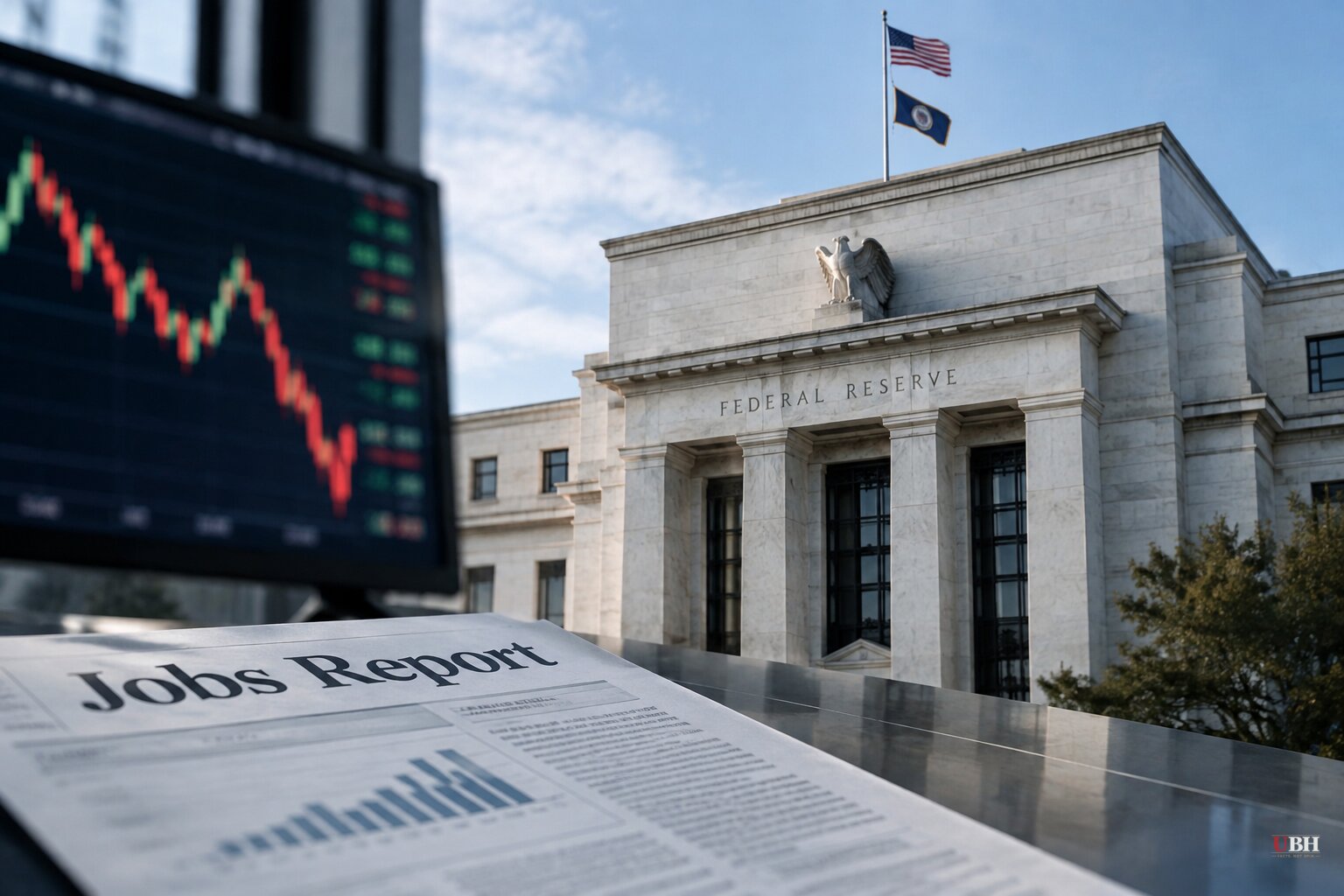
A hike, then a jolt
The Federal Open Market Committee voted unanimously in September to raise the federal funds rate a quarter point, to a range of 3.75% to 4%, according to the Boston Globe and CNBC. It was the first increase in three years under new Fed Chairman Kevin Warsh.
Warsh didn't call it tightening. He told reporters the move removed "a dose of accommodation," language Krishna Guha of Evercore ISI called "the one stand-out hawkish element" of the press conference, according to CNBC. Guha said the phrasing, taken literally, leaves the door open to more hikes until financial conditions are no longer accommodative, "however that is defined."
The FOMC's own median forecast points to one more hike before year-end and none in 2027, the Boston Globe reported. Investors in futures markets were pricing in something more aggressive: three additional hikes by the middle of next year, which would push the federal funds rate to 4.5%-4.75%, a level last seen in late 2024.
Then the jobs number landed
That was before the September jobs report came in at just 29,000 new jobs, a figure both Fortune and MSNBC cited as a reason the Fed may now hesitate to tighten further. Per CME's FedWatch tool, the odds of a hold at the Fed's next meeting, expected later this month, stood at 79.5% as of this weekend. Before the September decision, Breitbart reported Fed funds futures implied a 90% chance of a hike and 85% of economists surveyed by Reuters expected one.
Not everyone at the table agrees a pause is coming. Bank of America economists Claudio Irigoyen and Antonio Gabriel told clients the fundamentals "still point towards higher rates, with underlying inflation still stuck above 2.5%." The Cleveland Fed's nowcasting model projects August headline PCE inflation, the Fed's preferred gauge, at 3.8%, with core PCE at 3.4%, according to the Epoch Times. The Bureau of Economic Analysis rolled out a methodology change to that index effective September 30, retroactive to the first quarter of 2021, intended to better capture pricing distortions.
The rent 'doom loop'
Torsten Slok, chief economist at Apollo, laid out what he calls a "higher rates, higher rent doom loop" in a client note, reported by both Fortune and MSNBC. His logic: when rates are high, builders build less. When fewer homes and apartments get built, rents rise. Rising rents push inflation higher, and that keeps rates high. Owners' equivalent rent alone makes up roughly a quarter of the CPI basket, Slok noted, meaning a re-acceleration in rents directly works against the Fed's own goal.
The numbers back up the slowdown. Privately owned housing starts fell 2.6% in August from July, to 1,275,000, and were down 1.2% from a year earlier, according to Census Bureau data. Housing completions fell even harder, down 11.9% from July and 27.1% from August 2025. Builders are also competing for skilled labor with companies constructing AI data centers, pushing construction costs higher independent of interest rates.
Boston offers a local test case. Mayor Michelle Wu moved to offer tax breaks to developers struggling with high construction costs and interest rates, the Boston Globe reported, just two days before the Fed's September hike made borrowing even more expensive for those same builders. Boston College economist Brian Bethune told the paper the bigger drag on inflation right now is "the persistence of higher fuel and fertilizer prices" tied to fighting in the Persian Gulf, plus aluminum and steel prices pushed up by tariffs.
The case for patience
Mark Zandi, chief economist at Moody's Analytics, argued for holding off, according to Breitbart, on the grounds that squeezing inflation down faster requires pushing growth below its potential, raising recession risk. Breitbart also pushed back on the Fed's internal theory that repeated supply shocks are "de-anchoring" inflation expectations, noting that 10-year breakevens sit roughly where they were before the war with Iran began driving up gas prices, and arguing the bigger driver of the Biden-era inflation spike was deficit spending under the American Rescue Plan combined with the Fed holding rates too low for too long. That's Breitbart's read of the historical record, not an uncontested fact, and other economists cited in these reports, including those at Bank of America, still frame current inflation as supply-driven through energy and tariffs.
Warsh was nominated by President Trump, who has publicly pushed for lower rates. The Boston Globe noted that Warsh has shown he'll buck that pressure when he judges it necessary, a notable break from the assumption that his appointment guaranteed easier money.
What the Fed actually does at its next meeting remains unclear, with markets split between a 79.5% bet on a hold and a Bank of America view that underlying inflation still justifies tightening. Fed officials themselves don't expect inflation to hit the 2% target until 2029, according to the Boston Globe. The rent doom loop Slok described shows no sign of resolving itself anytime soon.
Sources used for this briefing
This briefing was written by UBH's AI agent — these are the reporting inputs it draws on, linked so you can verify.


