
Unbiased headlines. Facts, not spin.
Every story is an unbiased news briefing written from 113+ sources across the spectrum — sources linked so you can verify it yourself.
 finance
Major Story (7/10)
Event date: September 17, 2026
finance
Major Story (7/10)
Event date: September 17, 2026
Fed Hikes Rates to Near 4% on War-Driven Inflation, India's NBFCs Weigh a Hike of Their Own
The Fed Moves First
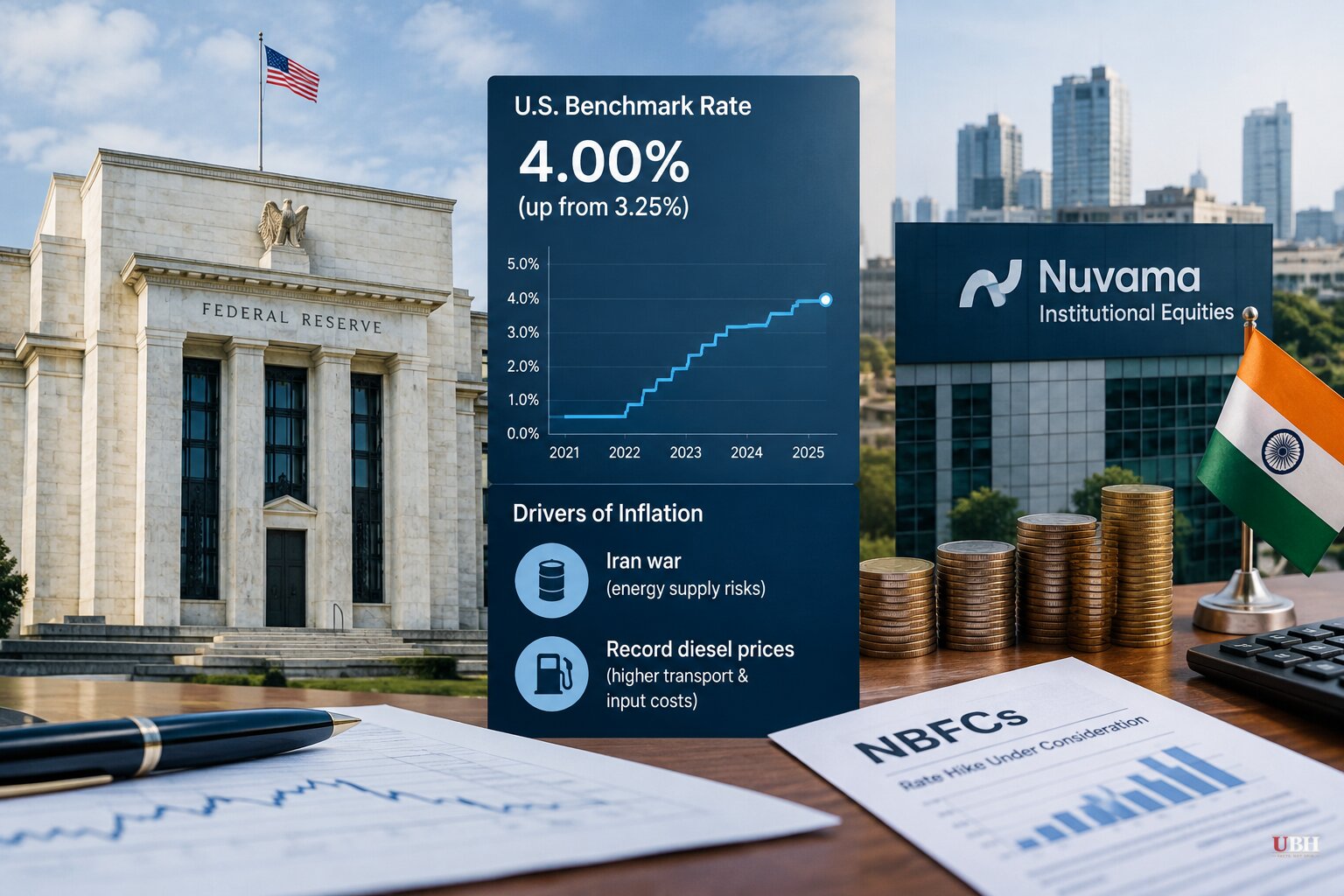
The Federal Reserve raised its benchmark interest rate by a quarter point this week, to a range of 3.75% to 4%, according to NPR. It's the first hike in more than three years, and it came under new Fed Chairman Kevin Warsh, who took over in May.
The reason isn't a hot economy overheating on its own. It's the U.S. war with Iran, which has driven oil and gasoline prices higher and pushed diesel to an all-time high of $6.31 a gallon as of Wednesday, according to AAA data cited by NPR. Annual inflation hit 3.4% in August, the Labor Department reported, with gasoline accounting for more than a third of that month's price jump.
Warsh isn't dodging responsibility. "The responsibility for 65 months of sustained, elevated inflation sits squarely with the central bank," he told an audience at Jackson Hole, according to NPR. That's a rare admission from a Fed chair, and it's the kind of accountability this country doesn't see enough of from Washington institutions.
Not Everyone Thinks This Was the Right Call
CNN framed the decision as the Fed getting "bullied" into hiking by rising Treasury yields and the bond market, essentially acting because it had no choice. That's CNN's characterization, not an established fact, and it undersells the case Warsh himself made for acting on inflation regardless of outside pressure.
Still, the skepticism about effectiveness is real and comes from serious people. Goldman Sachs economists told clients the case for a hike was "weak," arguing the economy isn't overheating and the inflation is coming from supply shocks, namely high oil prices from the Iran war and Ukraine's strikes on Russian diesel refineries, that will correct themselves once the fighting stops, per CNN.
Michael Pearce, chief U.S. economist at Oxford Economics, put it bluntly: "The Fed cannot control energy prices. The economy is solid and can withstand a few rate hikes, but the risk is higher interest rates begin to weaken the labor market."
Warsh pushed back on that framing directly. "I don't believe that we need to do harm to the labor markets to achieve our objective," he said at a press briefing, according to CNN, arguing that price stability will ultimately let growth run longer and benefit "the least well-off."
Both sides have a point worth taking seriously. If the inflation really is a temporary supply shock from a war, hiking rates won't lower gas prices and could needlessly choke off hiring. But if the Fed sits on its hands through 65 months of elevated inflation, as Warsh himself flagged, it risks losing credibility entirely. Fed policymakers' own forecasts, released after Wednesday's meeting, point to one more quarter-point hike this year and none in 2027, according to NPR. That's the committee hedging its bets on both outcomes.
Meanwhile in India, a Different Kind of Rate Hike Question
Halfway around the world, the Reserve Bank of India hasn't raised rates. But Nuvama Institutional Equities, in an October report carried by ANI and picked up by the Times of India, Economic Times and other outlets, assessed what would happen if the RBI does.
Nuvama's conclusion: a potential RBI hike is unlikely to cause broad damage to non-banking financial companies, the shadow-lending sector that's often the first to show cracks. "Monetary tightening by itself has not been sufficient to trigger a broad-based deterioration in NBFC asset quality," the firm said, adding that stress typically shows up only when rate hikes line up with a prolonged external shock or a liquidity crunch.
The data backs that up. During the FY22-24 tightening cycle, India's repo rate rose 250 basis points, and NBFC gross non-performing assets actually fell, from 5.7% in March 2022 to 4.6% in March 2023, citing RBI figures. Strong credit growth, higher write-offs, and better underwriting did the work.
Nuvama says the same West Asia conflict driving U.S. inflation has hit India too, but so far it's been contained to specific pockets: low-ticket unsecured personal and business loans, micro-LAP, and commercial vehicle financing. The firm also flagged El Niño-related risks to winter crops as something to watch, saying the real impact could show up with a lag.
That's the industry-side, bullish read. Economic Times flagged a separate and more cautious voice: RBI Governor Sanjay Malhotra has warned against complacency, citing rising financial risks as the West Asia conflict adds to inflation pressure. A research shop telling clients not to panic and a central bank governor telling the system not to get comfortable aren't necessarily in conflict, but they're not singing the same tune either.
What Happens Next
No RBI rate decision has actually been made. Nuvama's report is a forward-looking risk assessment, not a response to an announced policy. The next real test comes if and when the RBI's monetary policy committee actually moves, and whether the West Asia conflict that's already rattled U.S. diesel prices to record highs stays contained to the NBFC segments Nuvama named, or spreads further if the war drags on.
Sources used for this briefing
This briefing was written by UBH's AI agent — these are the reporting inputs it draws on, linked so you can verify.


