
Unbiased headlines. Facts, not spin.
Unbiased Headlines is an independently owned news organization. We bring you the facts, not opinions, written fresh from 110+ named sources. Sources linked so you can verify it yourself.
 economy
Major Story (8/10)
Event date: November 23, 2026 ·
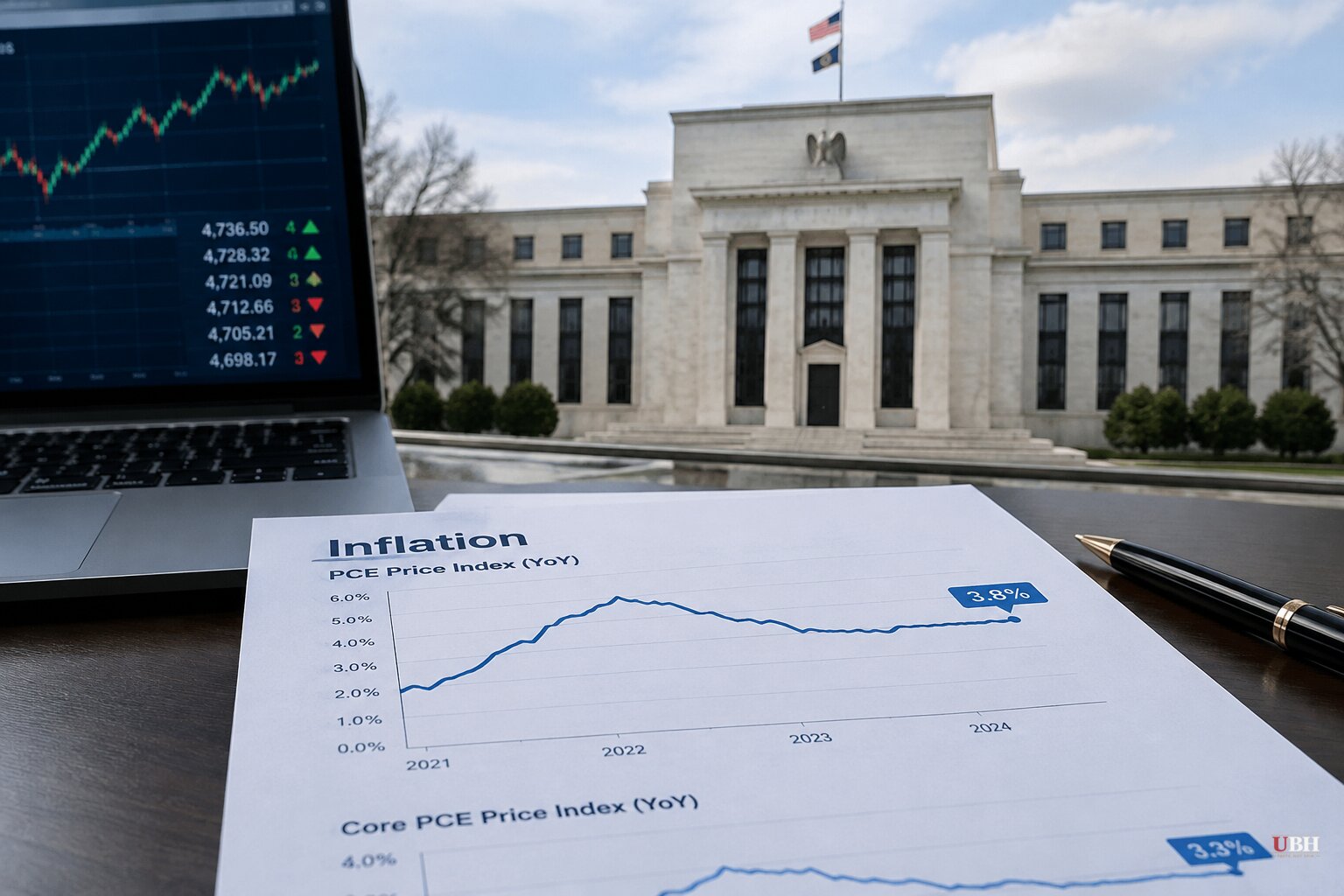
Fed Enters Dec. 8-9 Meeting With Inflation at 3.8% and Markets Pricing 95% Odds of a Rate Hike
Since the Federal Reserve raised its benchmark rate in September and then held it at 3.75% to 4% in October, the data has given policymakers little reason to stand pat. Two reports released Wednesday, Nov. 25, point in the same direction. Inflation is running hotter and the economy is running faster.
What the latest numbers show
The Commerce Department said the Fed's preferred inflation gauge, the personal consumption expenditures price index, rose 3.8% in October from a year earlier. That is up from 3.6% in September. On a monthly basis, prices rose 0.3%, down from 0.6% the month before.
Core inflation, which strips out food and energy, accelerated to 3.3% from 3.1%. It rose 0.3% for the third straight month. The yearly core figure is the highest in three years and well above the Fed's 2% target.
Gasoline prices rose just 0.8% in October after surging 9.2% in September. Food prices jumped 0.4%, the biggest monthly increase since April.
The same day, the government revised third-quarter GDP growth up to a 4.3% annual rate, the fastest in three years. Consumer spending grew 4.2%. Business investment surged 16.1%, driven by equipment and intellectual property products such as software.
Bradley Saunders of Capital Economics wrote that the data "reinforce the Fed's latest assessment that growth in economic activity is 'strong,' meaning more must be done to bring inflation down."
The Fed's own read
The Fed's Beige Book, covering the period through Nov. 16, described an economy growing at a solid pace, led by a manufacturing surge tied to the artificial intelligence buildout. Most of the 12 regional banks reported modest improvement. Affordability was a big worry. Rising interest rates depressed home and auto sales, and higher prices "strained household budgets."
Businesses told the Fed they expect their costs to keep rising and plan to raise prices. But competition and customer resistance "limited firms' ability to fully pass through higher costs." The survey found little sign that labor costs are feeding inflation.
In a speech at the Council on Foreign Relations, one FOMC participant said he supported holding rates in October to see how the September increase would play out. He said he expects several factors boosting inflation to fade next year, but that inflation "has proven to be more persistent than I had anticipated." He described progress on inflation as disappointing and said bringing it down "remains a priority." He also said he is monitoring AI and energy-price expectations.
What Wall Street expects
Markets are pricing 95% odds of a hike in December, according to the CME's FedWatch tool. Odds of another in January stand at 59%, and 31% for March.
BNP Paribas chief U.S. economist James Egelhof expects three consecutive 25-basis-point hikes in December, January and March. That would lift the range to 4.5%-4.75%. He argues the economy is showing "a high level of resilience to firmer interest rates," which suggests the short-run neutral rate is higher than expected.
Egelhof also pointed to hot non-shelter services inflation, which he said shows price pressures reaching beyond geopolitical shocks like elevated oil prices. The economy added 186,000 jobs in August and 165,000 in October. BNP does not expect Fed Chair Kevin Warsh's committee to overshoot. It sees 4.5%-4.75% as the stopping point and warns that going much higher could mean job losses and slower growth.
BNP flagged one risk to its forecast: the AI trade. The Nasdaq 100 has fallen steeply in recent weeks and is approaching bear-market territory. Egelhof said a lasting reappraisal of AI investment would be a concerning scenario.
The argument against hiking
Commentator Daniel Lacalle takes the opposite view. He argues the Fed is preparing to repeat a central-bank mistake by raising rates during an external oil shock. In his telling, the 2026 price surge came from the war with Iran and disrupted flows through the Strait of Hormuz, not from an overheated consumer. He cites money velocity of 1.47 and says money supply growth comes mostly from government spending.
Lacalle points to a sharp reversal in November. By his figures, Brent has lost about a fifth of its value as Middle East supplies recovered to prewar levels. Gasoline futures are down almost 20% over the past month and heating oil nearly 21%. Retail gasoline has fallen to roughly $3.65 a gallon, down about 15%.
He cites a Bloomberg price index pointing to a 0.1% monthly decline in consumer prices for November, which would be the first negative monthly reading since June. He also says one-year inflation swaps have collapsed from above 3.5%. He concedes headline annual inflation still looks high, at 4.2%, but calls that "the rearview mirror of the oil spike."
Lacalle also cites the minutes of the October FOMC meeting. They show almost all participants judged further hikes would likely be appropriate, and two members dissented in favor of an immediate increase. He says Governor Christopher Waller mentioned a half-point move in December.
What comes next
The two readings of the same data pull in different directions. BNP and the Beige Book emphasize resilient growth and sticky core inflation. Lacalle emphasizes collapsing energy prices and falling inflation expectations. The October figures show gasoline already cooled while core inflation still accelerated.
The FOMC meets Dec. 8-9. The November inflation report will show whether the energy-price drop has begun to pull down the monthly readings, and it is the next test of whether markets have the December hike priced correctly.
Sources used for this briefing
6 links from 6 independent newsrooms (syndicated copies of the same report count once)
These are the sources it draws on, linked so you can verify.
More coverage: Federal Reserve


