
Unbiased headlines. Facts, not spin.
Unbiased Headlines is an independently owned news organization. We bring you the facts, not opinions, written fresh from 110+ named sources. Sources linked so you can verify it yourself.
 economy
Low Interest (4/10)
Event date: November 25, 2026 ·
Uzbekistan and Kazakhstan Reopen Gishtkuprik–Zhibek Zholy Border Crossing After Nearly Two Years
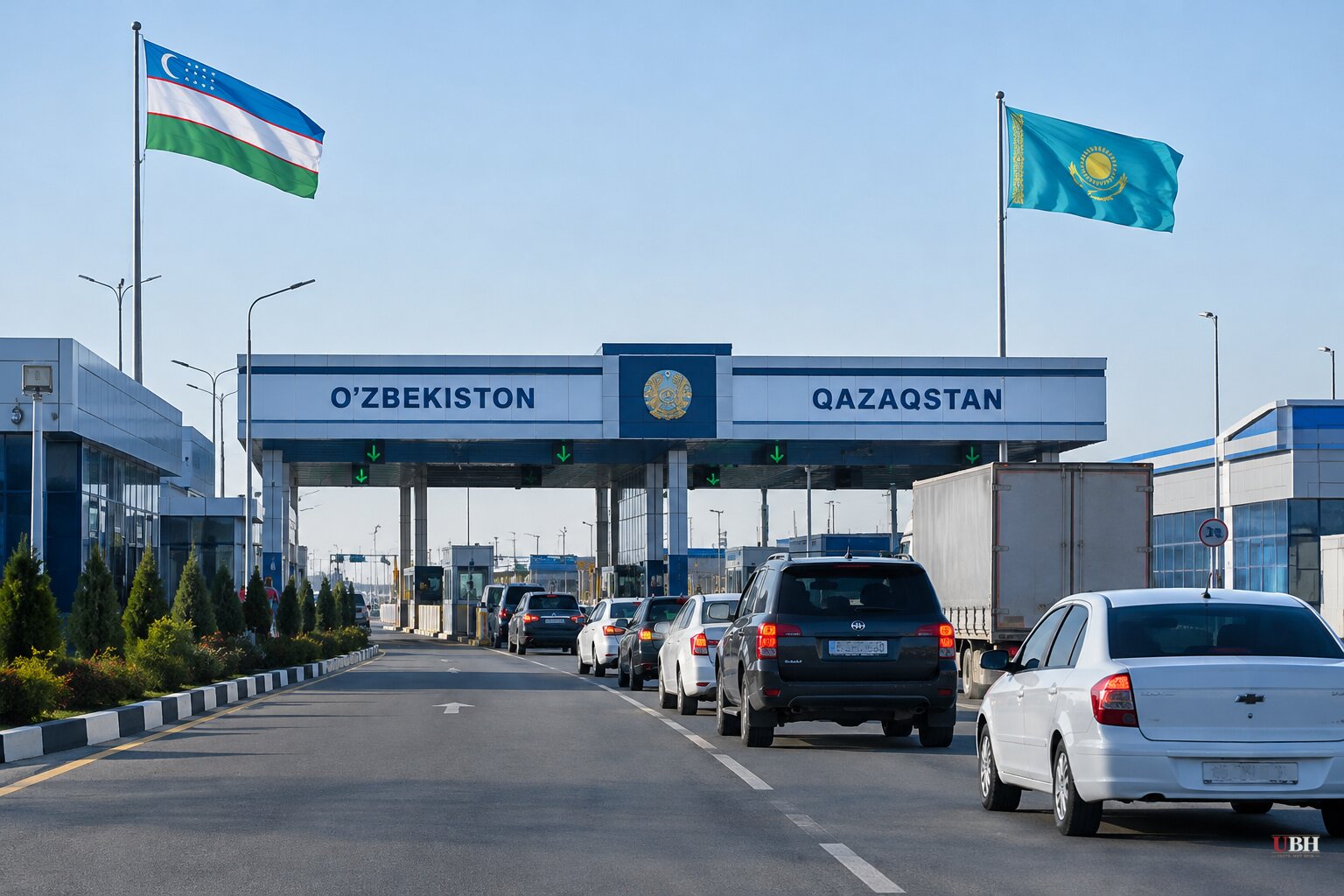
The Gishtkuprik crossing on the Uzbekistan–Kazakhstan border reopened on Nov. 25, 2026, after nearly two years of reconstruction. Border crossings on the Kazakh side go by the name Zhibek Zholy. Passenger crossings began at 16:00 local time, following a joint ribbon-cutting by Kazakhstan's Finance Minister Madi Takiyev and Uzbekistan's Deputy Prime Minister and Economy and Finance Minister Jamshid Kuchkarov.
The Uzbek side closed on Feb. 5, 2025. The work was initially planned to take four months, and the reopening date slipped several times before this week.
What was built
The Customs Committee of Uzbekistan says the post can now process up to 100,000 people a day. It also says the post can handle 3,000 passenger cars and 400 buses daily, up from 750 cars and 70 buses.
Figures for the Kazakh side differ. Kazakhstan's Finance Ministry says its terminals are built for up to 100,000 people during peak periods. Uzbek press reports citing the state news agency put the Kazakh checkpoint's daily capacity at 70,000 passengers and 2,000 cars. Euronews describes a 70,000 baseline rising to 100,000 at peak.
On the Uzbek side, per the Customs Committee:
- The site grew from six to nine hectares.
- Pedestrian lanes doubled from four to eight.
- Car inspection lanes rose from four to 18.
- Parking went from 20 spaces to 200.
- The post has four X-ray machines that can run at once, Face ID cameras at control points and a body scanner.
- It is the only road border crossing in Uzbekistan offering a Tax Free service.
On the Kazakh side, Kazakhstan's Finance Ministry says two new passenger terminals of roughly 10,000 square meters separate arrivals from departures. The terminals have 82 passport control booths and 20 automated "Q-gates." A 6,000-square-meter canopy covers vehicle inspections, and arrival lanes grew from two to six.
Why this crossing matters
The post has operated since Nov. 1, 1991. Uzbekistan's Customs Committee says 11.5 million people and 291,000 passenger cars crossed in 2024, up from 9.8 million people and 244,000 cars in 2023. That is a rise of almost 17% in people and 19% in cars. Kazakhstan's ministry puts 2024 crossings at more than 11 million. Euronews calculates that works out to about 30,000 a day.
During the closure, passenger vehicles were diverted to the Navoi checkpoint, which was built for freight. Truck access there was temporarily restricted. The Customs Committee says it expects freight to resume through Navoi now that Gishtkuprik is back. Kazakhstan's Finance Ministry says the closure put extra strain on neighboring crossings.
The reopened post serves pedestrians, cars and buses, not trucks. Any benefit to freight comes secondhand, by freeing up Navoi.
Tourism and trade
Jamshid Sobirov, a chief inspector at the Customs Committee, tied the project to a presidential target set in late 2025. That target is to raise the number of tourists visiting Uzbekistan from 11 million to 20 million over five years. Sobirov said the post uses technology not available at other Uzbek border crossings, and that authorities expect crossing times to fall.
No one has published a target crossing time or a wait-time baseline. One local resident told Euronews that before the closure, crossing by car meant waiting three or four hours, sometimes even 12.
The reopening also lands amid European Union interest in Central Asian transport links. On Nov. 16, representatives from the EU, Central Asia, the South Caucasus and the Black Sea region met in Brussels on transport, energy and digital infrastructure. The European Commission aims to triple trade flows along the Middle Corridor by 2030, according to Euronews. A passenger-only crossing is not part of that freight story directly.
What travelers should know
Not every Uzbek-Kazakh crossing has changed. A travel guide published Nov. 26 by morn.kz says the western Daut Ata–Tazhen road crossing, which serves the Nukus and Aral Sea region, has not been confirmed as reopened for passengers. Navoi–Kaplanbek remains an alternative to Gishtkuprik, and a direct international train runs from Tashkent to Almaty.
Travelers should also know the crossing's name changes with the side of the border. It is Gisht Kuprik, or Chernyaevka, in Uzbekistan and Zhibek Zholy in Kazakhstan. Both countries use UTC+5, so clocks stay put at the border.
Design capacity of 100,000 a day is more than three times the roughly 30,000 daily average from 2024. Whether the new lanes, scanners and Q-gates cut waits for ordinary travelers will show in actual crossing times once peak traffic returns.
Sources used for this briefing
7 links from 7 independent newsrooms (syndicated copies of the same report count once)
These are the sources it draws on, linked so you can verify.


