
Unbiased headlines. Facts, not spin.
Unbiased Headlines is an independently owned news organization. We bring you the facts, not opinions, written fresh from 110+ named sources. Sources linked so you can verify it yourself.
 economy
Major Story (8/10)
Vietnam Says Trade Talks Are 'Essentially Concluded' Two Days After US Proposes 35% Tariff
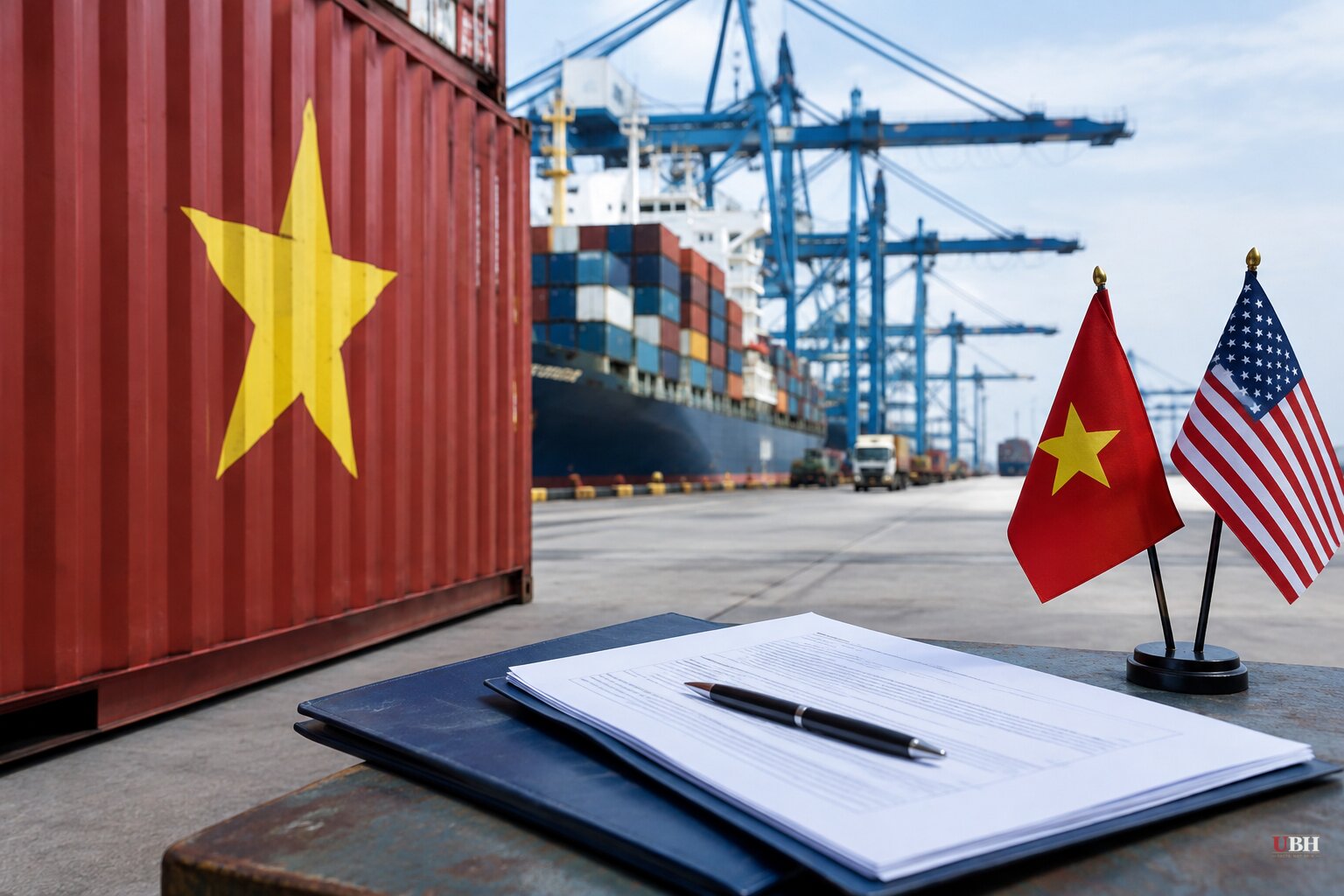
Vietnam says it is nearly done.
Prime Minister Le Minh Hung said in Hanoi on Friday, Nov. 27, that his country "has recently made very strong commitments and has essentially concluded negotiations" on a trade agreement with the United States. Both sides, he said, are "finalizing technical details for the signing," and the applicable rates "will be significantly lower than the maximum levels recently announced by the US."
Hung spoke at a ceremony marking the 30th anniversary of Vietnam's stock market. He gave no specific tariff number and no signing date.
What Washington proposed
On Wednesday, Nov. 25, the U.S. Trade Representative's office determined that structural excess capacity practices in 14 economies were unreasonable and burdened U.S. commerce. Vietnam is one of them, alongside China, the European Union, Japan, India, South Korea, Taiwan, Thailand, Indonesia, Malaysia, Singapore, Switzerland, Bangladesh and Cambodia.
For Vietnam, USTR proposed duties of up to 35% on all goods, net of existing Section 301 tariffs. That is second only to China's among the 14, and higher than Southeast Asian peers. USTR said it would consider lowering the rate to 20% if Vietnam signs a reciprocal trade agreement that addresses its findings.
The agency cited Vietnam's industrial and land planning, labor enforcement, financial repression, price regulation, failure to address imports, and investment from non-market economies. It said those practices matter most for textiles, apparel and footwear, shipbuilding, cement, and information and communications technology.
Some goods are exempt, including items already covered by Section 232 tariffs, informational materials and accompanied baggage, certain iron ores, and products listed in an annex. The annex includes semiconductor equipment and devices, computers, computer parts, network and mobile telephone equipment, and solid-state storage.
None of it is in effect. USTR will hold a public hearing in Washington on Jan. 25, 2027. U.S. Trade Representative Jamieson Greer told CNBC he does not expect any of the tariffs to take effect "earlier than a couple months from now."
Why Hanoi is moving
Vietnam has the largest trade surplus of any US trading partner. Total goods and services trade with the US reached an estimated $215.4 billion in 2025, up 39.1%. The US goods deficit with Vietnam widened 44.6% to $178.3 billion.
A deal at 20% would sit above the existing general duty of 12.5% and slightly above regional rivals, but far below 35% and well below China. Bangladesh, Cambodia and Indonesia have already struck deals with Washington at 18%.
Industry officials had expected an agreement in December, when Vietnamese leader To Lam is set to attend a G20 summit in Florida. Bruno Jaspaert, head of DEEP C Industrial Zones, which hosts multinational export factories in northern Vietnam, said: "I would not rule out a deal over the coming months." He added that most of the industries facing the highest threats "may have already made plans and carried out contingency measures."
John Campbell, head of industrial services in Vietnam at Savills, said the proposal "adds uncertainty for manufacturers serving the American market and could delay sourcing and expansion decisions." Garment, textile and footwear producers would be "particularly sensitive to higher costs and pressure on margins," he said.
Footwear industry officials have said Indonesia has drawn new investment while expansion has stalled in Vietnam, home to large Nike and Adidas operations.
A second front: intellectual property
The excess-capacity case is not the only pressure point. USTR designated Vietnam a "priority foreign country" for intellectual property protection in April, the first such designation of any country in 13 years. It cited online piracy, widespread counterfeiting, weak border enforcement, unlicensed software use, and cable and satellite signal theft.
A Section 301 investigation followed in May. On Nov. 10, USTR extended it by three months, and a decision on trade measures is due by the end of February. Vietnam's Foreign Ministry said in May that Hanoi had improved its legal framework and wants to keep working with Washington.
In August, To Lam urged the US to wrap up the probe quickly and avoid what he called "extreme trade remedy measures." Samsung and Tesla were among the companies that urged Washington not to raise tariffs on Vietnam over the IP findings.
Washington has also accused Vietnam of serving as a transit point for Chinese goods. That claim matters most for electronics, where Vietnamese factories assemble computers, tablets and consoles from large volumes of Chinese-made components.
The politics at home
The administration is turning to Section 301 after the Supreme Court ruled in February that the International Emergency Economic Powers Act does not authorize the president to impose tariffs. The new duties are also meant to help replace revenue lost in that ruling, according to the AP.
Democrats won majorities in the House and Senate in this month's midterms. Many campaigned against tariffs, and Democratic lawmakers have called for congressional approval of future tariffs. Trump can veto legislation aimed at overturning the duties, and some Democrats are expected to back certain tariffs, particularly on China.
The administration's position, stated by Greer, is that decades of foreign industrial strategies built on subsidies, state-owned enterprises and "wage and labor suppression" have eroded America's manufacturing base.
What to watch
The next dates are fixed: To Lam's G20 trip to Florida in December, the Jan. 25 hearing, and the Feb. 28 intellectual property deadline. Hanoi says the deal is nearly done, but neither government has said what rate Vietnam will actually pay, or whether a signed agreement would also settle the intellectual property case.
Sources used for this briefing
7 links from 7 independent newsrooms (syndicated copies of the same report count once)
These are the sources it draws on, linked so you can verify.


