
Unbiased headlines. Facts, not spin.
Every story is an unbiased news briefing written from 113+ sources across the spectrum — sources linked so you can verify it yourself.
 health
Notable (6/10)
Event date: September 22, 2026
health
Notable (6/10)
Event date: September 22, 2026
FDA Slaps Empower Pharmacy With Third Warning Letter Over Mass-Copied Ozempic and Zepbound Knockoffs
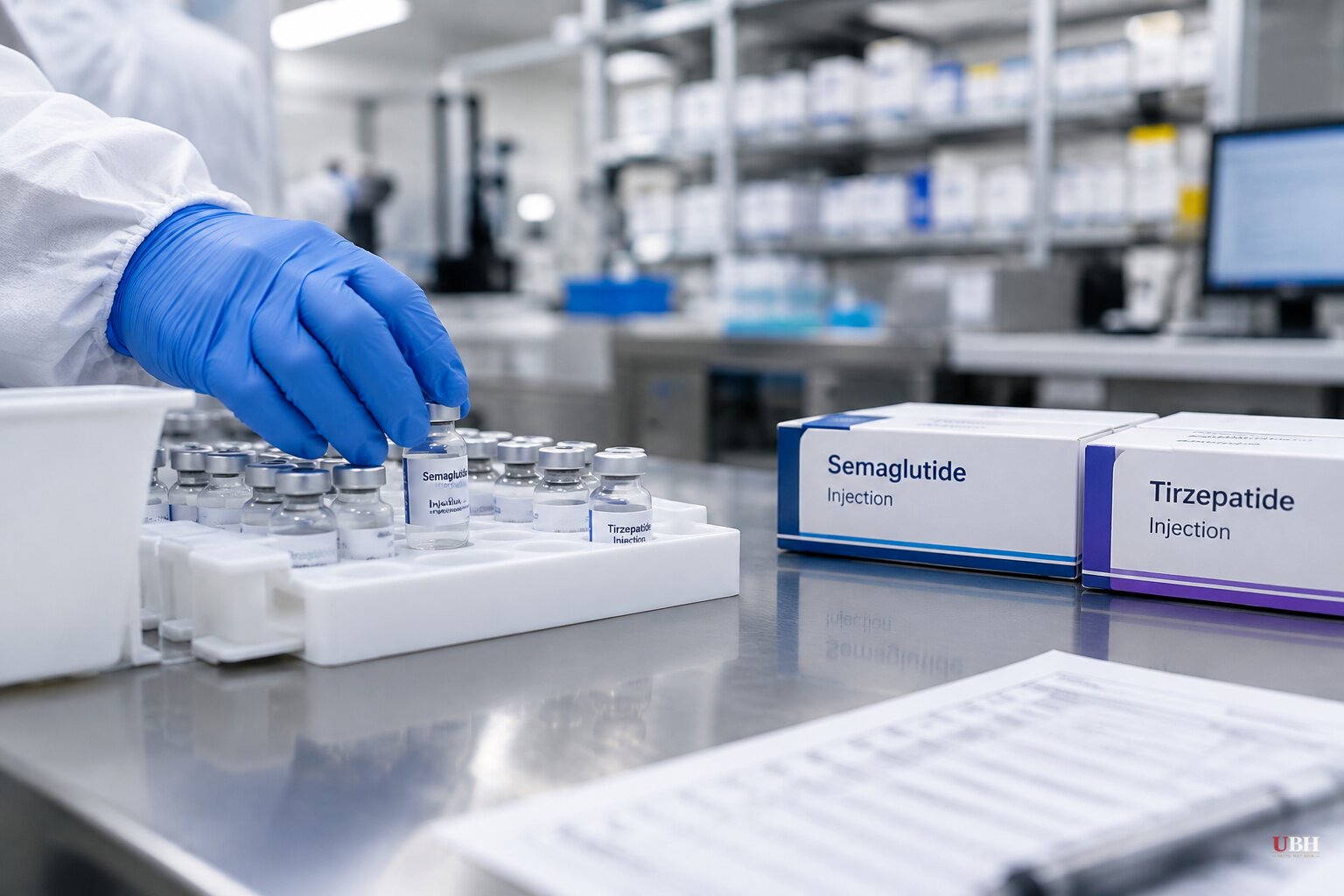
Since the FDA declared shortages of semaglutide and tirzepatide in 2022, letting compounding pharmacies legally copy Novo Nordisk's Ozempic and Wegovy and Eli Lilly's Mounjaro and Zepbound, that emergency exception has turned into a multiyear fight over who gets to make cheap versions of America's hottest drugs. The FDA declared the tirzepatide shortage over in December 2024 and the semaglutide shortage over in February 2025, according to MedPage Today. Now the agency has sent Houston-based Empower Pharmacy its third warning letter, according to Endpoints News, this one dated September 18 and posted publicly this week.
What the FDA Found
The letter followed a November 2025 facility inspection, according to MedPage Today. FDA investigators concluded Empower was producing drugs that were "essentially copies of FDA-approved semaglutide [Ozempic, Wegovy] and tirzepatide [Mounjaro, Zepbound] products," a violation of Section 503A of the Federal Food, Drug, and Cosmetic Act.
That law lets licensed compounding pharmacies tailor medications for individual patients but bars them from regularly copying commercially available drugs in "inordinate amounts" without a documented clinical reason specific to each patient. The FDA wasn't buying Empower's individualization claims. "The volume of products you are producing suggests that differences between products you are compounding and the FDA-approved products are pretextual," the agency wrote, as quoted by MedPage Today.
The formulations at issue combined the GLP-1 drugs with vitamins, specifically tirzepatide mixed with niacinamide and semaglutide mixed with cyanocobalamin, or B12. Because Empower failed to meet the 503A conditions, the FDA reclassified its products as unapproved new drugs and misbranded products, stripping the statutory protection compounders normally rely on.
Inspectors also found sterile drug products prepared, packed, or held under insanitary conditions that could leave them "contaminated with filth or rendered injurious to health," MedPage Today reported. The FDA said some of Empower's prior corrective actions were adequate and others were not. The company now has 15 working days to respond.
Empower told CBS News it has "already remediated many of the issues outlined in the Warning Letter" and will "continue to work cooperatively with the agency to ensure patient access to quality compounded drug products." The company still advertises tirzepatide and semaglutide products to healthcare providers on its website, according to CBS News.
The Lilly Lawsuit Still Hanging Over Empower
This isn't Empower's only legal headache. Eli Lilly is separately suing the company, arguing in court filings cited by CBS News that Empower's "practice of marketing (sham) 'personalized' products is deceptive, because in fact, Empower is mass-manufacturing standardized knockoffs of Lilly's commercially available and FDA-approved medicines." Empower denies the allegation in its own court filings, and the litigation remains unresolved. Neither the FDA warning letter nor the lawsuit has produced a court ruling or FDA enforcement action beyond the warning itself.
The Case Patients and Compounders Make
According to CBS News, compounded versions of these drugs drew millions of patients with much cheaper prices than the brand-name products once the FDA declared shortages in 2022. Smaller, state-licensed pharmacies have kept making compounded versions by leaning on a separate FDA allowance for a licensed prescriber to determine a change, like a different dose or an added vitamin, makes a "significant difference" for an individual patient. According to Darshan Kulkarni, founding partner of the Kulkarni Law Firm, the FDA's warning is more likely to prompt compounding pharmacies to reframe how they differentiate their weight-loss products than to immediately stop making them, though he said the avenue for doing so is narrowing. Scott Brunner, CEO of the Alliance for Pharmacy Compounding, said the FDA's warning wasn't about volume alone but about the lack of documentation proving Empower was appropriately customizing the drug for individual patient needs.
The China Supply Chain Angle
A separate but related concern involves where the raw ingredients for these drugs come from. Former Congressman Michael Burgess, writing in Breitbart, pointed to a February 2025 letter from 38 bipartisan state attorneys general warning the FDA about counterfeit and unapproved active pharmaceutical ingredients entering the U.S. supply chain from China, Turkey, and India. The attorneys general said those ingredients could carry contaminants, unknown substances, or dangerously incorrect potency, and urged the FDA to coordinate with Homeland Security and state pharmacy boards to stop it.
Burgess specifically criticized the FDA's "Green List," which grants preferential treatment to certain foreign API importers, arguing the trust-based system failed after a Chinese manufacturer, Harbin Jixianglong Biotech, was found sourcing unapproved semaglutide ingredient. That claim comes from Burgess's own advocacy piece rather than an FDA enforcement action, and no FDA warning letter tying Empower directly to Chinese-sourced ingredients has been reported.
What Happens Next
Empower's 15-working-day clock to respond to the FDA started September 18. The FDA's next moves against Empower and whether it targets other state-licensed compounders relying on the same "significant difference" exception remain unclear. Congressional action on the state attorneys general's and Burgess's push to overhaul the Green List is also pending.
Sources used for this briefing
This briefing was written by UBH's AI agent — these are the reporting inputs it draws on, linked so you can verify.


