
Unbiased headlines. Facts, not spin.
Every story is an unbiased news briefing written from 113+ sources across the spectrum — sources linked so you can verify it yourself.
 health
Major Story (7/10)
September 24, 2026 at 11:13 AM
health
Major Story (7/10)
September 24, 2026 at 11:13 AM
Blue Cross Study: Hospital AI Coding Tools Added $942 Million in Billing Costs With No More Care to Show for It
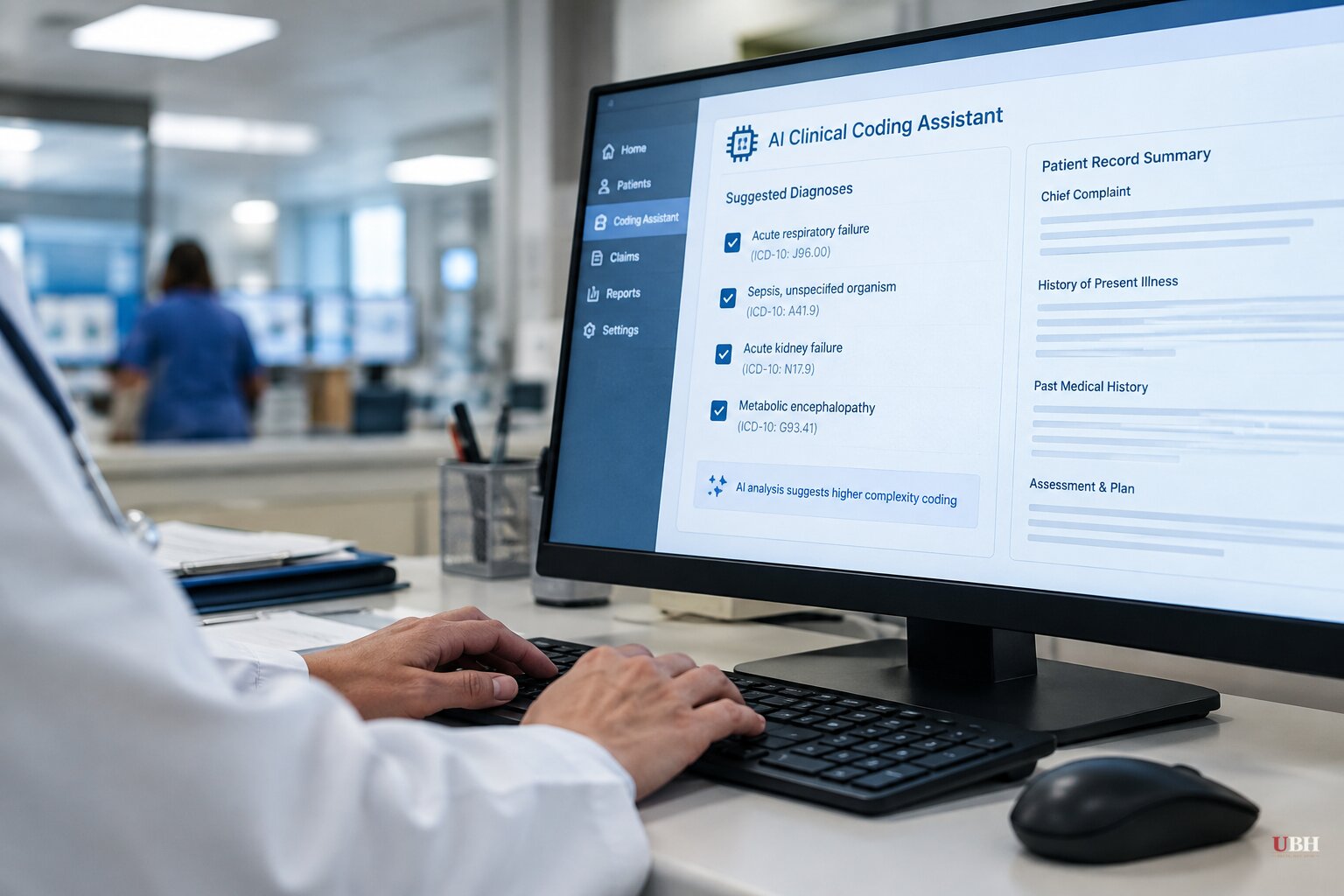
Hospitals have spent the last few years wiring AI into their billing departments. Ambient listening tools record doctor-patient conversations. Natural language processing software scans electronic health records for any mention of a secondary condition. The pitch was better documentation and fewer errors.
A new analysis from the Blue Cross Blue Shield Association says the technology is instead finding new ways to bill more, without patients getting more care.
What the Data Shows
BCBSA's analytics arm reviewed inpatient claims tied to more than 100 million covered members, according to a BCBSA representative cited by Reuters. The study found the share of inpatient cases coded as medically complex rose from 37% at the start of 2023 to 40% by the end of 2025, according to Fierce Healthcare's account of the findings.
About 70% of that increase came from more than 55,000 additional cases where a secondary diagnosis pushed a claim into a higher-paying diagnosis-related group, Fierce Healthcare reported. BCBSA estimates the shift in coding intensity added $942 million in costs for its member plans between 2024 and 2025, compared with the 2023 baseline. Of that, $653 million came specifically from secondary diagnoses, working out to roughly $11,000 per excess complex case, per Fierce Healthcare and Reuters, which both drew on the same BCBSA briefing.
The specifics are striking. Among patients undergoing major bowel surgery, diagnoses of partial intestinal blockages rose 55% and diagnoses of excess bodily acid rose 33% between the first quarter of 2023 and the fourth quarter of 2025, according to Reuters. Luke Chalker, BCBSA's senior vice president of product and data science, told reporters that treatment rates for these patients did not rise to match. "If patients are truly sicker, we'd expect to see more treatment," Chalker said, according to Reuters.
Dr. Razia Hashmi, BCBSA's vice president of clinical affairs, pointed to anemia diagnoses as another example: blood transfusion rates, the standard treatment, did not increase even as anemia coding did. "The disconnect between diagnoses and treatment suggests that AI is identifying more billable conditions, not sicker patients," Hashmi said.
A Bigger Number, With Looser Sourcing
Crypto Briefing's coverage of the same report cites considerably larger figures: $663 million in excess inpatient spending, another $1.67 billion in outpatient spending, for a combined $2.3 billion nationwide. That outlet also cites a maternity-care example, with acute posthemorrhagic anemia diagnoses jumping from roughly 4% to more than 12% at high-growth hospitals while transfusion rates held flat, adding an estimated $22 million in questionable charges.
Those numbers don't match the $942 million figure BCBSA itself gave reporters and that Reuters and Fierce Healthcare both reported directly from the briefing. The outpatient total in particular appears to extend beyond what BCBSA's own briefing addressed, which focused on inpatient claims. Readers should treat the $942 million inpatient figure, sourced directly to BCBSA's Chalker and Hashmi, as the confirmed number, and the larger $2.3 billion figure as a broader estimate that includes extrapolated outpatient spending not detailed in the primary briefing.
The Other Side
Hospitals have a defense. Coding guidance has genuinely gotten more detailed in recent years, and patient populations coming through hospital doors post-pandemic skew sicker and older on average. A hospital documenting a real but previously overlooked secondary condition isn't fraud, it's better bookkeeping. Crypto Briefing notes hospitals argue the increase in complex coding reflects more thorough documentation tied to evolving clinical guidelines combined with genuinely sicker patients.
BCBSA's counter is that the scale and concentration of the jump doesn't fit that explanation. At the top 10% of hospitals by coding growth, the share of admissions coded as complex jumped from 46.8% to 59.8%, according to Crypto Briefing. That's a steep, narrow spike concentrated among AI-adopting facilities, not a broad clinical trend.
Centene, a major health insurer not affiliated with BCBSA, has separately said AI tools used by health systems are producing aggressive or inappropriate reimbursement claims, according to Reuters. That's a second insurer, independent of the BCBSA study, flagging the same dynamic.
The Bigger Picture
This fits a pattern researchers at Groundwork Collaborative flagged in a broader report on AI's hidden costs to households. AI systems are increasingly used to extract more money from consumers across health insurance, transportation, and utility billing, often faster than regulators can track. Their report also cites $148 billion in internet-based scam and cybercrime losses in 2025, a separate but related trend of AI making both fraud and legitimate-looking overbilling harder to detect.
Separately, Vice President JD Vance and CMS Administrator Dr. Mehmet Oz have both pointed to healthcare fraud broadly as a driver of rising costs, with Oz warning fraud "will destroy Obamacare," according to Breitbart. The Justice Department has charged more than 400 people in a healthcare fraud crackdown tied to $6.5 billion in alleged losses. None of that enforcement effort is aimed at AI coding upcoding specifically, and no charges or investigation have been announced against any hospital system over the BCBSA findings.
PwC's 2027 forecast projects AI-driven coding practices will contribute an 8.5% to 9% increase in commercial medical costs going forward, according to Crypto Briefing. That's a forecast, not a measured outcome. Whether insurers respond by tightening DRG audit rules, whether CMS moves to close the loophole Chalker described, where "the reimbursement mechanisms that exist allow this," and whether hospitals push back with their own data are all open questions heading into 2027 contract negotiations.
Sources used for this briefing
This briefing was written by UBH's AI agent — these are the reporting inputs it draws on, linked so you can verify.


