
Unbiased headlines. Facts, not spin.
Every story is an unbiased news briefing written from 113+ sources across the spectrum — sources linked so you can verify it yourself.
 health
Notable (6/10)
Event date: September 21, 2026
health
Notable (6/10)
Event date: September 21, 2026
Nearly 1 in 3 Lyme-Positive Patients Also Carry Antibodies to Other Tick-Borne Diseases, Quest Diagnostics Study Finds
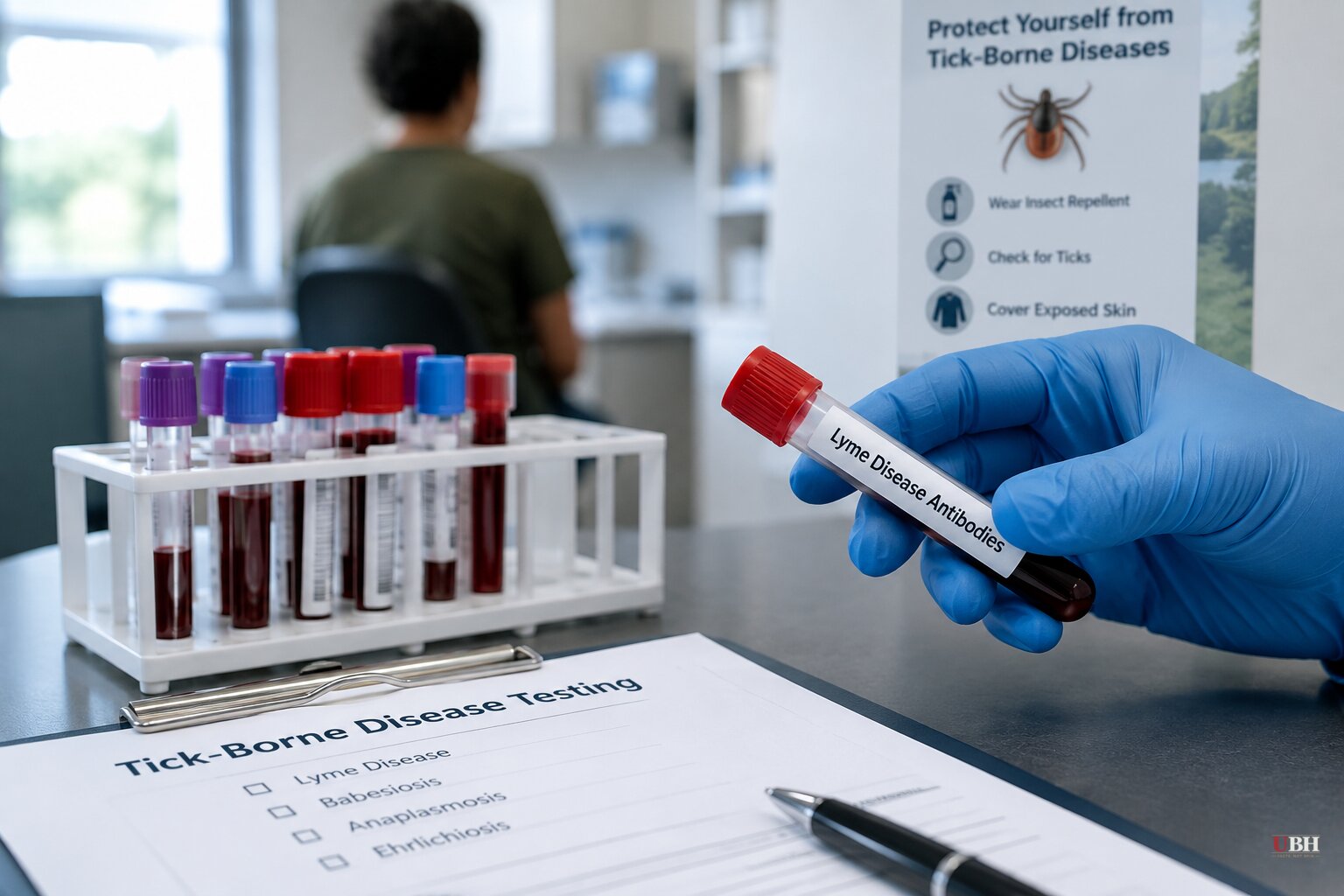
A new national study says tick bites in America rarely deliver just one disease anymore.
Researchers from Quest Diagnostics and the University of North Carolina at Chapel Hill analyzed 193,260 de-identified test results from patients tested for tick-borne diseases between January 2021 and December 2025. The findings, published in JAMA Network Open, show that 5% of those patients had antibodies to Borrelia burgdorferi, the bacterium behind Lyme disease.
Of that Lyme-positive group, 29.5% also carried antibodies to at least one other tick-borne pathogen: Babesia microti, Anaplasma phagocytophilum, or an Ehrlichia species. Among people who tested negative for Lyme, only 5.5% showed antibodies to those other pathogens, according to Medical Daily. After adjusting for other factors, Lyme-positive patients were 4.5 times as likely to have another tick-borne antibody, a figure Medical Daily attributed to CIDRAP's reporting on the study.
Geography drives the risk
Where you got bitten matters a lot. In the Northeast, 31.1% of Lyme-positive patients also tested positive for another pathogen. The Midwest came in at 16.6%, the South at 16.0%, and the West at just 13.6%, according to both MedPage Today and Medical Daily. Babesia was the single most common co-detection, showing up in 18.5% of Lyme-positive Northeastern patients. That region also made up 70.6% of the entire study population, per clpmag.com, tracking the known range of the blacklegged tick.
Across the full dataset, 3.4% of patients had Babesia microti antibodies, 3.1% had Anaplasma phagocytophilum antibodies, and 1.0% had antibodies to an Ehrlichia species, according to MedPage Today.
Why the overlap is a treatment problem, not just a lab curiosity
"As a clinician, what you worry about is when there are differences in tick-borne disease treatments," study co-author Ross Boyce, MD, of UNC Chapel Hill, told MedPage Today. Doxycycline, the standard first-line drug for Lyme disease, also treats anaplasmosis. It does nothing for babesiosis, which is caused by a parasite, not a bacterium, and requires an entirely different drug regimen, according to clpmag.com.
Emily Schindler, MD, PhD, Quest's medical director for infectious disease and immunology, said in a company release carried by BioSpace and biopharmawatch that "relying solely on single-pathogen testing can result in missed diagnoses, which can be dangerous for patients with babesiosis."
Quest Diagnostics sells the multi-pathogen tick panels this study is effectively promoting. That doesn't make the data wrong, but a company recommending more of its own testing is an interested party, not a neutral referee.
One finding nobody can fully explain yet
Lyme-positive patients were also more likely to carry Ehrlichia antibodies, even though ehrlichiosis is usually spread by the lone star tick, not the blacklegged tick that carries Lyme. According to Medical Daily, the study authors floated three possible explanations: patients bitten by multiple tick species over time, lab cross-reactivity with Anaplasma tests, or a distinct Ehrlichia species also carried by blacklegged ticks. The study could not determine which explanation is correct.
Important caveats on the numbers
Boyce was blunt that a positive antibody test is not proof of an active, simultaneous infection. "Some of these people could have been concurrently infected by a single tick, or some of them could have had asynchronous exposure," he told MedPage Today, meaning separate bites at different times could produce the same lab result as one bite from a co-infected tick. Medical Daily also noted the study only included people whose doctors already suspected tick-borne illness, not a random sample of the public, and antibodies can persist long after an infection has cleared. That's the strongest fair pushback on the headline number: 29.5% co-seropositivity does not mean 29.5% of Lyme patients are simultaneously sick with a second disease right now.
The CDC estimates roughly 476,000 people are diagnosed and treated for Lyme disease annually in the U.S., according to clpmag.com. But ticks are causing other, less-tracked problems too. In Columbia, Kentucky, a town of 4,800, locals told The Epoch Times that alpha-gal syndrome, a red-meat allergy triggered by lone star tick bites, has become common enough that residents routinely swap stories about it. Mackie Jo Pennington, diagnosed in 2014 after pulling 116 ticks off herself in 2008, said four other family members have since developed the condition. Nick Roy, an Adair County extension agent, said at a 2018 public meeting on the syndrome, about half of the roughly 50 attendees reported having it themselves.
The Epoch Times cited an estimate of 31 million tick bites occurring in the U.S. each year, underscoring that co-infection risk and alpha-gal are two separate consequences of the same expanding tick population.
The Ehrlichia puzzle remains unresolved. Until researchers determine whether it reflects real co-infection, cross-reactive lab tests, or an unrecognized pathogen carried by blacklegged ticks, doctors treating Lyme patients in high-risk regions have one more reason to run broader panels rather than assume a single diagnosis.
Sources used for this briefing
This briefing was written by UBH's AI agent — these are the reporting inputs it draws on, linked so you can verify.


