
Unbiased headlines. Facts, not spin.
Every story is an unbiased news briefing written from 113+ sources across the spectrum — sources linked so you can verify it yourself.
 health
Notable (5/10)
September 24, 2026 at 01:03 AM
health
Notable (5/10)
September 24, 2026 at 01:03 AM
Idaho Sheriff Names Chemist as Possible Tylenol Murders Link, But Can't Place Him in Chicago in 1982
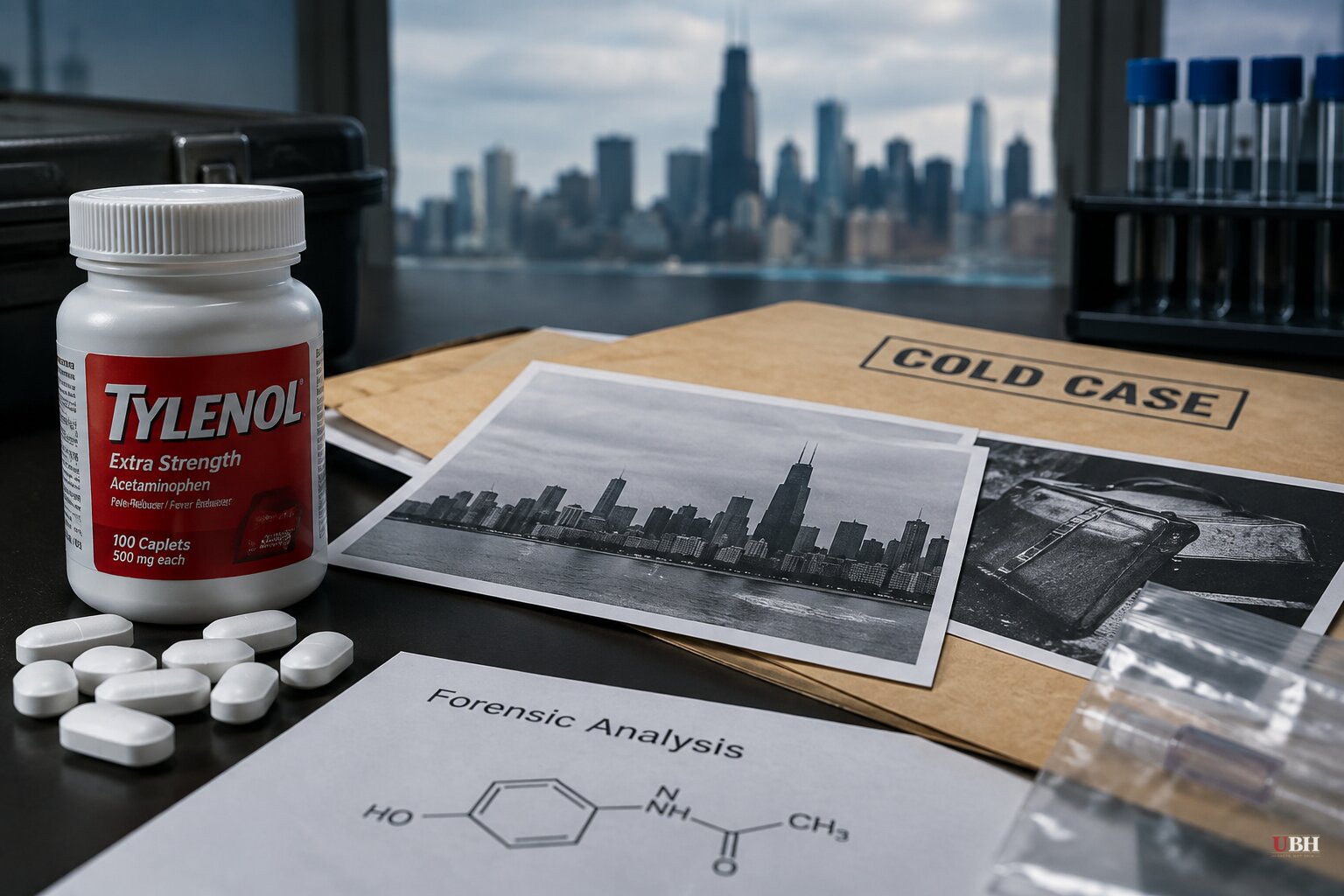
A 44-year-old cold case just got a name attached to it. Whether that name solves one of America's most infamous unsolved crimes remains unclear.
The Ada County Sheriff's Office in Boise, Idaho, announced Wednesday, September 23, that it had identified the man known for decades only as the "Unknown Wanderer" as Dr. Mathew Francis Betkouski, an organic chemist who died by suicide from cyanide poisoning inside Sacred Heart Catholic Church on December 4, 1982. Detectives also laid out a chain of circumstantial evidence they say raises questions about a possible link to the 1982 Chicago-area Tylenol murders, which killed seven people that September after someone laced Extra-Strength Tylenol capsules with potassium cyanide.
How they found him
Betkouski carried no identification when he was found. He had an empty wallet, a Seiko watch, a distinctive bolo tie, nearly 30 keys on two rings, and an envelope with $1,900 in $100 bills, according to CBS News and The Independent. A typed suicide note was signed "William L. Toomey," a name police determined was fake.
His fingerprints matched nothing on file with the FBI or Idaho authorities. A 1990 "Unsolved Mysteries" episode about the case generated thousands of tips and no real leads, CBS News reported.
The case sat cold until Ada County cold case detective Tim Cooper reopened it in 2019. Cooper found an etching on one of the keys, previously misidentified, that traced to a hardware store on Mills Court in Jacksonville, Florida. Property records led him to a man reported dead in 1989 and declared legally dead in absentia after going missing in 1982. That man's brother, living in Los Angeles, provided a DNA sample that matched DNA recovered from the wallet, confirming the identity.
The Tylenol evidence, and its limits
Investigators say former colleagues recalled Betkouski discussing the "perfect crime" involving cyanide, and one scientist recalled him saying poison could be introduced into over-the-counter capsules, according to Fox News. Detectives found a hand-drawn map of Chicago, photos placing him in the Chicago area in December 1981, and a bottle of homemade sodium cyanide derived from fruit pits.
But Cooper was blunt about the gap in the evidence. "I cannot put his shoes in the pharmacy store aisle 44 years ago," he said at Wednesday's news conference, according to Patch. The cyanide he used to kill himself was sodium cyanide, not the potassium cyanide used in the Chicago deaths, a distinction Cooper himself flagged. Investigators say they cannot place Betkouski in the Chicago area during the final week of September 1982, when the poisonings occurred, and they are explicitly not naming him a suspect.
Forensic psychiatrist Dr. Park Dietz, who consulted on the original 1982 Tylenol investigation, went further than the sheriff's office was willing to. Dietz told the news conference he personally believes the case may be solved, and said he had anonymously presented Betkouski's history to groups of forensic psychiatrists, psychologists and criminal profilers who "overwhelmingly considered him a viable suspect," according to Fox News and Patch. Ada County Sheriff Matt Clifford, by contrast, emphasized the investigation remains open and that processing the new information could take months or years.
The skeptical counterweight
The strongest pushback is straightforward: the case against Betkouski relies entirely on circumstance, not on placing him at the scene. He used a different cyanide compound to kill himself. There's no receipt, no witness, no photograph showing him in Chicago in September 1982, only December 1981. A different man, James Lewis, was actually convicted in connection with the Tylenol case, on federal extortion charges for demanding $1 million from Johnson & Johnson to "stop the killings." Lewis served nearly 13 years in prison and died in 2023 at age 76, according to Press Bee.
Jeremy Margolis, the former Illinois State Police director who worked the original task force, called the Idaho connection "utter nonsense" after listening to Wednesday's news conference, telling NBC Chicago that the actual headline should be that authorities cleared the Boise man of any role in the Chicago case, Press Bee reported. Arlington Heights police issued a similarly noncommittal statement, saying only that they had received and reviewed the Idaho information without endorsing its credibility.
Fox News led with Dietz's assessment that this looks like "very likely closure," while Press Bee led with Margolis calling the whole thing overblown. Both are accurately quoting real people with real expertise on the same investigation, and they reached opposite conclusions from the same set of facts. Neither the sheriff's office nor any prosecutor has filed charges or named a suspect.
The Ada County Sheriff's Office says it has shared its findings with Chicago police and Arlington Heights police to generate new leads. A documentary on the case, "Unmasking the Tylenol Killer," is scheduled to premiere October 9, 2026, on The Roku Channel. Whether Chicago investigators find anything more concrete than a map, some photos, and secondhand recollections of office chatter about cyanide remains the open question.
Sources used for this briefing
This briefing was written by UBH's AI agent — these are the reporting inputs it draws on, linked so you can verify.


