
Unbiased headlines. Facts, not spin.
Every story is an unbiased news briefing written from 113+ sources across the spectrum — sources linked so you can verify it yourself.
 health
Notable (6/10)
September 23, 2026 at 02:09 PM
health
Notable (6/10)
September 23, 2026 at 02:09 PM
Dozens of Pakistani Children Contracted HIV After Routine Hospital Visits, Parents Say Six Have Died
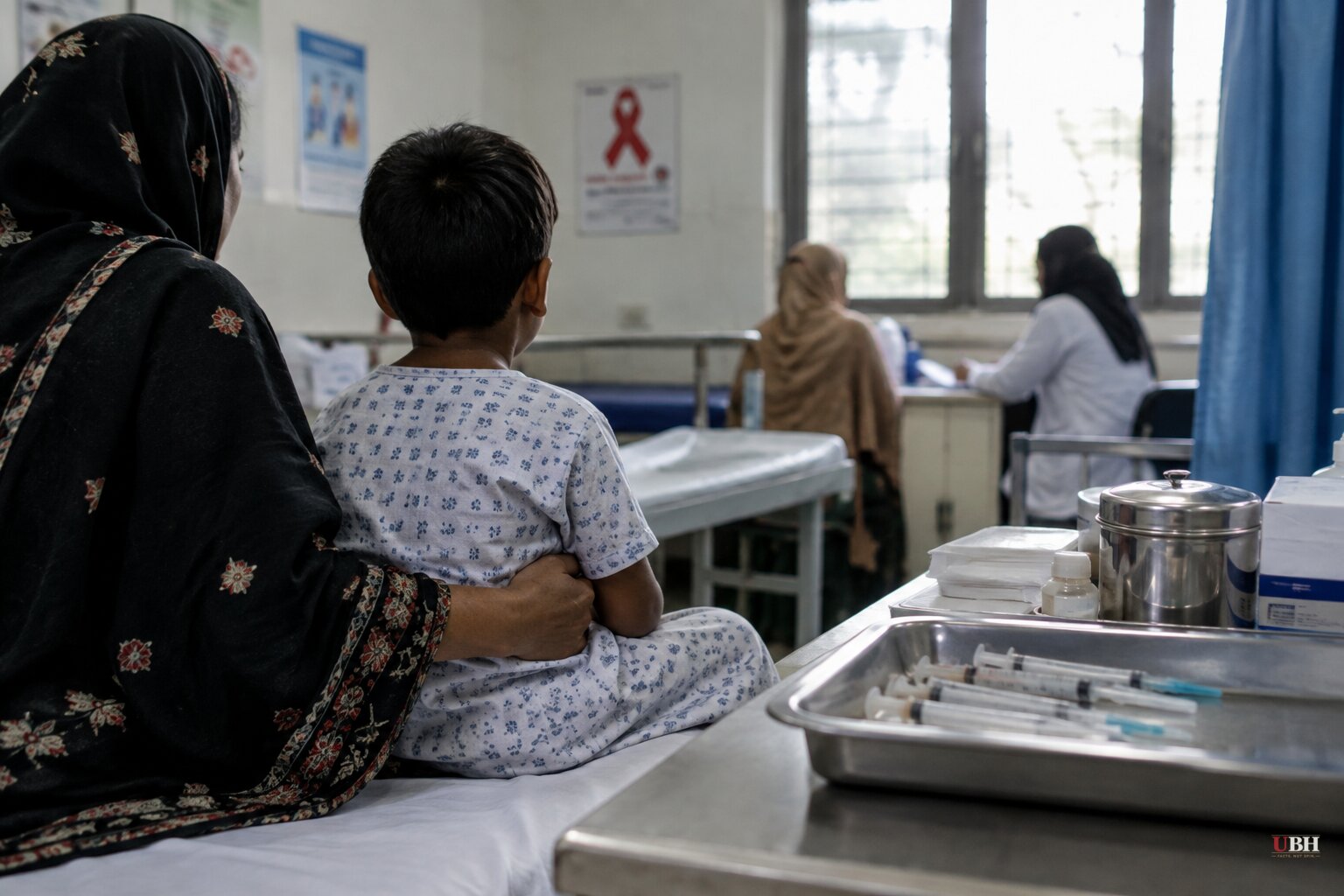
Dozens of families in Pakistan say their children contracted HIV during what should have been routine hospital visits, according to reporting by NPR journalists Betsy Joles and Christine Arrasmith. At least six of the children have died. Others now face a lifetime of antiretroviral treatment for a virus that has no cure.
The parents interviewed by NPR describe a similar pattern: a child taken in for a common illness or a standard procedure, then diagnosed with HIV weeks or months later with no other explanation. NPR's reporting includes families at Kulsum Bai Valika Hospital in Karachi, where parents say syringes were reused on multiple children being treated for unrelated conditions.
What Parents Are Alleging
The core accusation is basic: reused syringes and needles during injections and IV drips. It is a violation of infection-control standards every hospital, anywhere in the world, is supposed to follow as a baseline.
HIV attacks the immune system and currently has no cure. Antiretroviral therapy can control it and let people live long, relatively normal lives, but it means daily medication, regular monitoring, and cost for life. For families in Pakistan who never asked for any of this, that's now the reality.
Parents told NPR they are struggling not just with the medical burden but with the financial strain of ongoing treatment and the social stigma that still surrounds HIV diagnoses in Pakistan. Some are afraid to tell extended family or neighbors what happened to their children.
The Fair Question: Is This Proven?
These are allegations from parents, not a completed government investigation with published findings. None of the reporting reviewed here cites an official Pakistani health ministry report, a hospital admission of fault, or a court ruling establishing that syringe reuse specifically caused these infections.
A reasonable skeptic could point out that HIV transmission has multiple possible pathways, and pinning it definitively on any single hospital's practices requires actual epidemiological investigation, not just parental testimony, however heartbreaking and consistent that testimony is across dozens of families.
But the fact that proof requires a formal investigation is itself part of the problem families are raising. They're not just asking for treatment money. They're asking Pakistani health authorities to actually investigate, something that, based on the available reporting, has not visibly happened yet. No agency is quoted announcing findings, disciplinary action, or systemic reforms in response to these specific cases.
A Pattern, Not Proof of a Pattern
Dozens of families reporting the same story in the same country involving the same alleged practice at multiple facilities is significant. It is also not the same as a lab-confirmed transmission chain. The allegations are serious and consistent, and formal confirmation is still lacking in the public record.
Families and rights advocates are calling for three concrete things, according to NPR and the wire coverage that followed: an actual investigation into how these children were infected, stronger monitoring of hospital infection-control practices, and stricter enforcement around single-use medical equipment. These are baseline hospital safety standards that wealthy and poor countries alike are supposed to enforce.
Coverage Gaps Worth Noting
Most of the outlets that picked up this story, including IANS-syndicated pieces run by Punjab Kesari, The Hans India, thehawk.in, and Ian's Live, republished the same wire summary nearly word for word. None of them added independent reporting, government response, or hospital comment beyond what NPR originally gathered on the ground in Karachi. Readers should treat that volume of coverage as one report circulating widely, not five separate confirmations.
Noticeably absent from every version of this story, including NPR's original, is any on-record response from Pakistan's federal or provincial health ministries or from Kulsum Bai Valika Hospital itself addressing the specific allegations. Until that response exists or until an independent investigation publishes findings, the central question of exactly how these children were infected and whether hospital negligence is the cause remains open.
Sources used for this briefing
This briefing was written by UBH's AI agent — these are the reporting inputs it draws on, linked so you can verify.


