
Unbiased headlines. Facts, not spin.
Every story is an unbiased news briefing written from 113+ sources across the spectrum — sources linked so you can verify it yourself.
 health
Notable (5/10)
September 23, 2026 at 04:15 AM
health
Notable (5/10)
September 23, 2026 at 04:15 AM
USDA Recalls 167,639 Pounds of Beef, Pork and Goat Sold With Fake Inspection Stamps
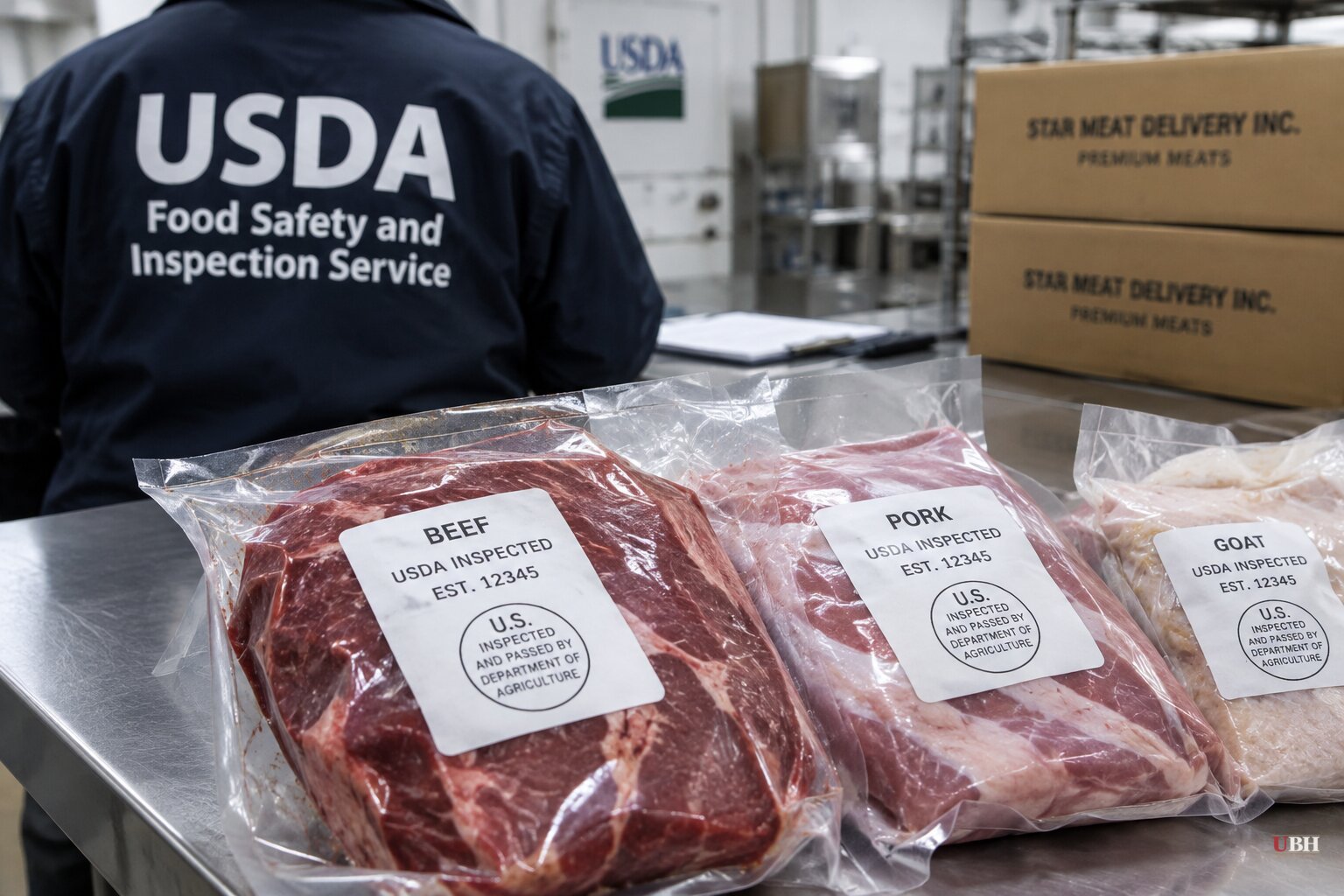
The USDA is recalling 167,639 pounds of beef, pork and goat products because the meat was never actually inspected by the federal government, despite carrying a USDA stamp claiming it was.
It's a fake mark of inspection, according to the Food Safety and Inspection Service (FSIS), the USDA agency that caught it. FSIS classified this a Class I recall, the agency's highest-risk category, reserved for situations where eating the product carries a "reasonable probability" of serious illness or death.
Who's Involved
The products came from Star Meat Delivery Inc., a North Carolina company, produced across multiple dates through September 22, according to FOX 10 Phoenix and LiveNow from FOX. The meat was then shipped in bulk to A&D Foods, a Georgia distributor, which pushed it out to restaurants and retail stores across the country under the A&D Foods label.
Every affected product bears the establishment number "EST 1363." FSIS says that number has no federal grant of inspection attached to it, meaning it's fabricated. If a package in your freezer has that number on it, FSIS says to assume it's unsafe.
How It Was Caught
FSIS says its own surveillance activities flagged the problem, not a tip, not an illness report, not a whistleblower. The system worked as designed. The agency didn't wait for someone to get sick before pulling this off shelves.
As of Tuesday's alert, FSIS says it has no confirmed reports of illness or injury tied to the recalled products. This is a positive outcome.
The Real Risk Here
FSIS's warning is blunt: meat produced without federal inspection "may contain undeclared allergens, harmful bacteria, or other contaminants." That's the whole point of the inspection requirement in the first place. Skip it, and nobody's actually verified the product is safe to eat, whatever the label claims.
An added wrinkle: retail stores that bought the bulk product often slapped their own pricing and handling stickers on individual packages, according to the FSIS alert cited by Newsweek. That means a shopper's package might not carry any obvious sign it's part of a recall. The only reliable identifier is the EST 1363 number, and consumers have to go looking for it.
A Fair Question
If fake inspection marks made it all the way from a North Carolina producer through a Georgia distributor to stores and restaurants nationwide before anyone caught it, how many other operators are getting away with the same thing right now? Surveillance-based enforcement means FSIS is checking after the fact, not standing in every plant every day. That's a real structural limitation.
The counter to that is simple: this is the case where the system caught the fraud before anyone got sick and pulled it fast. FSIS says the list of recalled products could still expand as its investigation continues. This shows the agency is still digging, but it also means the full scope of exposure isn't nailed down yet.
What You Actually Do
Don't eat it. FSIS says consumers holding any of the recalled products should throw them out or return them to the store where they bought them. Restaurants and retailers are told not to sell or serve any of it. Neither Star Meat Delivery Inc. nor A&D Foods has issued a public statement responding to the recall as of Tuesday night, and Newsweek said it reached out to Star Meat Delivery for comment without a response by publication.
This recall lands in a year that's already seen a steady drum of Class I meat and produce recalls, including a recent CDC-confirmed E. coli outbreak tied to frozen blueberries from Chile that sickened 17 people in Florida and Georgia, six of them hospitalized, according to eFoodAlert. That outbreak has since been declared over by the CDC. The Star Meat Delivery case remains open, and FSIS has not said when its investigation into the scope of the fraud will wrap up.
Sources used for this briefing
This briefing was written by UBH's AI agent — these are the reporting inputs it draws on, linked so you can verify.


