
Unbiased headlines. Facts, not spin.
Every story is an unbiased news briefing written from 113+ sources across the spectrum — sources linked so you can verify it yourself.
 health
Notable (6/10)
Event date: September 21, 2026
health
Notable (6/10)
Event date: September 21, 2026
HHS Opens 30-Day Comment Window on Cell Phone and Wi-Fi Radiation, Citing a 2021 Court Loss for the FCC
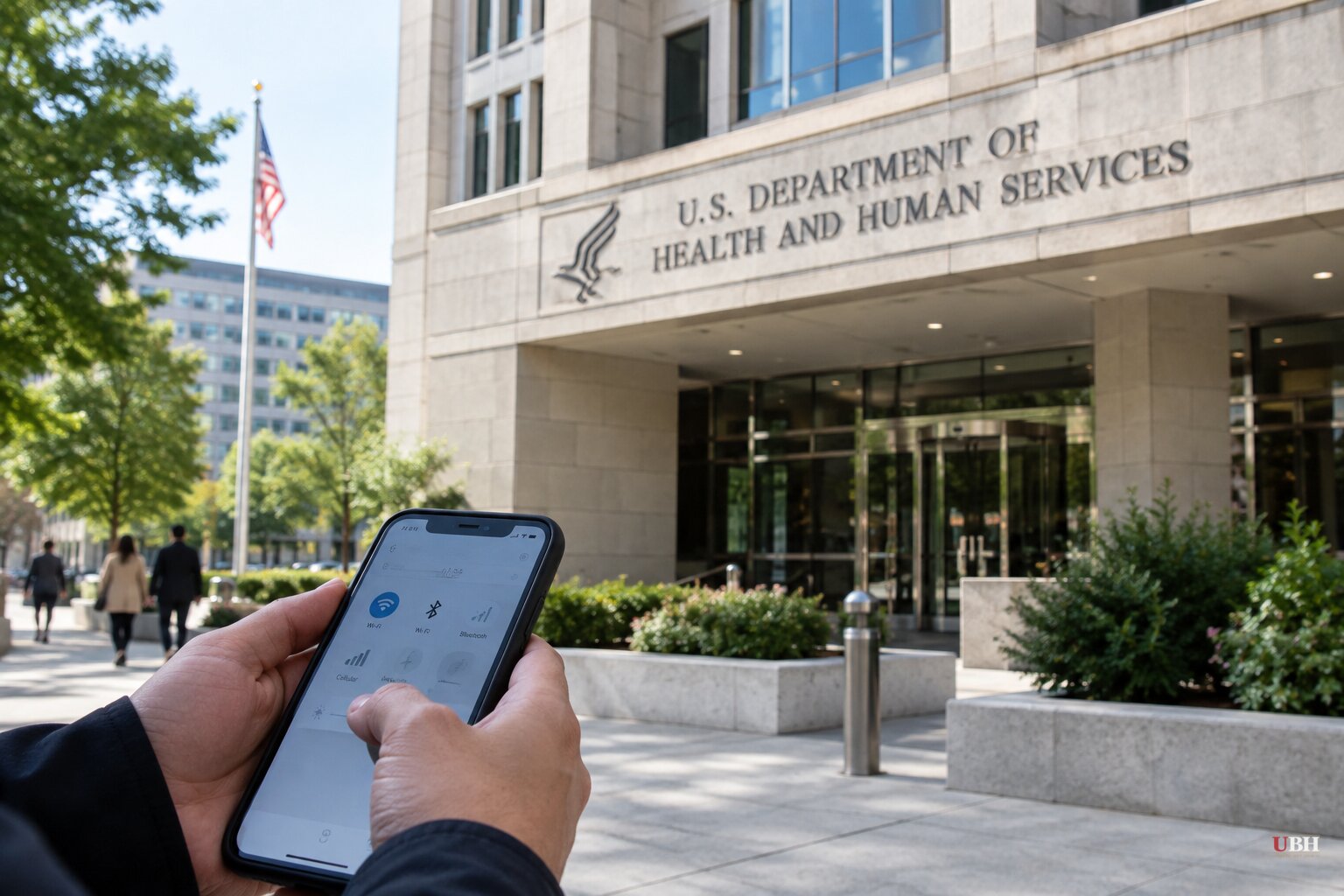
The Department of Health and Human Services opened a 30-day public comment period on September 21 seeking evidence on whether electromagnetic fields and radiofrequency radiation from everyday wireless devices pose health risks.
HHS Secretary Robert F. Kennedy Jr. announced the Request for Information on September 17, according to a press release from HHS. The agency wants input on exposure from mobile phones, Wi-Fi, smart meters, wearables, wireless medical devices, 5G, 6G, satellite communications, and other technologies built into modern life.
"Wireless technologies are part of daily life, and our science must keep pace," Kennedy said in the HHS release. He said the effort stems from the MAHA Strategy, which he said directed HHS to examine electromagnetic radiation and health research.
Kennedy made the announcement at a conference for Children's Health Defense, a nonprofit he once chaired, according to Scientific American and Yahoo News. At the same event, he said HHS would also investigate "chemtrails," the term some people use, without evidence, to allege that airplane contrails spread secret chemical or biological agents.
Scientific American drew a sharp line between the two claims. Chemtrails are "firmly in the realm of conspiracy theory," the outlet reported, while electromagnetic field and radiofrequency exposure have been the subject of decades of legitimate scientific study. Bundling the two together in one announcement risks tainting a genuine research question with a debunked one.
The Legal Backstory
Kennedy has a documented history with this issue beyond rhetoric. As a lawyer, he was involved in litigation against the Federal Communications Commission that led to a 2021 ruling from the U.S. Court of Appeals for the District of Columbia Circuit, according to the Epoch Times. That court found the FCC acted in an "arbitrary and capricious" manner by keeping 1996 wireless radiation limits in place without adequately explaining why those limits protected against non-cancer health effects. The court ordered the FCC to properly review the evidence.
Children's Health Defense has since filed a new case alleging the FCC has not complied with that order, the Epoch Times reported, and the commission has until later in September to respond. The FCC's own website currently states that "no scientific evidence currently establishes a definitive link between wireless device use and cancer or other illnesses."
Kennedy told the conference that court filings supporting the 2021 case included more than 10,000 studies. "But there are still gaps in knowledge, and we're filling those," he said, adding that HHS will release a report incorporating the public comments this fall.
What the Research Actually Shows
The RFI invites individuals to submit personal accounts of health effects they believe are tied to device exposure, alongside peer-reviewed studies, government reports, and industry data.
Kenneth Foster, a professor emeritus of bioengineering at the University of Pennsylvania, told Scientific American that soliciting anecdotes is not how a rigorous scientific review works. "The way that any health agency would manage this is to have a systematic, careful review looking at all the evidence, considering the strengths and weaknesses and trying to put together some kind of consensus or holistic picture," Foster said. "That process is very different than the process of soliciting opinions from various people about what they think happened to them."
The existing evidence base is substantial. A set of 12 systematic reviews commissioned by the World Health Organization examined frequencies from zero to 300 gigahertz, a range covering typical cell phone exposure, according to Scientific American. Those reviews found no or very small effects on cancer risks such as lymphoma and glioma, little evidence of symptoms directly caused by RF exposure, and highly variable results on oxidative stress and fertility in lab animals. A 2024 prospective study tracking more than 250,000 people found no increased risk of brain cancer tied to cell phone use.
The concern Kennedy raises in the RFI document itself—that public worry has grown "particularly in relation to children, schools, and long-term cumulative exposure" and that the scientific literature is "extensive, technically complex, and not always easy for policymakers to interpret"—reflects a genuine communication gap between researchers and the public. This does not establish on its own that current exposure limits are unsafe.
The unresolved question is what standard HHS will apply when it sorts through thousands of public submissions, many of which will be personal testimony rather than controlled data, to produce a report intended to shape federal guidance for schools and families this fall.
Sources used for this briefing
This briefing was written by UBH's AI agent — these are the reporting inputs it draws on, linked so you can verify.


