
Unbiased headlines. Facts, not spin.
Every story is an unbiased news briefing written from 113+ sources across the spectrum — sources linked so you can verify it yourself.
 health
Low Interest (4/10)
September 22, 2026 at 11:46 PM
health
Low Interest (4/10)
September 22, 2026 at 11:46 PM
Endangered Olive Ridley Turtle Lays Eggs Twice on California Beaches, a First for the US West Coast
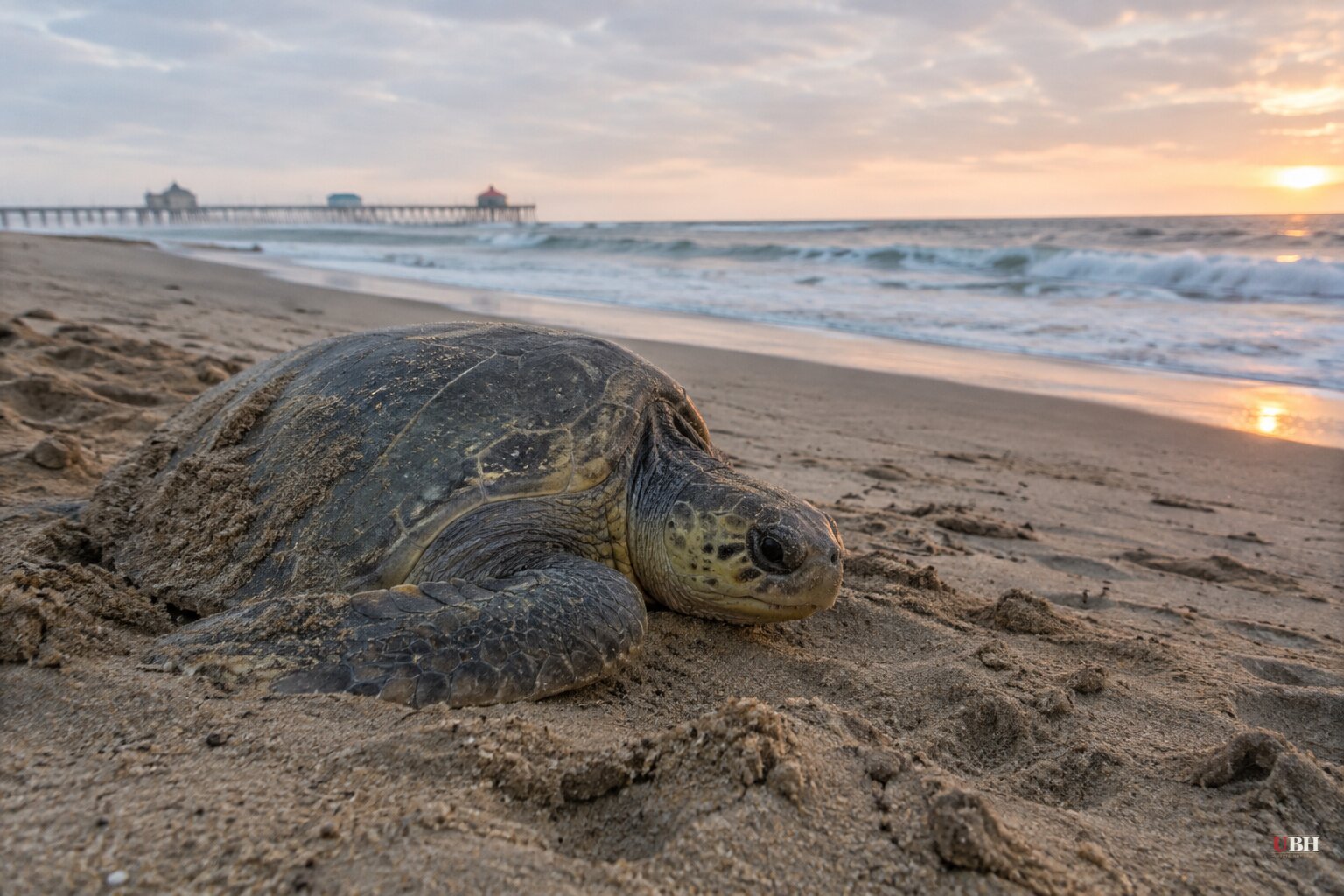
A sea turtle that has no business being in Southern California just made wildlife history there, twice.
On September 16, lifeguards in Seal Beach got a call about what they thought was an injured turtle. What they found instead was a female olive ridley sea turtle digging a nest in the sand between the waves and the oceanfront condos on Surfside Avenue, according to the Los Angeles Times. She laid a clutch of eggs and crawled back into the Pacific.
Three days later, on September 19, a turtle believed to be the same female showed up about eight miles south near the Huntington Beach Pier and did it again.
NOAA Fisheries' West Coast division called it "the first-ever recorded natural nesting for any sea turtle species" on the US West Coast, according to the Associated Press. Justin Viezbicke of NOAA Fisheries put it plainly to ABC7 Los Angeles: "This is our first ever documented case of a nest for an olive ridley turtle here on the West Coast. This is a highly endangered and protected species."
Nothing About This Is Normal
Olive ridleys are not West Coast animals. NOAA Fisheries says they're found mainly in tropical waters of the Pacific, Indian and Atlantic oceans, with large nesting populations in Mexico, Nicaragua, Costa Rica and Panama. Before last week, the northernmost known nesting ground was in Baja California Sur, Mexico, according to Lindsey Peavey Reeves, a senior scientist with the National Marine Sanctuary Foundation who has studied the species for 20 years.
The turtle's timing was off too. "Typically, they do it during the night. This one has been a little abnormal in the fact she came up during the day and right as the sun was setting," Viezbicke told ABC7. He said there's a real possibility more nests exist that nobody has found yet.
Trevor McDonald, marine safety chief for the Huntington Beach Fire Department, told CBS Los Angeles his crew's first instinct was that the animal was sick. "We had a report of a possible injured turtle, and when lifeguards got on scene, they realized the turtle was not injured and in fact, the turtle was nesting," he said.
Why Here, Why Now
The leading explanation, offered by multiple sources, is a strong El Niño pattern driving unusually warm water north from Mexico. Chad Steffen, a certified marine naturalist, told CBS Los Angeles: "The temps where their normal nesting sites may exist may be a little bit too high, being a super strong El Niño. There's a lot of really, really warm water down there, down in Mexico."
Peavey Reeves offered a similar read but framed it more broadly, telling the Los Angeles Times it "isn't outlandish" for olive ridley nesting to keep shifting north as ocean and sand temperatures rise and some traditional nesting beaches erode during severe storms. The Los Angeles Times went further than other outlets, tying the event to a broader climate narrative and citing a record global average sea-surface temperature of 70°F recorded on August 22, the highest since March 2024.
That's a real data point, but the El Niño explanation most scientists actually gave for this specific turtle is worth separating from broader climate narratives. El Niño is a naturally recurring Pacific warming cycle, not proof of a permanent shift, and none of the marine biologists quoted across these sources claimed this single nesting event proves a long-term range change. NOAA's own scientist framed it as a striking anomaly worth watching, not a verdict on climate trends.
What Happens Next
Both nests have been fenced off with mesh huts and warning signs by NOAA Fisheries, the U.S. Fish and Wildlife Service and the California Department of Fish and Wildlife. ABC7 reported each nest likely holds 50 to 100 eggs. Incubation typically runs 45 to 60 days, meaning hatchlings, if they emerge, could appear sometime in November.
Olive ridleys are listed as threatened under the Endangered Species Act nationwide, with breeding colonies on Mexico's Pacific coast listed as endangered, according to USA Today. Officials are asking beachgoers to stay outside the caution tape. Huntington Beach residents including George Zamora told the Associated Press he hopes the eggs survive tides, storms and crowded beach events this fall: "Let them do their thing. Let them be born."
Whether these eggs hatch at all is still an open question. NOAA has not said whether temperature or sand conditions on a beach never used for this purpose before will actually support viable incubation, and officials say it will be weeks before anyone knows.
Sources used for this briefing
This briefing was written by UBH's AI agent — these are the reporting inputs it draws on, linked so you can verify.


