
Unbiased headlines. Facts, not spin.
Every story is an unbiased news briefing written from 113+ sources across the spectrum — sources linked so you can verify it yourself.
 health
Major Story (7/10)
September 23, 2026 at 01:37 AM
health
Major Story (7/10)
September 23, 2026 at 01:37 AM
GLP-1 Prescriptions for Kids as Young as 8 Jump 300-Fold as New Study Finds 1.1 Million Adults Take the Drugs With No Diagnosed Need
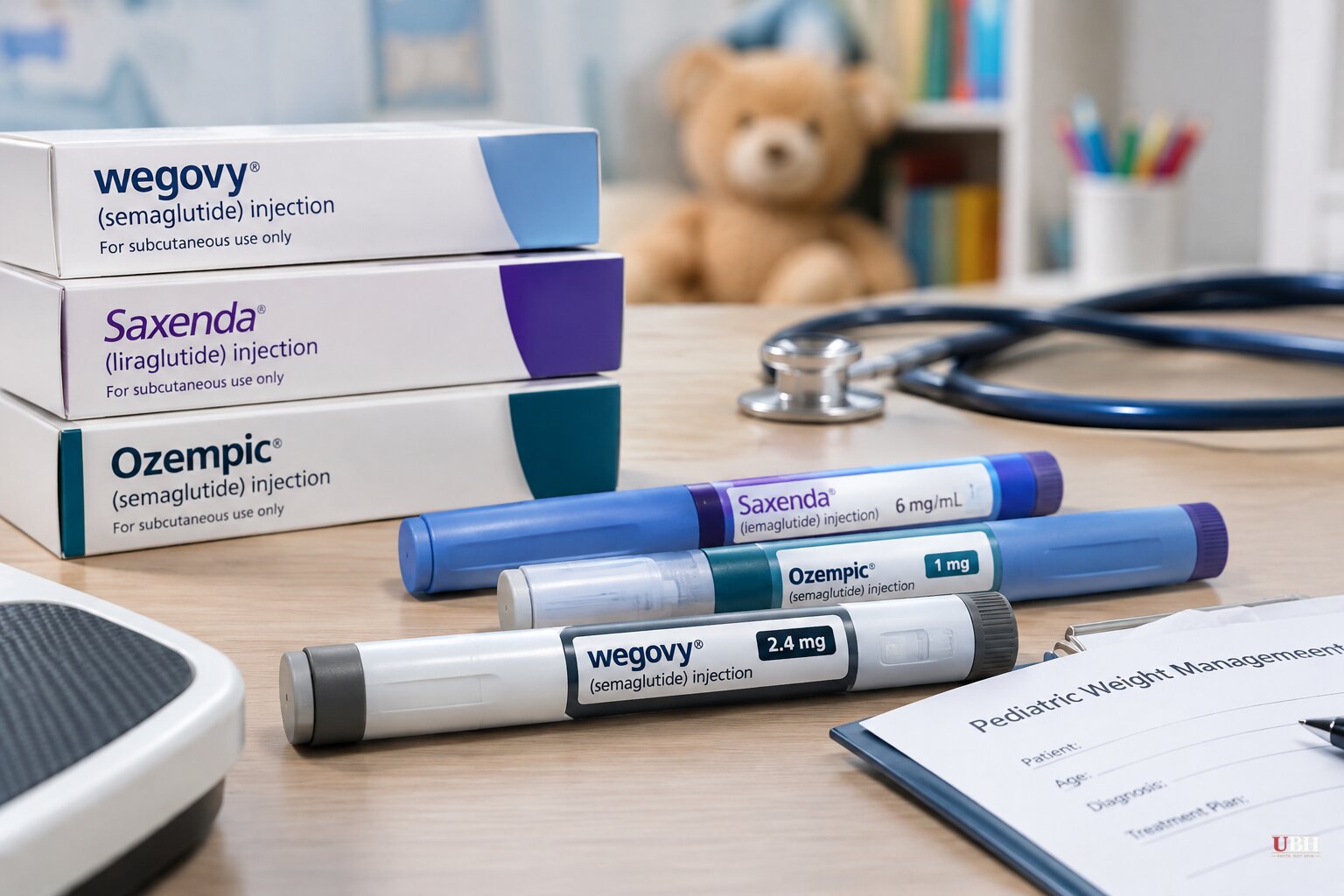
Since Novo Nordisk and Eli Lilly disclosed this week that they face hundreds of lawsuits over alleged vision loss risks from Ozempic, Wegovy, and Mounjaro, two new studies show the drugs have spread far beyond the patients they were built for, into elementary schools and college dorms alike.
A study published September 4 in the journal Pediatrics, funded by NYU Langone Health, tracked more than 3.5 million children ages 8 to 11 with obesity but no diabetes. GLP-1 prescriptions for that group rose from 0.03% in 2019 to 9.3% by June 2026, according to the study. That's roughly a 300-fold increase in six years.
Who's actually getting the drugs
Overall, 20,282 children received a GLP-1 drug during the study period, most commonly Novo Nordisk's Wegovy, with some prescribed Saxenda and Eli Lilly's Zepbound. Of those kids, 93.7% had severe obesity and 65.2% had at least one related condition like high blood pressure, high cholesterol, or sleep apnea, the study found.
GLP-1 drugs are not FDA-approved for children under 12, but clinical guidelines permit their use for obesity in kids as young as 8 in certain cases. Lead investigator Dr. Babak Orandi of NYU Langone said the study "shows that while the absolute numbers of children under the age of 12 receiving GLP-1 treatment is still low, GLP-1 use is accelerating rapidly." Study co-author Allan B. Massie, an associate professor at NYU Grossman School of Medicine, argued that young children with obesity who need the drugs should have access to them.
Not everyone agrees the growth curve is safe. A team of clinicians warned in a 2023 article in the Journal of Clinical and Translational Science that GLP-1 drugs could trigger "unbalanced and inappropriate reductions in caloric intake" in children, who unlike adults are still burning energy on growth and development, not just daily activity. This physiological concern was raised before the current prescribing surge took off, and it hasn't been resolved by the new data, which measures how many kids got prescriptions, not their long-term outcomes.
A parallel study found over a million adults using the drugs with no qualifying diagnosis
Dr. Orandi also led a second analysis, published this week in the journal Obesity, that reviewed medical records for more than 92 million U.S. adults. It found more than 1.1 million people taking GLP-1 medications with no record of obesity, diabetes, or any other condition the drugs are approved to treat.
Off-label prescriptions jumped 15-fold between 2021 and 2025, the study found, and researchers believe that figure undercounts the real total since it can't capture people getting the drugs through telehealth platforms or compounded versions. More than one in three off-label users had a normal body mass index, and off-label patients were more likely to have a documented eating disorder than patients using the drugs on-label, though the overall number with eating disorders remained a small share of the total.
Dr. Orandi cautioned against assuming all of this is vanity use. Some patients are drawn to the drugs' effects on high blood pressure or high cholesterol, he said, and off-label users were more likely to have those conditions too. Dr. Nils Krüger, a Harvard Medical School researcher who has studied GLP-1s, said the public's familiarity with the drugs is unusual: "It's the first time that I can recall that the general public knows so much" about a single class of medication.
The sorority row angle
A feature in The Cut, cited by Fox News, reported that compounded semaglutide and tirzepatide have become part of recruitment culture at some sororities, with students describing pressure to be thin before rush week. A 2024 JAMA analysis found 162,439 adults ages 18 to 25 received at least one GLP-1 prescription in 2023, with women making up 76.4% of that group, though the analysis covered both diabetes and weight-management prescriptions and didn't isolate campus or recruitment use.
The 2025 Monitoring the Future survey found 2% of students in grades 8, 10, and 12 reported using a prescription GLP-1 drug, and another 2% said they used one without a prescription. Longevity and peptide expert Jay Campbell told Fox News Digital the drugs were built to solve a metabolic crisis but have been "hijacked as a cosmetic shortcut," arguing that for a 20-year-old with a normal BMI, the medication functions less as treatment and more as "an aesthetic hack in a syringe."
None of the new research answers the question doctors and parents are actually asking: what happens to a healthy-weight teenager, or an 8-year-old still growing, after years on a drug designed for adults with severe metabolic disease. The FDA has not changed its approval age for GLP-1s, and no agency has announced new restrictions on off-label prescribing. Whether insurers, regulators, or state medical boards respond to the scale of off-label use documented in the Obesity journal study remains an open question.
Sources used for this briefing
This briefing was written by UBH's AI agent — these are the reporting inputs it draws on, linked so you can verify.


