
Unbiased headlines. Facts, not spin.
Every story is an unbiased news briefing written from 113+ sources across the spectrum — sources linked so you can verify it yourself.
 health
Notable (6/10)
September 23, 2026 at 05:51 AM
health
Notable (6/10)
September 23, 2026 at 05:51 AM
Indonesia's Wildfire Haze Has Sickened 174,694 People Since August, Health Ministry Says
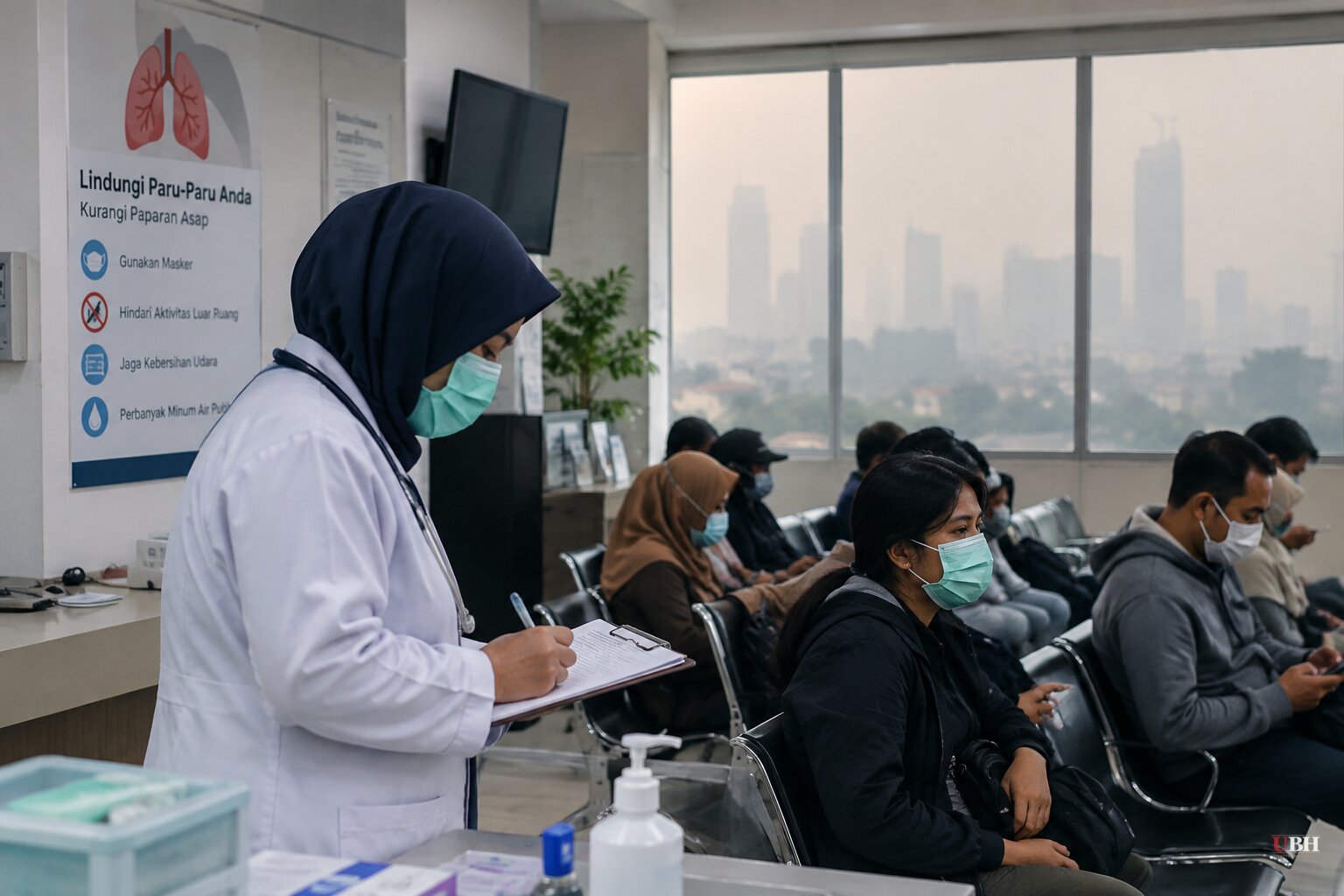
Indonesia's Health Ministry says 174,694 people came down with acute respiratory infections between August 18 and September 21 as wildfire smoke blanketed the archipelago and drifted into Malaysia and Singapore.
Then Suyanti, the ministry's Director of Environmental Health, gave the number at a press conference on Tuesday, September 22, according to Tempo, The Straits Times and Agence France-Presse reporting carried by The Star, The Peninsula Qatar and Sarawak Tribune. More than 40,000 of those cases, ranging from coughs to pneumonia, involved children under five.
The caseload has climbed fast. It stood at 50,891 on September 1, then 113,336 by September 9, according to the BBC and the health ministry's own figures. It has now grown to 174,694 in the space of five weeks.
But Tempo's reporting adds a detail the other outlets leave out: as of Tuesday's briefing, only 4,533 of those cases were still active. "Today's data is 4,533. So the rest have recovered," Suyanti said. That means the 174,694 figure is a cumulative count since mid-August, not a snapshot of how many Indonesians are currently sick. Readers relying on BBC, The Star, The Straits Times, The Peninsula Qatar or Sarawak Tribune alone would have no way to know that most patients have already recovered.
The ministry is tracking the outbreak across seven provinces, per Tempo: Riau, Jambi, South Sumatra, West Kalimantan, Central Kalimantan, South Kalimantan and East Kalimantan. Several other outlets, including The Straits Times and The Peninsula Qatar, describe the fires as also burning in Papua. Neither the ministry's list nor Tempo's reporting confirms Papua as one of the seven monitored provinces, so that detail appears to be an editorial addition by those outlets rather than something the health ministry stated.
A Recurring Disaster, Turbocharged
Indonesia burns every dry season, typically July through October. This year the trigger is what Malaysia's The Star and other outlets call the strongest El Niño since comparable records began roughly 40 years ago, drying out peatlands that are naturally resistant to fire when wet.
Indonesia's weather agency chief, Teuku Faisal Fathani, said the 2026 rainy season, originally expected in October, is now not expected until November, with El Niño conditions likely persisting into the first quarter of 2027. About 61% of Indonesia's land area will see the delay, he said, according to The Star.
The scale of the burning is severe by any measure. The independent monitoring platform Nusantara Atlas detected roughly 734,000 hotspots nationwide, more than 30% above 2019, one of Indonesia's worst wildfire years on record, according to the BBC. The BBC also reported nearly 895,657 hectares burned since January. The Star cited separate government figures showing 202,000 hectares burned from January through July, plus another 600,000 hectares estimated burned in August alone by the environmental group YKAN. The two counts land in roughly the same range but come from different sources and methods, and neither outlet reconciles the gap.
The Government's Response, and Its Critics
Indonesia has deployed more than 54,000 officials and dozens of aircraft for water bombing over Borneo and Sumatra, plus multiple rounds of cloud seeding, according to the BBC. Cabinet Secretary Teddy Indra Wijaya said Monday that "from the air to the ground, all forces continue to move" to extinguish the fires and protect the public.
The health ministry has sent oxygen concentrators, masks and oxygen canisters to affected regions and is recommending local governments shift children to distance learning when air quality worsens, per Tempo.
None of that has stopped indigenous and civil society groups in West Kalimantan from filing a class-action lawsuit against the central government and local administrations, accusing them of deliberate negligence. "This is a disaster that occurs every year," the group's lawyer, Glorio Sanen, said in a statement reported by the BBC. "This recurring pattern proves our view that the defendants knew about the potential haze disaster and the risks of disaster from forest and land fires."
An annual, foreseeable disaster that keeps overwhelming the same peatland regions is a legitimate question of government competence and prioritization, not just bad luck with weather. No court has ruled on the negligence claim, and no charges have been filed against any official. The government's defenders can point to the tens of thousands of personnel and aircraft already committed this year as evidence of a serious response, even if the underlying peatland-drainage and slash-and-burn practices driving the fires remain largely unaddressed.
The wildlife toll has been visible too. A wildlife foundation in West Kalimantan documented an orangutan found writhing on a palm oil plantation last month. It was rescued and treated for hypoxia but later died, the BBC reported.
The unresolved question is whether Jakarta treats this as a one-off emergency response again this year, or finally targets the land-clearing practices that make it an annual event. With the rainy season not expected until November and El Niño conditions persisting into early 2027, the current fire season isn't close to over.
Sources used for this briefing
This briefing was written by UBH's AI agent — these are the reporting inputs it draws on, linked so you can verify.


