
Unbiased headlines. Facts, not spin.
Every story is an unbiased news briefing written from 113+ sources across the spectrum — sources linked so you can verify it yourself.
 health
Notable (5/10)
Event date: September 19, 2026
health
Notable (5/10)
Event date: September 19, 2026
Cut-Rate Eyelid Surgery Leaves Patients With Burns, Botched Eyes, and the NHS Holding the Bill
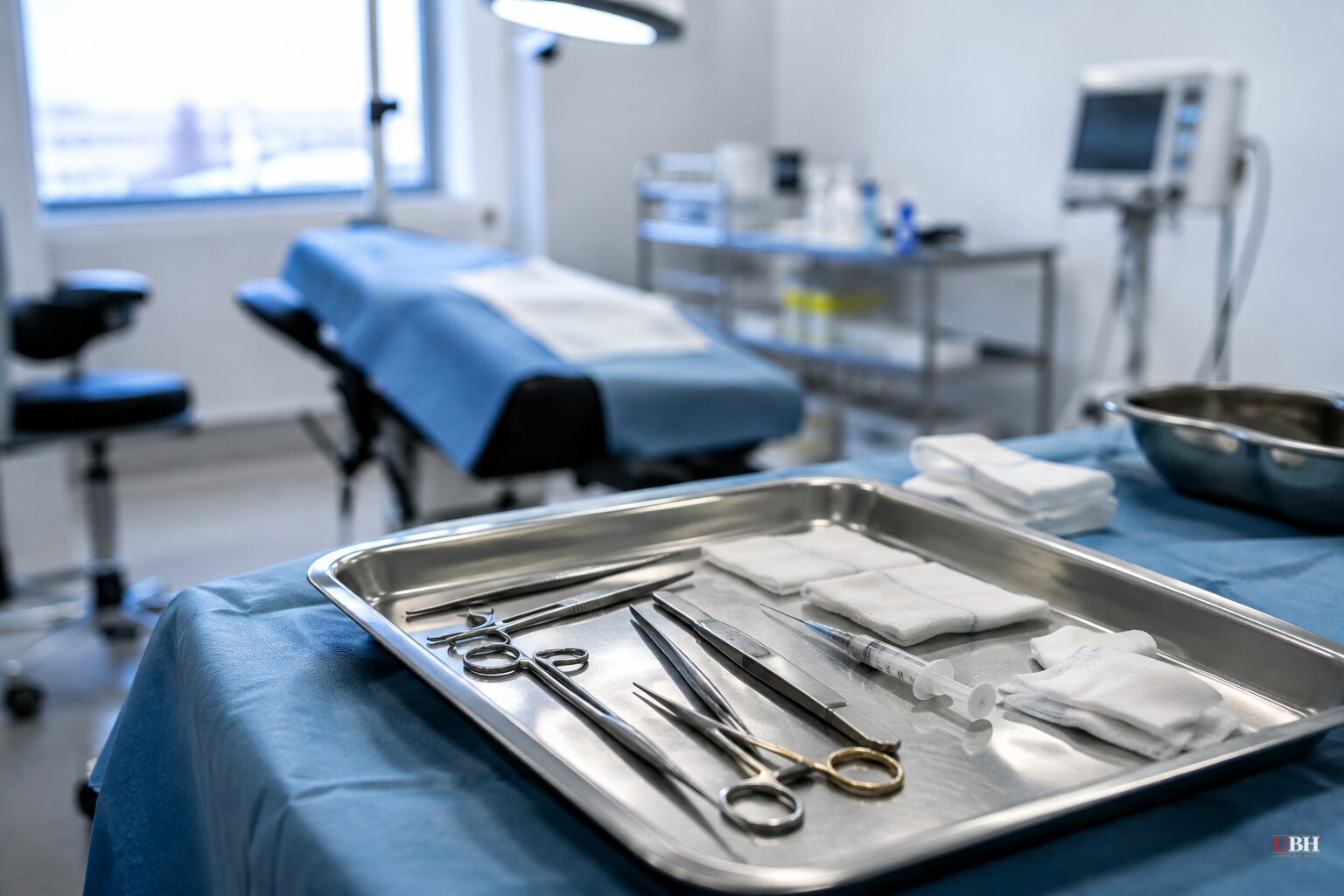
A blepharoplasty, or "bleph," removes excess skin from around the eyes. Done right, in a licensed clinic, it costs upwards of £2,000 to £4,000 in the UK and Ireland. Done cheap, it can leave you with a burned face, stitches that won't hold, and eyelids that physically can't close.
Nikita Morgan, 31, from Dublin, told the BBC she found a Dutch company called Faceland on TikTok offering the procedure for €750, roughly a fifth of the €4,000-plus quote she got at home. She described the Düsseldorf clinic as "like a conveyor belt, just one in, one out constantly." Under local anaesthetic, she says the pain was unbearable. "My face felt like it was on fire and there was a horrible smell of burning skin," Morgan said.
Faceland told the BBC it has performed more than 2,950 bleph procedures on UK patients since October 2024 across clinics in the Netherlands, Germany and Switzerland, and that fewer than 1% of procedures led to a formal complaint. The company says that figure does not include patients who needed revision surgery afterward, meaning the real complication rate could be higher than the headline number suggests. Faceland also said all patients sign consent forms and go through consultations to be "well informed and well prepared."
That is a fair point worth taking seriously. Adults who understand the risks and choose a cheaper procedure abroad are exercising personal choice, and a 1% complaint rate, taken at face value, is not nothing but it's not an epidemic either. Nobody forced these patients into a clinic.
But oculoplastic surgeons, the specialists who work on eyes, told the BBC they're seeing a rising number of patients unable to close their eyes properly after treatment abroad. One woman had to tape her eyes shut just to sleep because too much skin had been removed. Another feared she was going blind. When those patients need fixing, it's the NHS picking up the tab, not the discount clinic that did the damage.
The UK's own backstreet problem
The Daily Mail's investigation found a woman named Luyen Vu, who goes by "Miss Cindy" and "the Bleph Lady," performing blepharoplasties out of a £400,000 terraced house in Manchester. Patients were texted instructions to park a few doors down and wait to be walked in, one at a time, paying £850 in cash. They left wearing sunglasses that didn't hide the jagged stitching on their faces, according to footage the Mail cited from a Channel 5 documentary.
Vu has no known medical training. Under current UK rules, unregulated operators can perform invasive cosmetic procedures so long as they don't falsely claim to be a registered doctor or medic. There's no requirement that the person cutting into your eyelids actually knows what they're doing, as long as they don't lie about a credential they never claimed.
An expert cited by the Daily Mail estimated that for every legitimate cosmetic practitioner operating in the UK, there are four unregulated ones. Safety campaigners quoted by the paper describe a "wild west" of ghost businesses, fake storefronts, and operators who are, in their words, "botching patients beyond recognition." The Mail also reported that MPs have been warned hundreds of women have needed extensive corrective surgery after unregulated cosmetic procedures went wrong, in testimony one described as "like something out of a horror film."
Who actually pays
When a cut-price bleph goes bad, the patient doesn't go back to the unlicensed operator to get it fixed. She goes to the NHS. British taxpayers end up funding corrective surgery for procedures performed by people with no medical license, working out of houses and back rooms that face zero oversight.
Neither Faceland's continental clinics nor Luyen Vu's Manchester operation have been shown to have broken any law as reported by these sources. That's the actual scandal. The BBC's reporting focuses on the demand side, patients drawn in by TikTok and price, while the Daily Mail zeroes in on the supply side, the legal loophole letting untrained operators legally cut into people's faces. Both are true, and both point to the same unresolved question: will Parliament close the loophole that lets someone with no medical training legally perform eyelid surgery, so long as they never claim to be a doctor? As of now, no legislation has been announced to change that.
Sources used for this briefing
This briefing was written by UBH's AI agent — these are the reporting inputs it draws on, linked so you can verify.


