
Unbiased headlines. Facts, not spin.
Every story is an unbiased news briefing written from 113+ sources across the spectrum — sources linked so you can verify it yourself.
 health
Major Story (7/10)
Event date: August 31, 2026
health
Major Story (7/10)
Event date: August 31, 2026
Employer Health Insurance Costs Set to Rise 8.2% in 2027, the Steepest Jump Since 2003
Health insurance is about to get a lot more expensive, and the people who provide your care are getting squeezed right alongside everyone else.
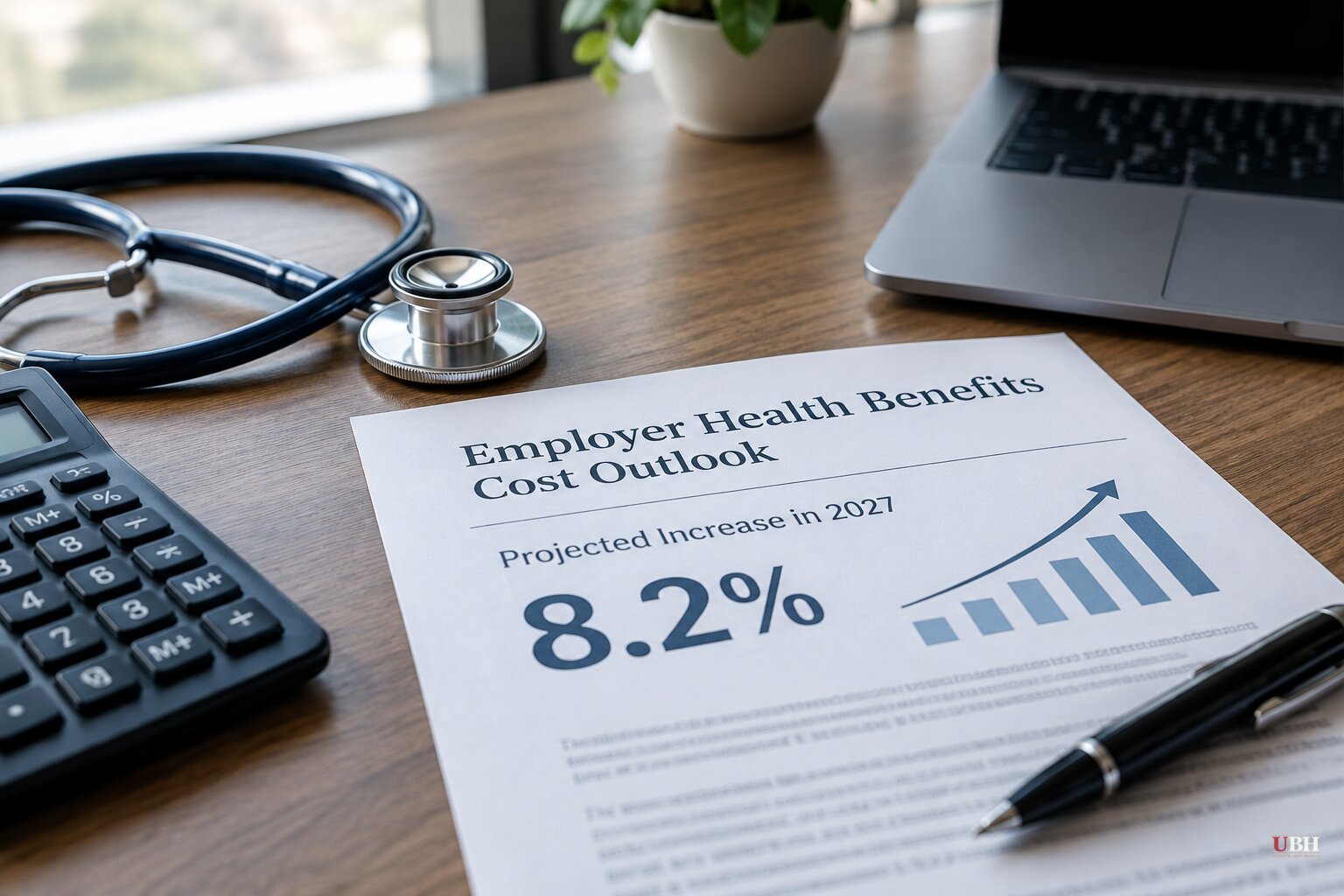
According to an Aug. 31 report from consulting firm Marsh, based on a national survey of more than 1,800 employers fielded over the summer, total health benefit costs per employee are projected to rise 8.2% in 2027. That's the steepest increase since 2003, and the fifth straight year of elevated growth. It's also up from a projected 6.7% increase for 2026.
If employers make zero changes to their plans, Marsh found costs would jump 11%. Instead, 59% of employers plan to raise deductibles or make other cost-cutting moves that shift more expense onto workers' shoulders. About two-thirds of large employers, those with 500 or more workers, plan to increase employees' share of premiums outright, Marsh found.
Who's Driving the Cost, and Who Pays
Marsh points to a mix of long-running and newer pressures. Expensive new cancer and rare-disease treatments cost more than what they replace. Hospital and provider consolidation has handed fewer, bigger health systems more leverage in price negotiations with insurers. Government reimbursement, per Marsh, hasn't kept pace with inflation, pushing providers to make up the difference through private plans.
Two newer factors stand out. GLP-1 weight-loss drugs are driving up drug spending as more employers cover them, Beth Umland, director of employer research for health and benefits at Marsh, told CBS News. At the same time, some employers are pulling back GLP-1 coverage or tightening eligibility rules to control costs, Umland said.
Marsh also found that AI-enabled software used by medical providers to document care and submit claims has led to more claims, and more of them billed at higher levels, than expected, according to the Epoch Times.
Employers typically cover about 80% of health plan costs, with workers picking up the rest, a split that's held steady for two decades, Matthew Rae, associate director of the healthcare marketplace at KFF, told CBS News. "Most employees will spend more on healthcare next year, with both higher paycheck deductions and higher out-of-pocket costs," Umland told CBS News.
Small Practices Getting Hit Twice
Independent medical practices face this from both directions. They deliver care, and they're also employers footing the bill for their own staff's coverage.
Jack Dillon, executive director of the Association for Independent Medicine, which represents 4,000 physician-led practices, told Fortune his own practice faced a 22.5% premium increase this year. "It's a bigger struggle this year that I've heard than in previous years, and it's getting louder and louder," Dillon said.
Brad Close, president of the National Federation of Independent Business, told WCPO 9 Cincinnati that a single seriously ill employee at a small firm can threaten the whole company's ability to keep offering coverage at all. Jennifer Schaefer, founder of JS Benefits Group, told WCPO larger employers can self-insure in ways small businesses simply can't, widening the gap.
Health Workers Dropping Their Own Coverage
The strain has followed some health care workers home. Samantha LeGault, a nurse practitioner in Idaho, told KFF Health News her family's monthly premium jumped from $700 to $1,500 this year. Because she has Crohn's disease and two of her daughters have medical conditions, dropping coverage wasn't an option, so she cut dental coverage instead. "I know how the clinics work, that I am an expensive patient," LeGault told KFF Health News.
Joshua and Ashley Durham, who run a family medicine practice in Boise, made a more drastic call. According to KFF Health News, the couple bought ACA marketplace coverage when they opened their practice in late 2023, but this year their premium for a similar plan rose to nearly $1,600 a month. They dropped insurance entirely and are now paying medical costs out of a $50,000 health savings account. "It's nerve-racking," Joshua Durham, 47, told KFF Health News. "It just takes, you know, one little accident, and then you got a big fat bill."
Nationwide, 7% of health care workers were uninsured in 2024, compared with 11% of all adults under 65, and just 2% of doctors were uninsured, according to a KFF analysis of American Community Survey data cited by KFF Health News. Health insurance already eats up nearly a quarter of what private employers spend on benefits, with employers paying an average $3.48 per employee hour toward coverage in June out of $14.07 in total benefit spending, according to Bureau of Labor Statistics data.
The Subsidy Fight in the Background
KFF Health News noted that the Republican-led Congress opted last year not to renew the pandemic-era Affordable Care Act marketplace premium tax credits. Subsidies for low-income enrollees remain in place, but the pandemic-era credits that had helped reduce premium payments for many consumers, including those working in small businesses such as independent medical practices, lapsed. Nearly half of marketplace enrollees worked for small businesses or were self-employed in 2024, per KFF Health News, in occupations that commonly included chiropractic care and dentistry.
Dillon told KFF Health News that as coverage keeps getting less affordable, more health care employers may start looking at alternatives to standard insurance altogether, such as providing higher hourly wages or offering only minimal plans. "The cost has become so astronomical," Dillon said. "You're looking at it and saying, 'What's the value?'" Whether that shift actually leaves workers better off, or just moves the risk from the employer's balance sheet to the worker's, is the question nobody in this survey has answered yet.
Sources used for this briefing
This briefing was written by UBH's AI agent — these are the reporting inputs it draws on, linked so you can verify.


