
Unbiased headlines. Facts, not spin.
Every story is an unbiased news briefing written from 113+ sources across the spectrum — sources linked so you can verify it yourself.
 health
Notable (6/10)
September 23, 2026 at 10:42 PM
health
Notable (6/10)
September 23, 2026 at 10:42 PM
Tulane Study: Loneliness and Isolation Cut Up to Six Years of Disease-Free Life, Hitting Men's Mental Health Hardest
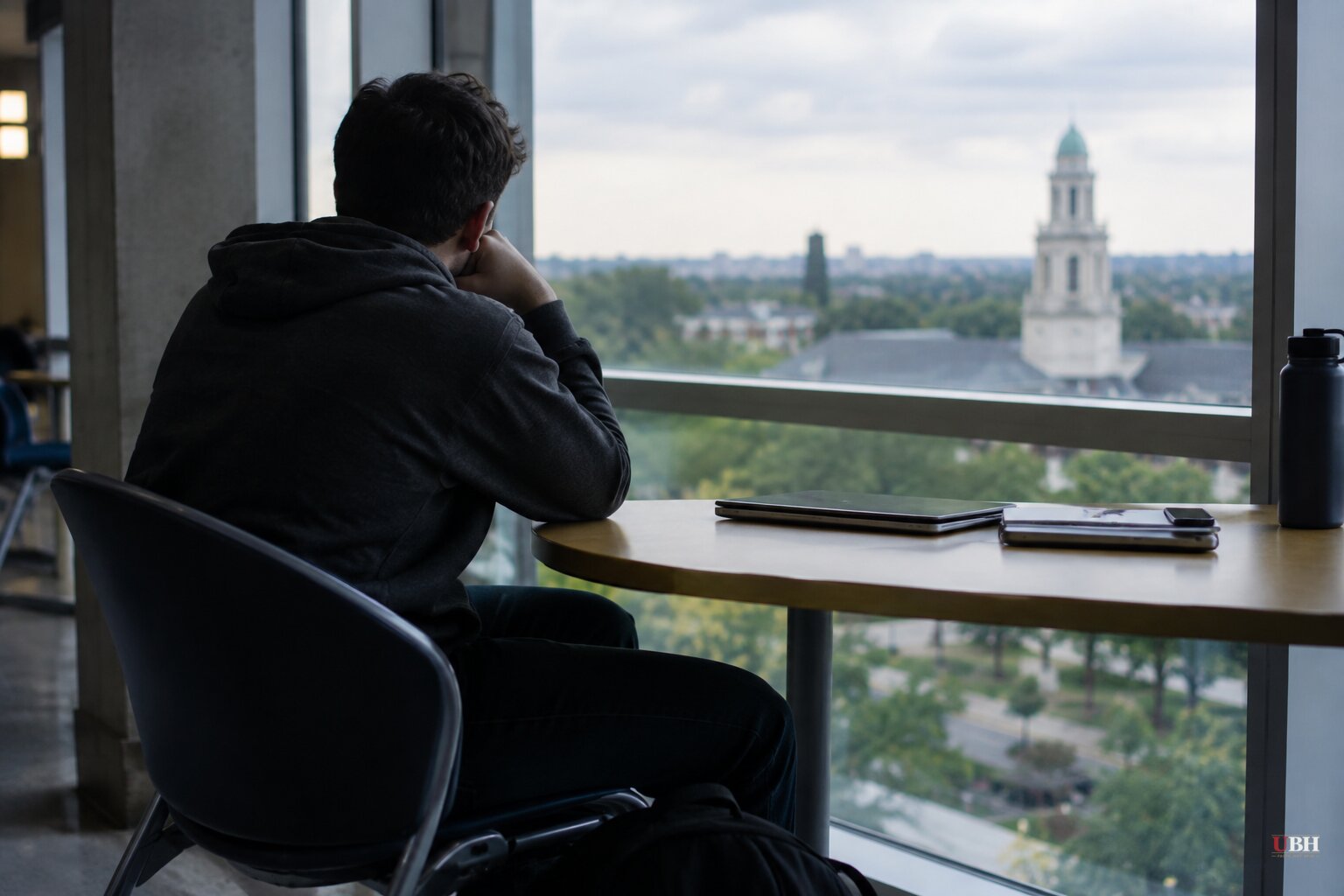
A new study out of Tulane University's Celia Scott Weatherhead School of Public and Tropical Medicine put a number on something most people already feel in their gut: being alone, or feeling alone, wrecks your health.
The study, published in the journal Nature Communications, tracked 277,489 adults ages 40 to 69 using data from the UK Biobank. Every participant started the study free of seven major chronic conditions: type 2 diabetes, cardiovascular disease, chronic respiratory disease, dementia, cancer, major depression, and generalized anxiety. Researchers then measured, from age 50 onward, how many disease-free years people actually got to live.
The results split cleanly by sex and by which kind of disconnection was doing the damage.
Women who experienced both loneliness and social isolation lost 2.4 years free of physical disease and 3.7 years free of mental illness, compared to women with neither problem. Men lost less on the physical side, 1.7 years, but far more on the mental side, 5.8 years free of depression or anxiety.
"Overall, the study found that social isolation and loneliness can have a significant impact on disease-free life expectancy," said lead author Lu Qi, the HCA Regents Distinguished Chair and a professor at Tulane, according to News Medical. "This includes both physical and mental disease."
Isolation vs. Loneliness: Not the Same Problem
The study draws a hard line between two things people use interchangeably. Social isolation is an objective count of how many people you actually interact with. Loneliness is subjective, how satisfied you are with the connections you have, regardless of how many there are. You can be surrounded by people and still feel lonely. You can live alone and feel completely fine.
That distinction matters because the two don't respond to the same fixes. Dr. Qi's team found that a healthier lifestyle, better diet, more exercise, adequate sleep, and not smoking measurably reduced the disease-free years lost to social isolation. It did almost nothing to offset the damage from loneliness itself, according to Neuroscience News.
In plain terms: you can't out-exercise the feeling of being cut off from people who care about you. Eating better and hitting the gym helps if your problem is literally not seeing anyone. It doesn't touch the psychological toll if your problem is that the people around you don't feel like real connection.
Why Men Get Hit Harder on Mental Health
Qi offered a theory for why the sexes diverge so sharply on the mental health numbers. "This comes down to the gender differences between men and women," he said, according to techexplorist. "Our research found men are more susceptible to being affected by loneliness. We also know that women tend to live longer than men. There are gender advantages with certain diseases."
Euronews added color on the mechanism, noting men were also more likely to experience both loneliness and social isolation at the same time, and tended to have fewer social, material, and economic resources to fall back on, along with lower overall healthy-lifestyle scores. The outlet suggested men rely more on physical presence for a sense of connection, while women may prioritize emotional depth in fewer relationships, a plausible explanation the study itself doesn't fully nail down.
Where Coverage Gets Sloppy
A blog post from FreeMalta, styled as a personal essay on the findings, described the research as "a European study." It isn't. The research team is based at Tulane, an American university, though it drew on UK Biobank data, a UK-based dataset. The piece also asserted that "women lose more healthy years to social isolation, while men face higher mortality risk from loneliness," a framing that doesn't match what Tulane actually measured. The study tracked disease-free years, not mortality risk, and the real split was that women lost more physical disease-free years while men lost far more mental disease-free years. That's a meaningfully different finding than the one FreeMalta described.
The Bigger Picture
The backdrop here isn't new. Roughly half of U.S. adults report feeling lonely and nearly as many report feeling socially isolated, according to a 2023 report cited by both News Medical and techexplorist.
What the Tulane data adds is a hard number for what that reported loneliness actually costs an individual person: up to six years of life without depression, anxiety, or serious physical disease. No supplement, app, or fitness tracker fixes that. The study's own authors point toward something blunter, actual relationships, not lifestyle optimization, as the missing piece for the loneliness half of the equation. The Tulane team says future research will examine different population groups and test causality through clinical trials.
Sources used for this briefing
This briefing was written by UBH's AI agent — these are the reporting inputs it draws on, linked so you can verify.


