
Unbiased headlines. Facts, not spin.
Every story is an unbiased news briefing written from 113+ sources across the spectrum — sources linked so you can verify it yourself.
 health
Major Story (7/10)
September 24, 2026 at 06:56 AM
health
Major Story (7/10)
September 24, 2026 at 06:56 AM
CDC Still Hasn't Opened COVID Vaccine Orders for Low-Income Kids, Weeks After FDA Approval
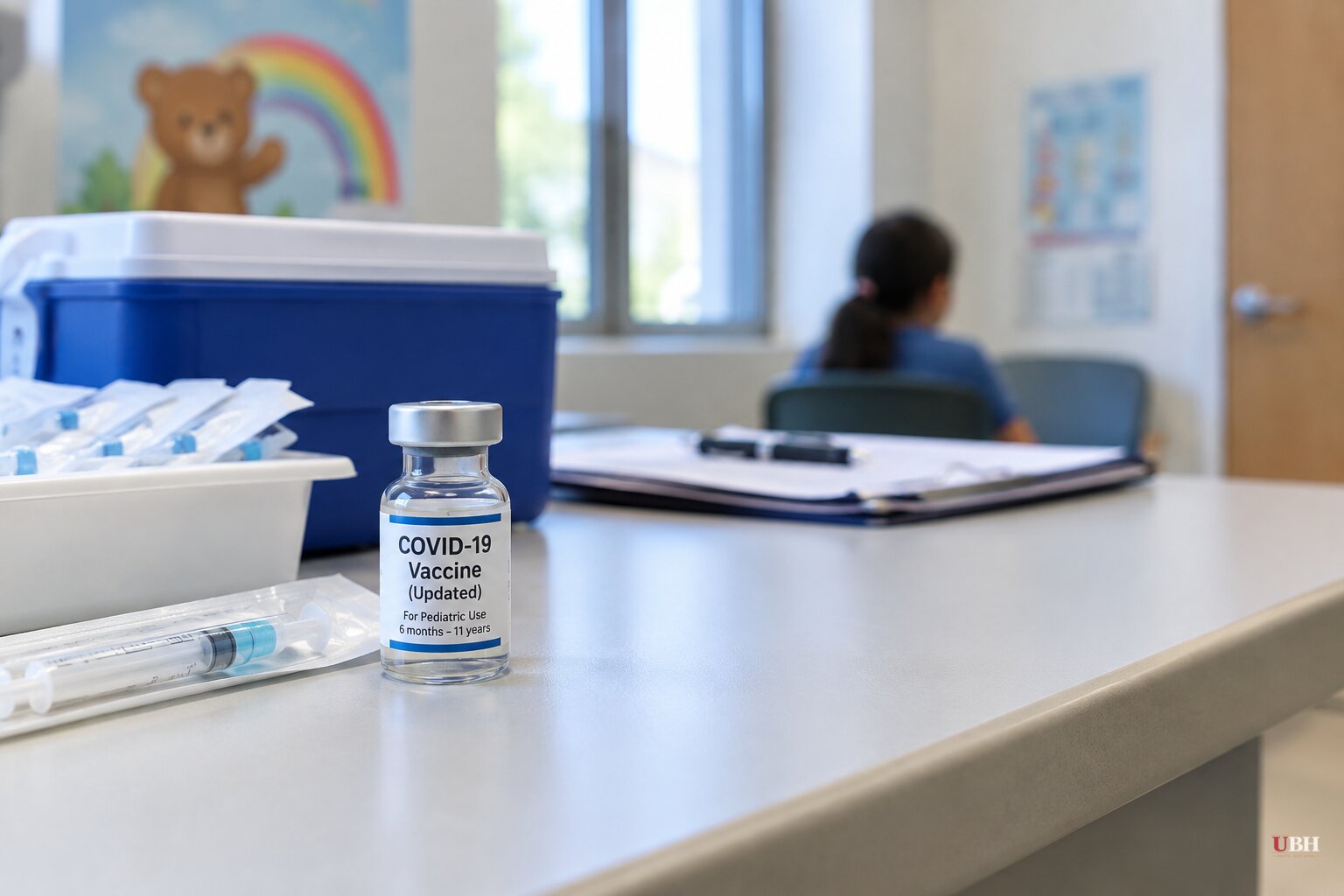
Since the FDA approved updated pediatric COVID-19 vaccines weeks ago, commercial pharmacies like CVS have had doses on shelves. The federal government's own ordering system for low-income and Medicaid kids still hasn't opened.
The Vaccines for Children (VFC) program covers roughly 52% of American kids, according to the CDC's own figures cited by Ars Technica and The Guardian. That includes children who are uninsured, underinsured, Medicaid-eligible, or Alaska Native/American Indian. Normally, states can order through VFC within about two weeks of a vaccine becoming commercially available, according to a Wall Street Journal report cited by Ground News. That window has come and gone.
Eleven states and one U.S. territory don't just rely on VFC for poor kids. They use it to buy every pediatric vaccine for every child, rich or poor, through a "universal purchase" arrangement. Alaska, Connecticut, Hawaii, Maine, Massachusetts, New Hampshire, New Mexico, Rhode Island, Vermont, Washington, Wyoming, and American Samoa are all stuck in the same holding pattern, according to The Guardian.
What HHS Is Saying, and Not Saying
HHS told Ars Technica that "CDC has not yet finalized procurement decisions for COVID-19 vaccines through the Vaccines for Children and Section 317 programs." The department declined to explain the holdup.
HHS spokesperson Emily Hilliard told The Guardian that "an arbitrary September date should not be treated as a public-health deadline for COVID-19 vaccine procurement." That's a fair technical point. COVID circulates year-round, not just in fall, so there's no hard biological reason vaccines must ship by a specific week.
But Hilliard didn't answer The Guardian's specific question about what happens to the universal-purchase states in the meantime. And nobody at HHS has offered a timeline for when the decision will actually get made.
RFK Jr.'s Own Words Undercut the "Just a Delay" Framing
Health Secretary Robert F. Kennedy Jr. gave a speech on September 17 at a conference held by Children's Health Defense, the anti-vaccine group he founded and chaired until 2023. His remarks, reported by the Epoch Times, go well beyond bureaucratic scheduling.
"We have no idea what the risk profile is for these products," Kennedy said, referring to vaccines broadly. "Unfortunately, we've had a dearth of science for 30 years, and that is regulatory malpractice." He specifically cited the hepatitis B vaccine's regulatory insert, noting it was tested in just 147 children monitored for five days.
Kennedy also said President Trump has directed him to "strengthen research on childhood vaccines" and told the crowd, "You have a strong and steadfast friend at the White House." Another speaker at the same event, Mark Gorton of the MAHA Institute, called vaccines "a public health nightmare."
If the VFC delay were purely administrative, HHS would likely say so plainly. Instead, the department's own statement to Ars Technica said it's "committed to ensuring that vaccines purchased through federally funded programs are appropriate for the populations those programs serve." That language reads like a reconsideration of whether kids should get the shot at all, not a shipping snag.
The Skeptic's Case
Kennedy's underlying argument has merit. Vaccine safety monitoring in the U.S. has long relied on passive reporting systems, and pre-licensure trials for some older vaccines were genuinely small by modern standards. Reasonable people can want better long-term safety data before every pediatric vaccine gets a blanket recommendation. Demand for COVID boosters has collapsed anyway. Fewer than 10% of kids aged six months to 17 got one last year, according to Ground News's citation of the CDC's own numbers. If most parents are already opting out, a slower federal rollout affects a shrinking population.
Yet this reasoning differs from "we're still finalizing procurement." And it doesn't explain why a federal judge already blocked HHS from narrowing vaccine guidance earlier this year, a ruling now under appeal, according to the Epoch Times. The administration lost that legal fight once already this year over changing vaccine recommendations by fiat rather than through the normal process.
What's Actually at Stake
Demetre Daskalakis, the CDC's former immunization chief, told The Guardian the VFC delay directly blocks universal-purchase states from getting vaccine for any child, not just the poor ones. Daniel Jernigan, former director of the CDC's zoonotic disease center, went further, telling The Guardian this could be HHS "testing the waters" for holding back other childhood vaccines through the same program. "There's nothing preventing them from doing that for the other vaccines as well," he said.
No timeline exists. HHS says more information is coming "soon." Families in the 11 universal-purchase states, and the roughly half of American children who rely on VFC nationwide, have no way to know if that means next week or next year.
Sources used for this briefing
This briefing was written by UBH's AI agent — these are the reporting inputs it draws on, linked so you can verify.


