
Unbiased headlines. Facts, not spin.
Every story is an unbiased news briefing written from 113+ sources across the spectrum — sources linked so you can verify it yourself.
 health
Notable (5/10)
September 24, 2026 at 02:12 AM
health
Notable (5/10)
September 24, 2026 at 02:12 AM
Ohio Doctor Sentenced to 6 Months for Forcing Abortion Pills on Girlfriend, Pro-Life Groups and Sen. Moreno Press DOJ for Action
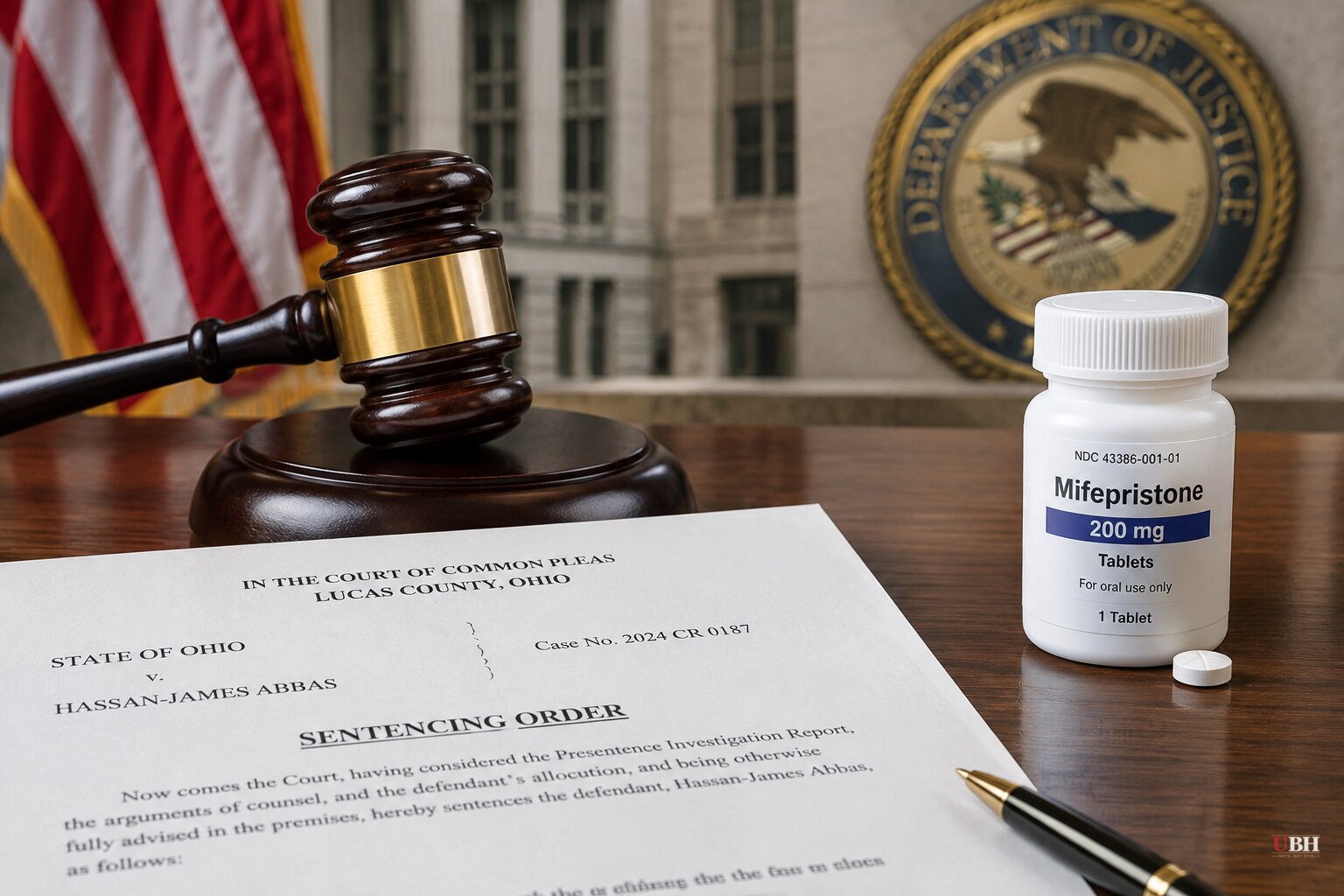
Since Judge Joseph McNamara handed down a six-month jail sentence to former University of Toledo surgical resident Hassan-James Abbas on September 11, the case has turned into a rallying point for Ohio pro-life advocates and at least one U.S. senator demanding the Justice Department get involved.
On Tuesday, September 22, Center for Christian Virtue President Aaron Baer stood outside the Lucas County Courthouse in Toledo alongside former Ohio Attorney General Dave Yost and Savannah Marten, president of the Ohio Coalition of Pregnancy Centers, to call the sentence a failure of the legal system. The same day, Sen. Bernie Moreno, R-Ohio, sent a letter to Deputy Attorney General Todd Blanche urging federal action, according to the Daily Signal.
What Abbas Did
According to court records cited by Breitbart, 13abc and the Lucas County Prosecutor's Office, Abbas began a relationship with Jona Affholder, a former patient, in October 2024 while he was still married. She got pregnant in December 2024 and told him on December 7 that she intended to keep the baby.
Prosecutors say Abbas ordered mifepristone and misoprostol the next day from an out-of-state telehealth provider, using his estranged wife's name, his own credit card, his own email address and his own delivery address. The drugs arrived three days later.
On December 18, 2024, at his home in Holland, Ohio, Abbas offered Affholder hot chocolate and tea, which prosecutors said was out of character for the relationship. She fell asleep and woke up to find him on top of her, holding her down while he forced crushed pills into her mouth. When she broke free and called 911, he took the phone from her hand and hung up. She eventually got to a hospital, where she was documented as an assault victim with vaginal bleeding and later miscarried.
The Charges and the Plea
A Lucas County grand jury indicted Abbas in December 2025 on six felonies: abduction, unlawful distribution of an abortion-inducing drug, disrupting public services, deception to obtain a dangerous drug, identity fraud, and tampering with evidence. Investigators said he later discarded the remaining pills while driving, which formed the basis of the tampering charge.
In May 2026, Abbas pleaded no contest to four of the six felonies as part of a plea agreement. Prosecutors dropped the abduction and tampering charges. A no-contest plea, as WTOL reported, is not an admission of guilt but allows a judge to find guilt based on the prosecution's evidence.
None of the charges Abbas pleaded to or was originally indicted on were assault or attempted murder, despite prosecutors' own description of him physically pinning Affholder down. Breitbart also reported that Abbas told State Medical Board of Ohio investigators the pills were consensual, a claim Affholder denies. That factual dispute has not been resolved by any court finding beyond the no-contest plea.
The State Medical Board of Ohio suspended Abbas's medical training certificate in November 2025, concluding he posed a danger to the public, according to Breitbart. He was placed on administrative leave from the University of Toledo College of Medicine and his training certificate remains inactive and suspended.
The Sentence and the Pushback
Judge McNamara sentenced Abbas to six months at the Corrections Center of Northwest Ohio plus two years of community control, warning that a probation violation could add up to 18 months, according to 13abc.
Marjorie Dannenfelser, president of SBA Pro-Life America, told Fox News Digital the sentence "says a lot about the state of our culture right now," arguing Affholder wanted the pregnancy and didn't need Abbas's involvement. Moreno's letter to Blanche called it hard to imagine "a wickedness more significant than this."
At Tuesday's press conference, Baer blamed the Food and Drug Administration's December 2021 decision to drop the in-person dispensing requirement for abortion pills, which opened the door to telehealth prescriptions and mail delivery. "Predators like Abbas can steal an identity, order the pills, drug a woman, and take a life," Baer said, according to the Daily Signal.
Marten, of the Ohio Coalition of Pregnancy Centers, framed the case as common ground across the abortion debate. "We agree that women should be able to carry and parent their children," she said, according to 13abc.
What's Actually Being Asked For, and What's Missing
The strongest counterargument to the pro-life groups' framing is that this was, at its core, a plea bargain in a state criminal case, not a federal telehealth-policy failure. Plea deals that drop the most serious charges in exchange for a guaranteed conviction are routine in American courts, and the four felonies Abbas pleaded to (identity fraud, deception, disrupting public services, unlawful drug distribution) are process crimes, not violent ones, which is part of why the guideline range landed where it did.
That explanation does not account for why no assault, felonious assault or attempted murder charge was ever filed against a man prosecutors say climbed on top of a woman, held her down, and forced drugs into her mouth against her will. None of the seven outlets covering this case, across the political spectrum, address that gap or say whether Lucas County prosecutors considered such a charge.
No federal investigation into Abbas or the telehealth provider that shipped the pills has been announced. Moreno's letter is a request, not a directive, and Deputy Attorney General Blanche has not publicly responded. Whether the Justice Department opens any review, and whether Congress moves on identity-verification requirements for mail-order abortion drugs that pro-life groups say could have stopped Abbas from using his estranged wife's information, remains unresolved.
Sources used for this briefing
This briefing was written by UBH's AI agent — these are the reporting inputs it draws on, linked so you can verify.


