
Unbiased headlines. Facts, not spin.
Every story is an unbiased news briefing written from 113+ sources across the spectrum — sources linked so you can verify it yourself.
 health
Notable (6/10)
September 24, 2026 at 01:01 PM
health
Notable (6/10)
September 24, 2026 at 01:01 PM
California Issued Nearly 18,000 Pesticide Safety Actions Since 2020, but Fewer Than 30% Came With a Fine
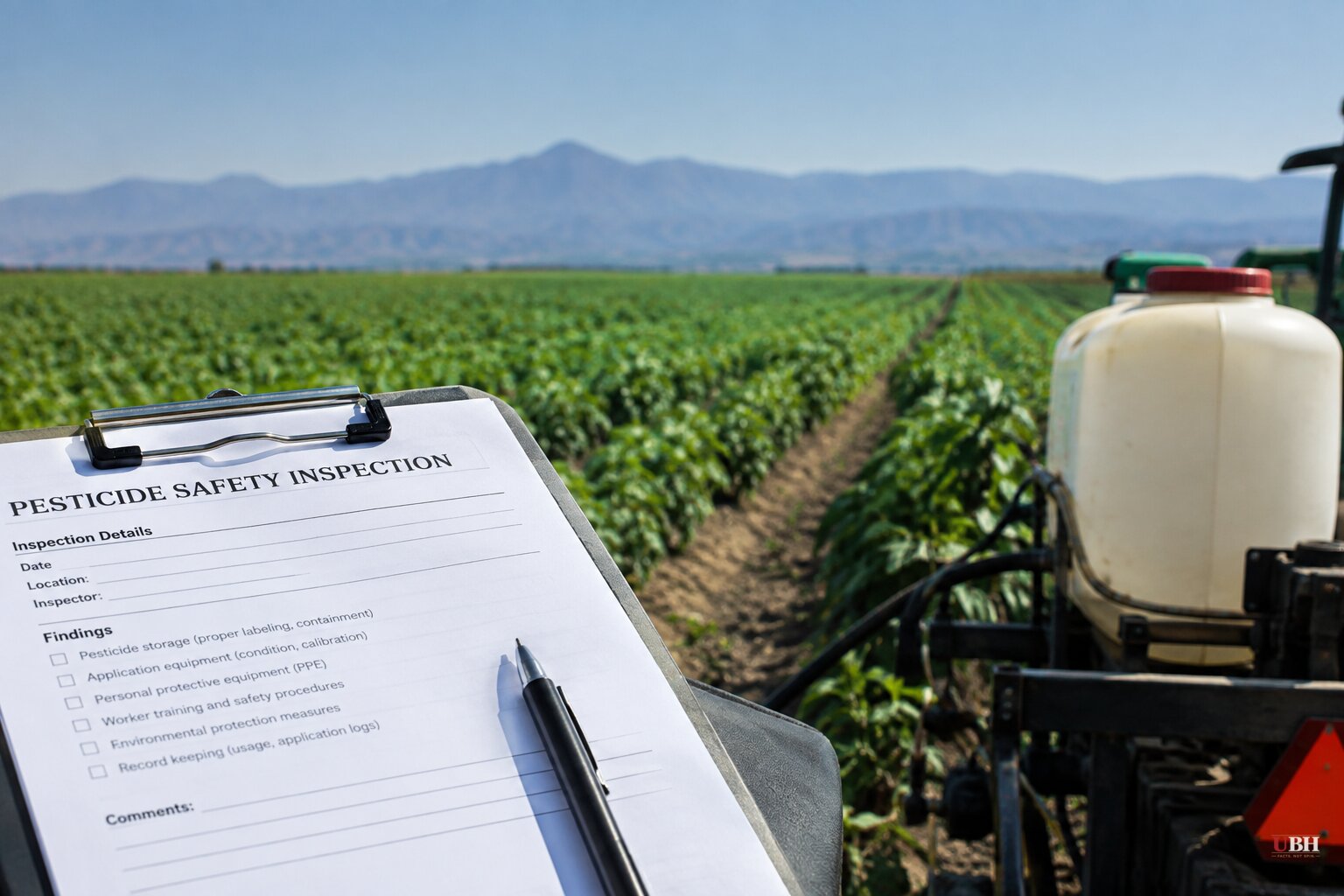
California's pesticide safety enforcement system looks less like law enforcement and more like a suggestion box, according to an investigation by Capital & Main published in partnership with the Los Angeles Times.
County inspectors took nearly 18,000 regulatory actions against California growers, seed suppliers and agricultural retailers between the start of 2020 and June 2025. Fewer than 30% of those actions resulted in a fine, according to state enforcement records reviewed by Capital & Main. The rest ended in warning letters or notices to fix the problem. No money changed hands. No real consequence attached.
When fines were issued, they were often tiny. Capital & Main's analysis of more than 40,000 state enforcement records found penalties as low as $50 to $250, and the amounts varied wildly from county to county for the exact same violation. A grower in the Sacramento Valley got cited for multiple pesticide safety violations in a stone fruit orchard. A Central Coast seed supplier racked up more than two dozen violations, some serious enough to cause health or environmental hazards. A San Joaquin Valley agricultural retailer, with a documented history of prior violations, got cited again for failing to hand out protective equipment and post emergency medical information in the fields.
Bianca Lopez, co-founder and project director at Valley Improvement Projects, which monitors pesticide safety in the northern San Joaquin Valley, told Capital & Main that warning letters and written notices were issued more than twice as often as actual penalties. She said that pattern "raises serious questions about accountability and deterrence."
Farmworkers interviewed for the investigation described nausea, burning eyes and irritated throats from working in chemical-treated fields. Most said they never reported it. A farmworker identified only as Jesus, who has spent years harvesting garlic, pruning grapevines and picking blackberries in the San Joaquin Valley, put it plainly: "Yes, there are laws. But unfortunately, at times the law favors the powerful, it sides with the wealthy." He asked that his last name be withheld, fearing retaliation from his employer.
The counterargument: discretion isn't automatically corruption
Regulators and some in the agriculture industry argue that warning letters and correction notices exist precisely so smaller operators can fix a problem without being run out of business over a paperwork lapse. Not every citation is a worker standing in a chemical cloud. Some are missed signage or an expired training record. Treating every infraction like a criminal case would be its own kind of overreach, and would hit family farms hardest.
But the investigation's specific examples undercut the idea that this is mostly minor paperwork. A retailer cited repeatedly for the same protective-equipment failures. A seed supplier with two dozen violations including ones flagged as causing actual health hazards. When a company shows a pattern of the same serious violations and keeps getting warnings instead of penalties, the discretion argument stops explaining the data.
The state can be tough when it wants to be
While field-level enforcement looks soft, California's Department of Pesticide Regulation has shown it can move aggressively at the chemical-registration level. DPR announced on September 15, 2026, that it finished tightening the label on tribufos, an organophosphate cotton defoliant sold as DEF and Folex, cutting allowable application rates and banning irrigation or weeding right after spraying, according to Global Agriculture. The chemical, first registered with the EPA in 1985, remains legal, but DPR's own risk assessment found that 2023 federal label changes hadn't cut exposure risk enough, so the state used its independent authority to go further.
DPR went further still with paraquat. In August 2026, every company holding a paraquat-dichloride registration in California, including Syngenta, voluntarily canceled it, following a DPR reevaluation opened in November 2024 over links to thyroid effects, birth defects and wildlife harm, Global Agriculture reported. The last cancellation took effect August 6, 2026, kicking off a two-year window for retailers to sell existing stock. Paraquat is already banned in more than 70 countries, including the European Union since 2007, and is tied to extensive U.S. litigation over alleged links to Parkinson's disease.
California will ban a chemical outright when the science and the litigation pile up. But when it comes to the everyday grind of making sure a supervisor hands out gloves and posts an emergency phone number in the field, the state's own county inspectors let violators walk with a warning more than 70% of the time.
Capital & Main's reporting notes that state officials are weighing changes to how enforcement rules get applied, though the specifics of that proposal weren't detailed. Whether that overhaul actually standardizes penalties across counties, or just adds another layer of paperwork, remains unanswered.
Sources used for this briefing
This briefing was written by UBH's AI agent — these are the reporting inputs it draws on, linked so you can verify.


