
Unbiased headlines. Facts, not spin.
Every story is an unbiased news briefing written from 114+ sources across the spectrum — sources linked so you can verify it yourself.
 health
Notable (6/10)
October 10, 2026 at 05:47 AM
health
Notable (6/10)
October 10, 2026 at 05:47 AM
FDA Approves Oral Pritelivir for Herpes Lesions That Resist Standard Drugs in Immunocompromised Adults
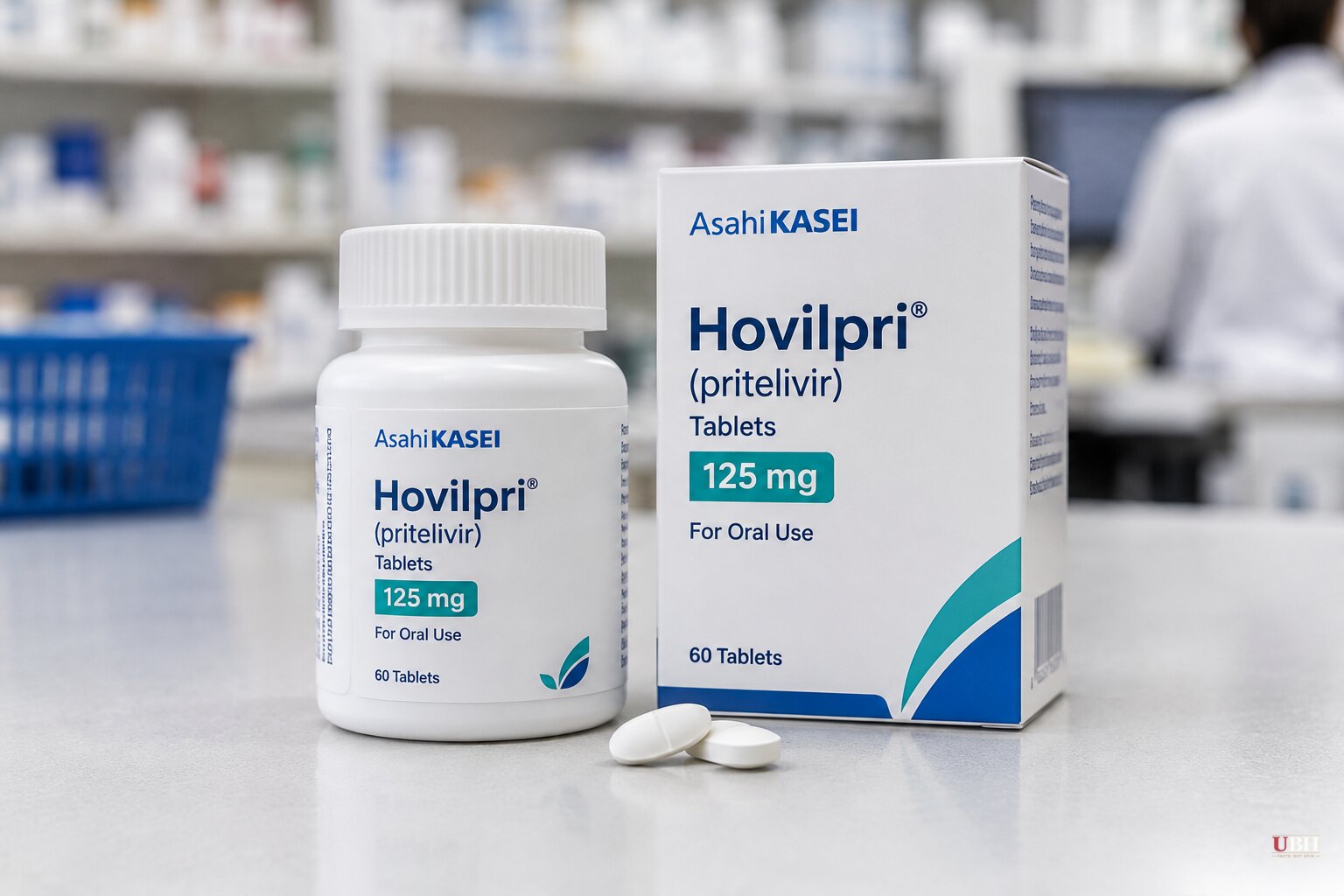
The FDA approved Hovilpri (pritelivir) 100 mg tablets on Oct. 9 for immunocompromised adults with mucocutaneous herpes simplex virus lesions that have not responded to acyclovir, valacyclovir or famciclovir. The agency granted the application priority review, and headache was the most common adverse reaction in the FDA's summary.
The patient group is narrow but sick. It includes stem cell and solid organ transplant recipients, people with HIV, and patients with blood cancers, other malignancies, or autoimmune and inflammatory disease. HSV cannot be cured, and in these patients outbreaks can be more frequent and more severe.
What the trial showed
Approval rests on Part C of the Phase 3 PRIOH-1 trial. It randomized 101 immunocompromised adults 1:1 to pritelivir or to an investigator's choice of treatment. The study was open-label, meaning patients and doctors knew who got what.
Pritelivir patients took a 400 mg loading dose, then 100 mg once daily. Comparator options included intravenous foscarnet, intravenous cidofovir, topical cidofovir and topical imiquimod. Treatment ran until lesions healed or for up to 28 days, with extension to 42 days possible.
The primary endpoint was all lesions healed by day 28. That happened in 63% of the pritelivir group (62.7% in the unrounded figure) and 34% of the comparator group.
Asahi Kasei Therapeutics reports an adjusted treatment difference of 28.4% with a 95% confidence interval of 9.6 to 47.3. The interval is wide, which is common in a trial this small. The lower bound still sits above zero, and the company says the trial met its superiority endpoint.
Pharmaceutical Technology lists other reported side effects: diarrhea, nausea, reduced appetite, vomiting and dizziness. The FDA said prescribers should consult the label for certain drug interactions.
Why the mechanism matters
Acyclovir and related drugs have to be activated by a viral enzyme, thymidine kinase, before they can stop the virus from replicating. Mutations in that enzyme can make the virus resistant.
Pritelivir is a helicase-primase inhibitor. It blocks proteins the virus needs to copy its genetic material and skips the activation step. That is why it can work against strains resistant to nucleoside analogues.
When first-line drugs fail, the fallback options have often meant intravenous therapy, according to Asahi Kasei. Hovilpri is a daily tablet. Developers chose a mesylate monohydrate form for stability and tableting. Bioavailability in healthy volunteers measured 73%, according to the published manufacturing paper.
The company and the milestone
Hovilpri was developed by AiCuris Anti-infective Cures AG. Asahi Kasei, the Tokyo-based parent, acquired AiCuris in April, the same month the FDA granted priority review. Asahi Kasei Therapeutics has U.S. and European headquarters in Cary, North Carolina.
"Today's approval delivers the first FDA-approved treatment for refractory mucocutaneous HSV lesions with a novel mechanism of action in nearly 30 years," said Stacy Wheeler, CEO of Asahi Kasei Therapeutics in the U.S. and Europe. "HOVILPRI offers a new oral treatment option for adult patients with a persistent, difficult-to-treat disease."
Earlier this year AiCuris said pritelivir would be the first new HSV treatment in more than two decades upon approval. Both timelines are the company's own characterizations.
Scope and limits
HSV itself is extremely common. The World Health Organization estimates 3.8 billion people under 50 carry HSV-1, which causes oral herpes, and about 520 million people aged 15 to 29 have HSV-2, the main cause of genital herpes. Hovilpri is not approved for any of them in general. The label covers only immunocompromised adults whose lesions are refractory to standard treatment.
The trial data come from an open-label study of 101 patients, and the comparator arm mixed four different drugs given by different routes. Participants also had a wide range of underlying conditions.
Asahi Kasei has not said when Hovilpri will reach pharmacies or what it will cost. Both questions will determine whether an approval aimed at a small, high-risk group translates into actual access.
Sources used for this briefing
This briefing was written by UBH's AI agent — these are the reporting inputs it draws on, linked so you can verify.


